Introduction: When the Climate Crisis Becomes a Mental Health Crisis
The planet is heating up, seas are rising, and forests are burning. While the environmental damage is visible, a quieter crisis is brewing inside our minds. It’s called eco-anxiety — a chronic fear of environmental doom. With the frequency of extreme weather events and the deluge of climate news, eco-anxiety is no longer a fringe psychological issue. It has emerged as a global mental health concern, particularly among the youth, climate scientists, and activists.
This article explores what eco-anxiety is, why it’s increasing, who is most affected, and how individuals and communities can cope.
What Is Eco-Anxiety?
Eco-anxiety, also called climate anxiety, is defined as a “chronic fear of environmental doom” (American Psychological Association, 2017). It is not a formally diagnosable mental illness but is considered a valid emotional response to the real and perceived threats of climate change.
Unlike general anxiety, eco-anxiety is driven by environmental triggers — from reading about Arctic melting to experiencing a local flood. Symptoms often include:
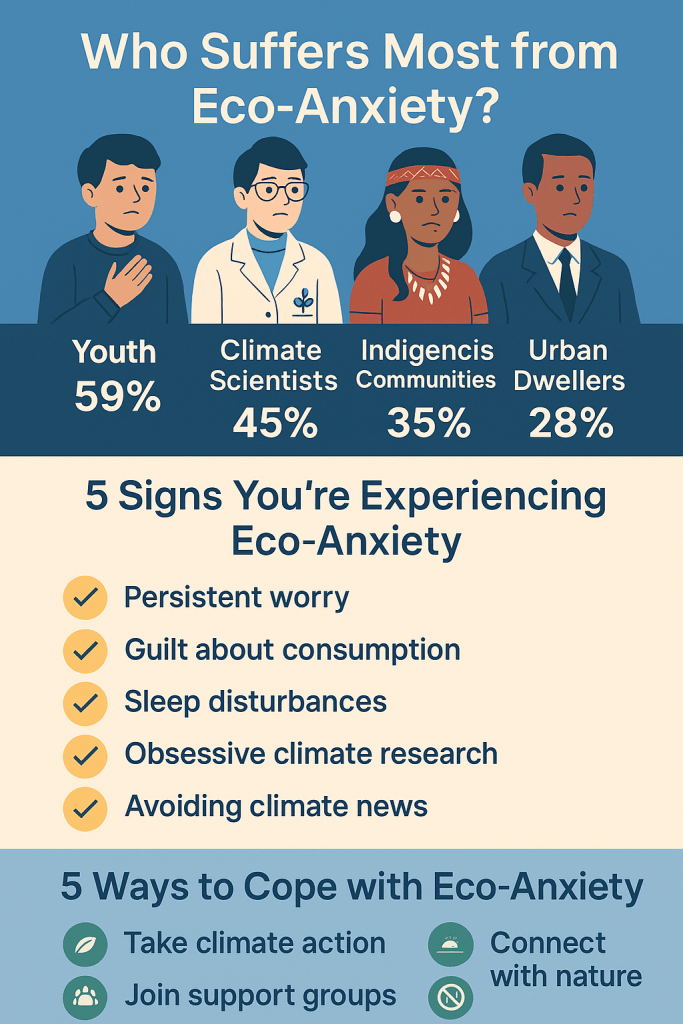
- Feelings of helplessness, guilt, and frustration
- Trouble sleeping
- Obsessive thoughts about climate change
- Avoidance behaviors
- Emotional numbness or despair
Who Is Most Affected by Eco-Anxiety?
While eco-anxiety can affect anyone, studies show it disproportionately impacts:
1. Youth and Children
In a groundbreaking study published in The Lancet Planetary Health (2021), over 59% of young people said they felt “very or extremely worried” about climate change. Many also expressed feelings of betrayal by governments that they perceive as not doing enough.
2. Climate Scientists and Activists
Those working in environmental fields are often at the frontlines of witnessing ecological collapse, making them particularly susceptible to burnout and despair.
3. Indigenous and Marginalized Communities
Communities that are directly dependent on nature, such as indigenous tribes, are more vulnerable to both environmental and psychological impacts of ecological degradation.
4. Urban Dwellers in High-Risk Zones
People living in cities prone to floods, heatwaves, and air pollution often experience heightened anxiety due to immediate climate threats.
Why Is Eco-Anxiety Increasing?
● Constant Media Exposure
Social media algorithms tend to prioritize sensational climate news, which can amplify fear and helplessness.
● Climate Disasters Are More Frequent
More people are experiencing environmental crises firsthand, from wildfires in California to floods in Germany and India.
● Governmental Inaction
A perceived lack of serious climate action leads to feelings of betrayal and loss of trust in institutions.
● Intergenerational Conflict
Many young people feel their future is being compromised by previous generations who failed to act.
Eco-Anxiety Symptoms: A Closer Look
While eco-anxiety is not a clinical diagnosis, mental health experts observe that its symptoms overlap with generalized anxiety disorder, depression, and PTSD. These include:
- Difficulty concentrating
- Social withdrawal
- Physical symptoms like headaches or fatigue
- Hopelessness about the future
- Persistent worry about biodiversity loss, climate refugees, or ecosystem collapse
Coping Strategies: From Despair to Action
Fortunately, eco-anxiety can be managed with a mix of personal, social, and systemic strategies.
✅ 1. Channel Emotions into Action
Taking meaningful steps such as reducing your carbon footprint, joining climate campaigns, or advocating for green policies can give a sense of control and purpose.
✅ 2. Connect with Nature
Spending time in green spaces, gardening, or hiking can reduce stress levels and improve emotional well-being.
✅ 3. Build a Climate-Conscious Community
Discuss your feelings with like-minded individuals. Platforms like Climate Cafés, Extinction Rebellion, and local sustainability groups offer emotional and activist support.
✅ 4. Practice Eco-Therapy and Mindfulness
Eco-therapy combines environmental connection with psychological healing. Techniques include mindful walks, outdoor meditation, and wilderness retreats.
✅ 5. Seek Professional Help
Therapists specializing in climate-related distress are increasingly available. Cognitive Behavioral Therapy (CBT) and Acceptance and Commitment Therapy (ACT) have shown promising results.
What Can Institutions Do?
The responsibility to address eco-anxiety doesn’t lie solely with individuals. Governments, schools, and organizations can help by:
- Integrating climate education in schools to foster resilience, not fear
- Offering mental health resources specifically for climate anxiety
- Creating platforms for youth voices in climate decision-making
- Strengthening policies that reflect urgency and instill hope for the future
The Role of Media in Eco-Anxiety
Media has a double-edged role:
- Positive: It can educate, inspire, and mobilize collective action.
- Negative: It can also overwhelm, misinform, or desensitize the public.
To avoid emotional burnout, follow a “media diet” by:
- Curating your climate news sources
- Limiting exposure to apocalyptic content
- Balancing negative headlines with stories of hope and innovation
Case Study: How Greta Thunberg Turned Anxiety Into Global Action
Greta Thunberg, one of the most recognizable youth climate activists, has openly discussed her own struggles with climate anxiety. Instead of succumbing to fear, she mobilized millions through the “Fridays for Future” movement.
Her story shows how transforming fear into purpose can drive global impact.
Conclusion: Turning Anxiety into Agency
Eco-anxiety is a rational response to an irrational situation: the continuous degradation of our planet. But it’s also a sign of empathy and awareness. By transforming anxiety into action, individuals can reclaim a sense of purpose, hope, and resilience.
As the climate crisis continues, mental health must be part of the climate conversation. Because a sustainable future isn’t just about saving the planet — it’s also about healing ourselves.


 Decoding Biosphere
A very interesting read, thank you
LikeLike