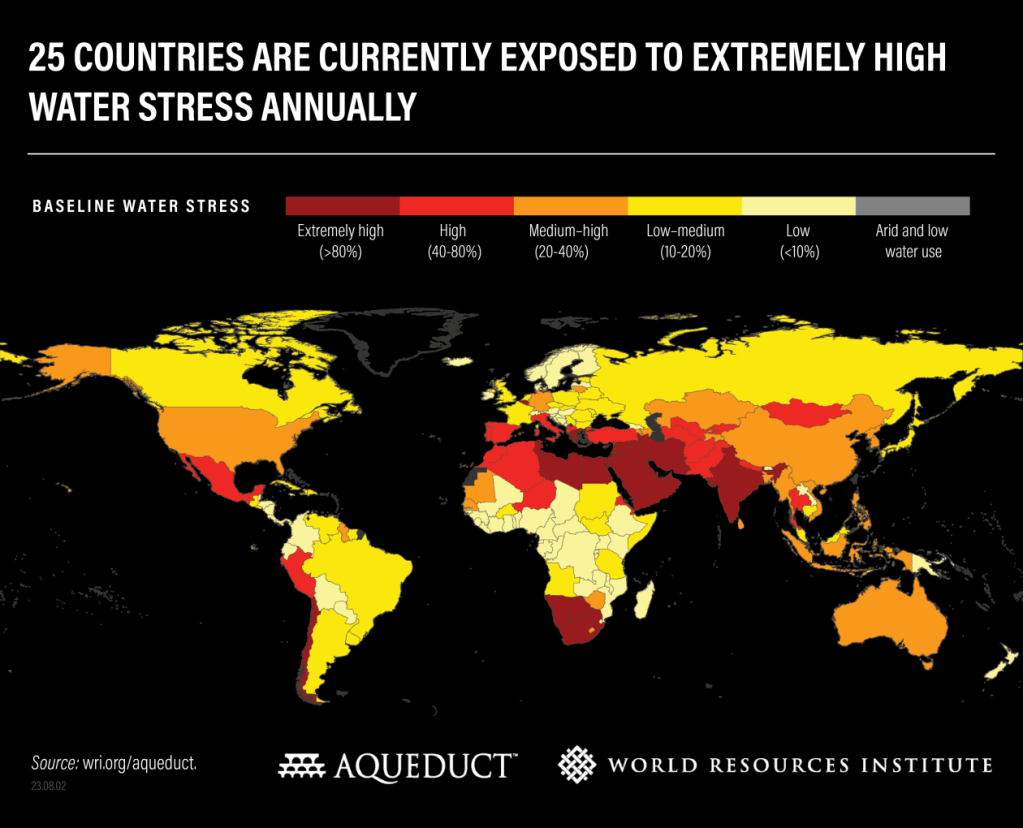
Water, the essence of life, has been a source of sustenance and civilization since time immemorial. However, as the world witnesses unprecedented growth in population, urbanization, and industrialization, coupled with the specter of climate change, water resources are under severe strain. A recent report from the Aqueduct Water Risk Atlas by the World Resources Institute (WRI) has revealed a sobering truth: 25 countries, home to a quarter of the global population, face extreme water stress, with water demand regularly exceeding the available supply. In this article, we delve into the extreme water stress faced by the top 10 countries on this list – Bahrain, Cyprus, Kuwait, Lebanon, Oman, Qatar, United Arab Emirates (UAE), Saudi Arabia, Israel, and Egypt – understanding the causes, consequences, and possible solutions to this dire situation.
1. Bahrain
Bahrain, a small island nation in the Persian Gulf, is the first on the list of extreme water-stressed countries. The combination of minimal natural water sources, population growth, and high per capita water consumption contribute to its predicament. Desalination plants play a pivotal role in catering to the nation’s water needs, but the process consumes significant energy and contributes to environmental challenges.
2. Cyprus
Cyprus, another island nation, confronts its own water scarcity battle. With limited freshwater resources and a rising population, the country relies on reservoirs, desalination, and groundwater sources to meet its water needs. Over-extraction of groundwater and the risk of contamination further compound Cyprus’ water stress woes.
3. Kuwait
Kuwait’s arid climate, coupled with high water consumption, places it in the list of extreme water-stressed nations. The nation relies heavily on desalination to bridge the gap between demand and supply. However, the environmental impact of desalination and the energy consumption it entails underline the urgency for sustainable water management.
4. Lebanon
Lebanon, blessed with abundant water resources in its rivers and aquifers, faces an ironic challenge – a lack of proper water management. Pollution, inefficient agricultural practices, and inadequate infrastructure exacerbate the nation’s water stress. Political instability compounds the crisis, making it difficult to implement necessary reforms.
5. Oman
Oman, characterized by its desert landscapes, relies on desalination and groundwater extraction to fulfill its water requirements. Rapid urbanization and industrial growth have led to increased water demand, which is further amplified by agriculture. Sustainable practices, efficient irrigation methods, and alternative water sources are pivotal for Oman’s water security.
6. Qatar
Qatar, known for its rapid development and modernity, grapples with extreme water stress due to its desert environment and high water consumption. The nation’s reliance on desalination to meet water needs underscores the environmental and energy challenges posed by this practice.
7. United Arab Emirates
The UAE’s transformation from a desert expanse to a modern metropolis has come at the cost of immense water stress. The nation’s high demand for water, driven by population growth and development, is met through desalination and groundwater extraction. However, the sustainability of such practices remains a concern.
8. Saudi Arabia
Saudi Arabia, known for its vast deserts, has long relied on extensive groundwater extraction for agriculture. This approach has led to depletion of finite water resources. The nation’s efforts to shift toward sustainable water management, including water pricing reforms and agricultural reforms, aim to address this dire situation.
9. Israel
Despite pioneering water management innovations, Israel faces extreme water stress due to its arid climate and growing population. The nation’s accomplishments in desalination, wastewater recycling, and efficient irrigation practices are tempered by ongoing water challenges.
10. Egypt
Egypt’s reliance on the Nile River masks its vulnerability to extreme water stress. The nation’s growing population and industries, coupled with upstream water use by other countries, pose a significant challenge to its water security. Climate change adds another layer of uncertainty to Egypt’s water resources.
Consequences of Extreme Water Stress
Extreme water stress has far-reaching consequences that transcend borders and impact societies, economies, and ecosystems. It jeopardizes agricultural production, energy generation, and industrial processes, potentially leading to political instability. The scarcity of water not only affects domestic consumption but also heightens the risk of conflicts over shared water resources.
Addressing the Crisis: A Way Forward
Tackling extreme water stress requires multi-pronged solutions at local, national, and international levels. Sustainable water management, efficient irrigation practices, investment in water infrastructure, and the adoption of water-efficient technologies are essential. Collaboration among nations sharing water resources is critical to ensure equitable distribution and avoid conflicts.
Investing in Innovation and Conservation
Innovations in desalination, wastewater treatment, and rainwater harvesting can offer solutions to extreme water stress. Moreover, promoting public awareness about water conservation, sustainable agricultural practices, and responsible water use can contribute to a collective effort toward water security.
Sustainable Development and Climate Resilience
Water stress can be alleviated through holistic approaches to sustainable development. Investing in renewable energy sources can mitigate the energy-intensive nature of desalination, while improving water efficiency can bolster climate resilience.
Conclusion: The Need for Urgent Action
The extreme water stress faced by these 10 nations is a stark reminder of the urgent need for global action. As climate change intensifies and populations continue to grow, the crisis will only exacerbate. The burden of responsibility lies not only with the affected countries but with the international community as a whole. The world must unite to address the water scarcity crisis, adopting innovative solutions, promoting sustainable practices, and ensuring equitable access to this precious resource.
You May Also Like


 Decoding Biosphere
These countries should make arrangements to avoid water scarcity now. Thank you. Apurva 🌍👏
LikeLike