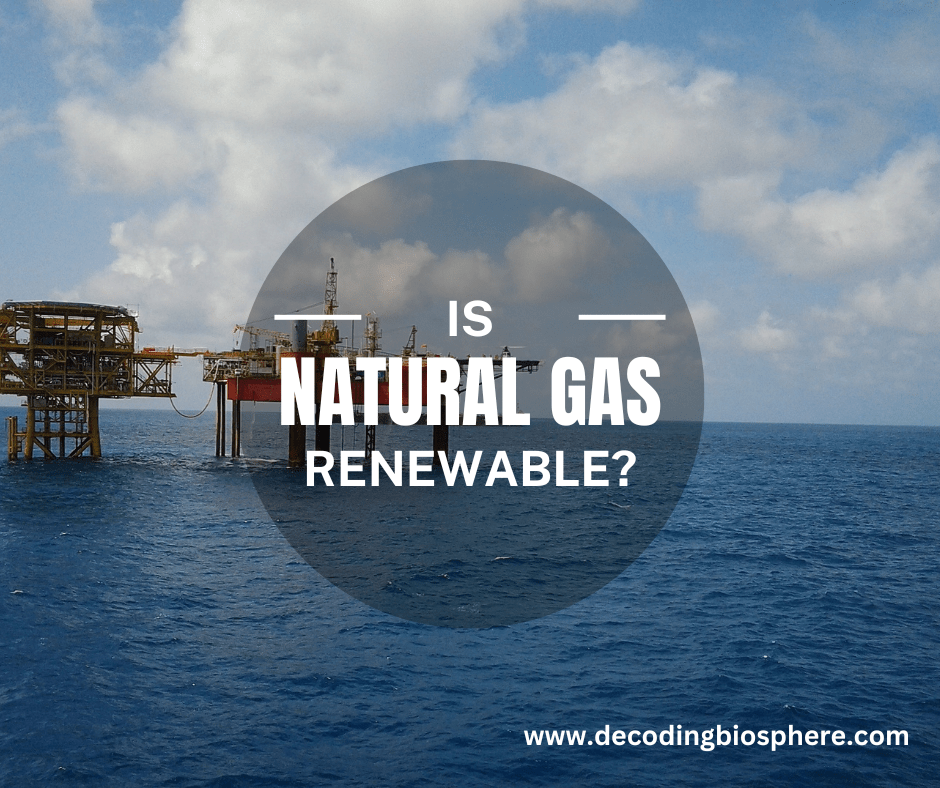
The debate on whether natural gas is renewable or nonrenewable is ongoing in the field of energy and sustainability.
Natural gas is a main energy source for homes and businesses. However, as the world focuses on climate change and cleaner energy options, the question arises: Natural gas – Is it renewable or nonrenewable?
Renewable energy sources occur naturally, are plentiful, and can be used repeatedly. Examples include wind, sunlight, and water. On the other hand, natural gas, like coal and oil, comes from a finite source and cannot be replenished over time, making it a nonrenewable resource.
It is important to prioritize the use of renewable energy sources for most energy needs to protect the environment. You can find more information about renewable energy sources here.
What is a natural gas?
Methane, as well as other hydrocarbons like nitrogen and carbon dioxide, are the main components of natural gas, which has formed naturally beneath the earth’s surface. It is made from organic matter that died millions of years ago, just like other fossil fuels. The primary component of natural gas is methane, which typically makes up around 70-90% of its composition. In addition to methane, natural gas may also contain varying amounts of ethane, propane, butane, and pentane, along with traces of carbon dioxide, nitrogen, and hydrogen sulfide. The specific composition can vary depending on the source of the gas and the extraction process.
Natural gas is commonly found in underground reservoirs alongside oil deposits and is extracted through drilling.
Is natural gas a renewable or nonrenewable resource?
Natural gas is not a type of energy that we can renew or recreate. It’s actually a fossil fuel, and it takes an incredibly long time—millions of years—to form. Think of it like something precious that we can’t easily make more of once it’s used up.
Hence natural gas falls firmly within the nonrenewable category. Although its geological formation occurs naturally, the process spans millions of years, rendering it finite in the context of human civilization. As extraction and consumption rates continue to rise, the gap between usage and replenishment widens, raising concerns about the sustainability of natural gas as a long-term energy source.
Why isn’t natural gas a renewable resource?
Natural gas is not considered a renewable resource because it comes from fossil fuels. Fossil fuels, like natural gas, form over millions of years from the remains of ancient plants and animals buried under layers of rock. This process takes much longer than human timescales, making natural gas a finite resource.
When we extract and use natural gas, we deplete the existing supply. Unlike renewable resources such as solar or wind energy, which are naturally replenished in a short time, natural gas cannot be quickly or easily replaced once it is used up.
Additionally, the extraction and use of natural gas contribute to environmental issues. Burning natural gas releases carbon dioxide, a greenhouse gas that contributes to climate change. Although it burns cleaner than coal or oil, it still has a significant environmental impact.
How is gas produced naturally?
Like oil, natural gas is created by decomposing organic material left behind by marine microorganisms over the course of the last few hundred million years.
The primary sources of these organic materials include dead plants, microorganisms, and marine life that were buried in sedimentary basins. Over time, these materials undergo a process called diagenesis, where they are subjected to high pressure and heat from the overlying sediments. This transformation gradually converts the organic matter into hydrocarbon-rich compounds, including natural gas.
The specific process of natural gas formation involves several stages:
- Organic Material Accumulation
- Ancient plants, microorganisms, and marine life die and settle at the bottom of oceans, lakes, or swamps. Over time, layers of sediment accumulate over these remains.
- Burial and Compression
- As more sediment layers accumulate, the weight of the overlying material increases. This pressure compacts the lower layers, causing them to undergo physical and chemical changes.
- Heat and Decomposition
- The buried organic materials are subjected to increasing heat and pressure as they become buried deeper within the Earth’s crust. This heat causes the organic matter to undergo thermal decomposition, breaking down complex molecules into simpler hydrocarbons.
- Hydrocarbon Formation
- The decomposition process leads to the creation of hydrocarbons, which include natural gas, oil, and other organic compounds. These hydrocarbons migrate through porous rock formations until they encounter impermeable barriers, creating pockets of trapped gas and oil.
- Reservoir Formation
- The hydrocarbons accumulate in underground rock formations known as reservoirs. These reservoirs are often porous and permeable rocks, such as sandstone or limestone, which can hold significant quantities of natural gas.
- Trapping Mechanisms
- Natural gas is often trapped beneath impermeable layers of rock, preventing its upward migration. These trapping mechanisms can include structural features like folds or faults in the Earth’s crust, as well as the caprock, a dense rock layer that seals the reservoir and prevents the escape of gas.
- Extraction
- To access the trapped natural gas, wells are drilled into the reservoirs. The pressure within the reservoir causes the gas to flow to the surface, where it can be captured, processed, and transported for various uses.
How damaging is natural gas to the environment?
Natural gas, while often touted as a cleaner alternative to coal and oil, still has significant environmental impacts. Here’s a look at how damaging it can be:
- Greenhouse Gas Emissions:
- Carbon Dioxide (CO2): Burning natural gas for energy releases carbon dioxide, a major greenhouse gas contributing to climate change. Although it emits less CO2 than coal or oil, it still adds to the atmospheric burden.
- Methane (CH4): Natural gas is primarily methane, a potent greenhouse gas. Methane leaks can occur during extraction, transportation, and storage. Methane has a much higher global warming potential than CO2 over a short period.
- Air Pollution:
- Nitrogen Oxides (NOx): Burning natural gas produces nitrogen oxides, which contribute to smog and respiratory problems.
- Volatile Organic Compounds (VOCs): During extraction, VOCs can be released, contributing to air pollution and health issues.
- Water Pollution:
- Hydraulic Fracturing (Fracking): The extraction of natural gas through fracking can contaminate groundwater with chemicals used in the process. It also produces large amounts of wastewater that need to be managed.
- Water Usage: Fracking requires substantial amounts of water, which can strain local water resources.
- Land Degradation:
- Habitat Destruction: Drilling and infrastructure development for natural gas extraction can destroy habitats, disrupt wildlife, and lead to land degradation.
- Seismic Activity: Fracking has been linked to increased seismic activity, including minor earthquakes.
- Resource Depletion:
- Natural gas is a finite resource. Its continued extraction depletes reserves that took millions of years to form, reducing availability for future generations.
How is natural gas better than coal and oil?
Natural gas is often considered a better option compared to coal and oil for several reasons:
Lower Carbon Emissions:
Natural gas burns more cleanly than coal and oil, producing less carbon dioxide (CO2) per unit of energy. This makes it a more environmentally friendly option for reducing greenhouse gas emissions and combating climate change.
Reduced Air Pollutants:
Burning natural gas emits fewer pollutants than coal and oil, which can lead to improvements in air quality and public health by reducing the contribution to acid rain, smog, and respiratory problems.
Higher Efficiency:
Natural gas plants are usually more efficient than coal-fired plants. They can convert a higher percentage of the fuel’s energy into electricity, requiring less fuel to produce the same amount of power and resulting in reduced overall emissions.
Lower Particulate Matter:
Natural gas combustion produces very little soot, a harmful pollutant found in coal and oil combustion. Soot can lead to serious health issues, such as heart and lung diseases.
Flexibility and Reliability:
Natural gas plants can quickly adjust their output to match electricity needs, serving as dependable backup for fluctuating renewable sources. This flexibility enhances grid stability and ensures a steady power supply.
Less Impact on Land and Water:
Natural gas extraction and transportation generally have a smaller environmental footprint than coal mining and oil drilling. Coal mining, especially surface mining, can cause significant land disruption, while oil drilling, particularly offshore, poses risks to marine environments.
Economic Benefits:
Natural gas is often a cheaper option than coal and oil because it is abundant and extraction technologies like hydraulic fracturing have advanced, resulting in lower energy costs for consumers and businesses.
Source:
- https://www.agwayenergy.com/blog/is-natural-gas-renewable-or-nonrenewable/
- https://www.perchenergy.com/blog/energy/natural-gas-explained-nonrenewable
Subscribe
Subscribe to get exclusive updates in our weekly newsletter!
Follow us on twitter @DecodingBiosph1


 Decoding Biosphere