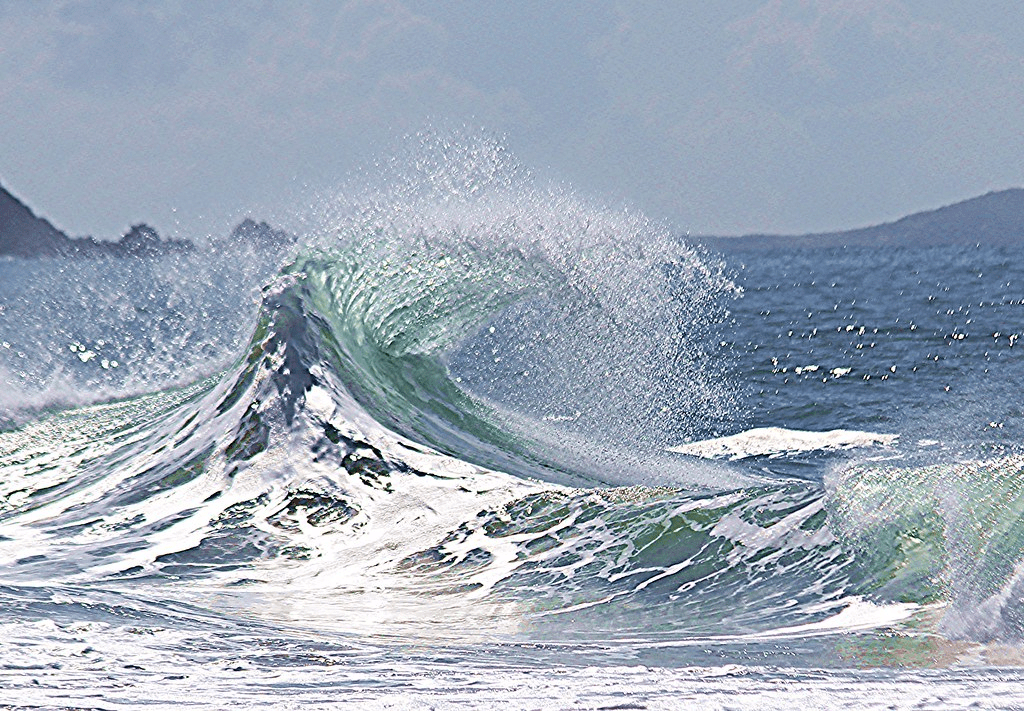
Backwash refers to the backward flow of water that occurs after a wave has broken and recedes back into the ocean, sea, or other bodies of water. It is an essential part of the wave cycle and plays a crucial role in shaping coastal environments. In this article, we will explore the concept of backwash, its process, and the implications it has on beaches, sediment transport, and coastal erosion.
Understanding Backwash:
When a wave approaches the shoreline, it carries energy and momentum that causes it to rise and eventually break. As the wave reaches its maximum height and breaks, it releases the energy it carried, leading to the formation of white water and foam. Following the breaking of the wave, the water that surged toward the shore during the wave’s approach returns seaward in a process known as backwash.
Process of Backwash:
The process of backwash involves the gravitational force pulling the water and sediment back down the beach and into the nearshore zone. As the wave recedes, it pulls loose sediment, such as sand and pebbles, along with it. The backwash water flows under the influence of gravity, following a reverse path back to the ocean or sea. The force and speed of the backwash depend on several factors, including the wave size, beach slope, sediment characteristics, and the energy of the breaking wave.
Implications of Backwash:
- Beach Morphology: The backwash plays a significant role in shaping the morphology of beaches. As water is pulled back into the ocean, it carries sediment with it, resulting in the erosion of the beach face. The backwash redistributes sediment along the coast, influencing the formation of sandbars, beach profiles, and overall beach shape.
- Sediment Transport: Backwash is a critical component of the sediment transport process along the shoreline. It contributes to the movement of sediment from the beach face and nearshore zone back into the offshore area. The interaction between backwash and incoming waves affects the net sediment transport and the overall sediment budget of a coastal system.
- Coastal Erosion: The backwash can contribute to coastal erosion, especially when it is stronger or more pronounced than the incoming swash. As the backwash carries sediment away from the beach, it can lead to a loss of sand and other coastal materials, resulting in the gradual retreat of the shoreline.
- Barrier Islands and Sand Dunes: Backwash is essential for the formation and maintenance of barrier islands and sand dunes. As waves approach these landforms, they carry sediment toward the shore. The subsequent backwash then transports sediment landward, helping to build and sustain these coastal features.
- Beach Stability and Restoration: Understanding the dynamics of backwash is crucial for beach management and restoration efforts. By assessing the backwash patterns and sediment transport processes, coastal engineers and planners can implement strategies to stabilize eroding beaches, such as beach nourishment, the construction of groynes or breakwaters, and dune restoration.
In conclusion, backwash is the backward flow of water that occurs after a wave breaks and recedes back into the ocean or sea. It plays a significant role in shaping coastal environments, influencing beach morphology, sediment transport, and coastal erosion. Understanding the process and implications of backwash is crucial for managing and protecting coastal areas and ensuring their long-term sustainability.
You May Also Like
- How Plastic Pollution Is Choking Our Oceans And 12 Real Ways You Can Fix It

- 2025 Outlook: Top Global Trends Shaping the Future of Tech, Lifestyle, Sustainability and Culture

- 10 Eco-Friendly Gift Ideas for People Who Care About the Planet

- Audiobooks vs E-books: Which Is More Eco-Friendly?

- Why Audiobooks Are the Most Sustainable Way to Learn


 Decoding Biosphere