When it comes to baking, it’s important to pick the right tools and materials to ensure delicious results and a safe cooking experience. Lately, silicone bakeware has become popular because it doesn’t stick, is easy to use, and comes in colorful designs. But some people have worries about using silicone for baking, and they’re not sure if it’s a trustworthy option. In this article, we’ll explore the myths and facts about the safety of silicone bakeware, giving you the information you need to make a smart choice.
Understanding Silicone Bakeware
Silicone is a synthetic rubber-like material that is flexible, heat-resistant, and non-toxic. It is commonly used in various kitchenware products, including baking mats, molds, and utensils. The appeal of silicone bakeware lies in its non-stick surface, which allows for easy release of baked goods and hassle-free cleanup.
Myth: Silicone Bakeware Is Unsafe and Releases Toxins
One of the most common concerns raised about silicone bakeware is the fear that it may release harmful chemicals or toxins when exposed to high temperatures. However, this is largely a myth. Silicone is a stable material that does not emit harmful substances or fumes when heated within the recommended temperature range for baking.
Silicone bakeware is typically designed to withstand temperatures up to 450°F (230°C) or higher, which covers the vast majority of baking needs. As long as you adhere to the manufacturer’s guidelines and avoid subjecting silicone bakeware to extreme heat, it remains a safe and reliable option for baking.
Fact: Silicone Bakeware Is Non-Reactive and Versatile
Unlike certain metal or non-stick coatings, silicone is non-reactive and does not leach chemicals into your food. This makes it an excellent choice for baking delicate or acidic ingredients, such as citrus fruits, without altering the taste or texture of the final product. Silicone bakeware is also freezer-safe and microwave-safe, providing versatility beyond just oven use.
However, it is important to note that while silicone is non-reactive, it can absorb odors or flavors from strong-smelling foods. So, if you use your silicone bakeware for baking garlic bread or heavily spiced dishes, it’s a good practice to dedicate separate silicone items for those specific flavors.
Myth: Silicone Bakeware Is Hazardous to Health
Another concern often raised is the potential health risks associated with using silicone bakeware. Contrary to these claims, silicone is generally considered safe for food contact. It is an inert material that does not react with food or release harmful substances. Silicone is also FDA-approved and BPA-free, further solidifying its safety credentials.
That being said, it’s always important to purchase silicone bakeware from reputable brands and ensure it complies with relevant food safety standards. Cheap or low-quality silicone products may not meet the same rigorous safety requirements and could potentially pose a risk.
Fact: Silicone Bakeware Offers Easy Maintenance and Durability
One of the significant advantages of silicone bakeware is its ease of maintenance. Silicone is naturally non-stick, which means baked goods are less likely to stick to the surface, making cleanup a breeze. Most silicone bakeware is also dishwasher-safe, but handwashing is equally convenient.
Moreover, silicone is a durable material that can withstand repeated use without losing its shape or performance. Unlike traditional metal pans that may rust or lose their non-stick properties over time, silicone bakeware tends to maintain its quality for an extended period.
Conclusion
In conclusion, silicone bakeware is generally safe and reliable for baking purposes. The myths surrounding its safety often stem from misconceptions and misinformation. Silicone is a non-toxic, non-reactive material that does not release harmful chemicals when used within its recommended temperature range. It is versatile, easy to clean, and offers long-lasting performance.
However, it is essential to purchase high-quality silicone bakeware from reputable brands and follow the manufacturer’s guidelines. By doing so, you can enjoy the benefits of silicone bakeware while ensuring a safe and enjoyable baking experience.
Some Reputed Silicone Brands and Products
Trudeau Square Silicone Cake Pan, 8x8in, Confetti, 05118556
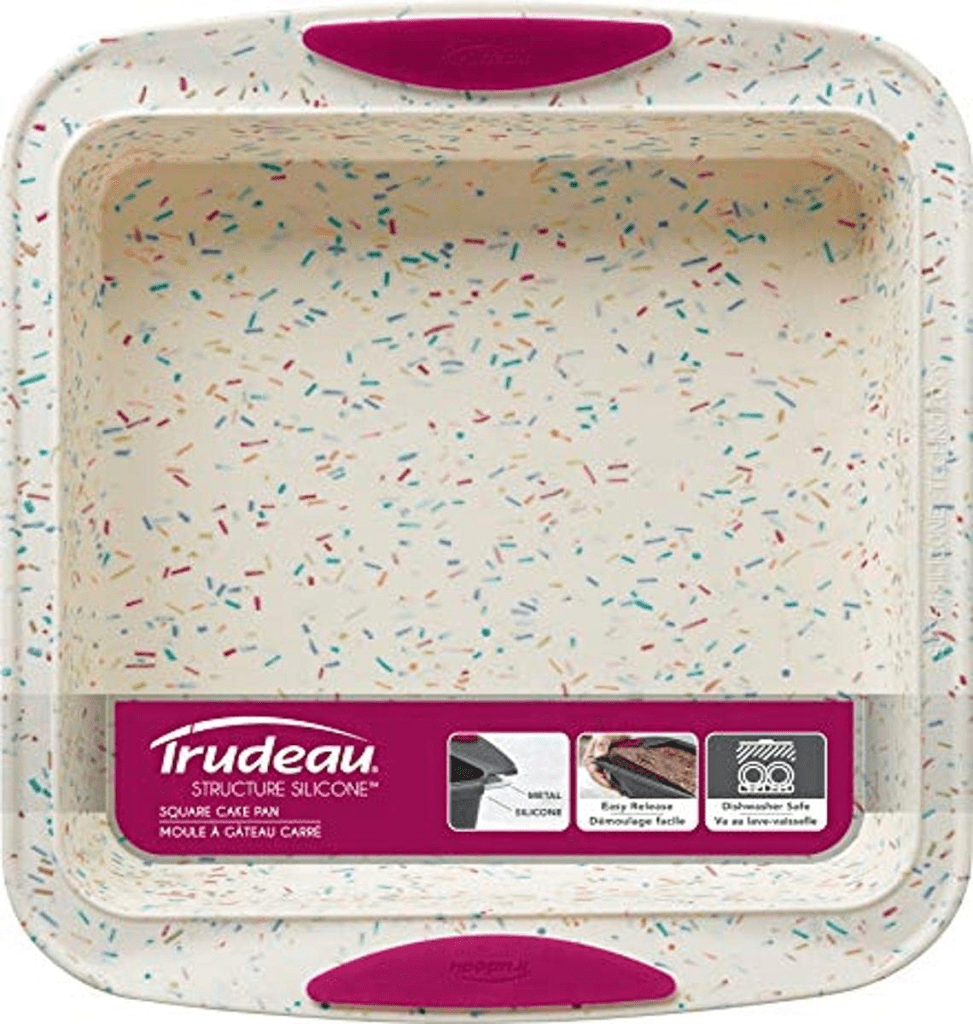
- Perfect baking every time; our confetti with fuchsia square cake pan combines the stability of metal bakeware with the flexibility, nonstick performance and quick cleanup of silicone
- Patented Structured Silicone cake pan with integrated steel frame keeps the pan secure to and from the oven – no drooping or sagging.
- Oven Safe to Temperatures of 428 F (220 C)
- BPA free and food safe. 8x8in interior
- Dishwasher safe. 10 Year Warranty
SILIVO 5-Piece Silicone Baking Pans Sets

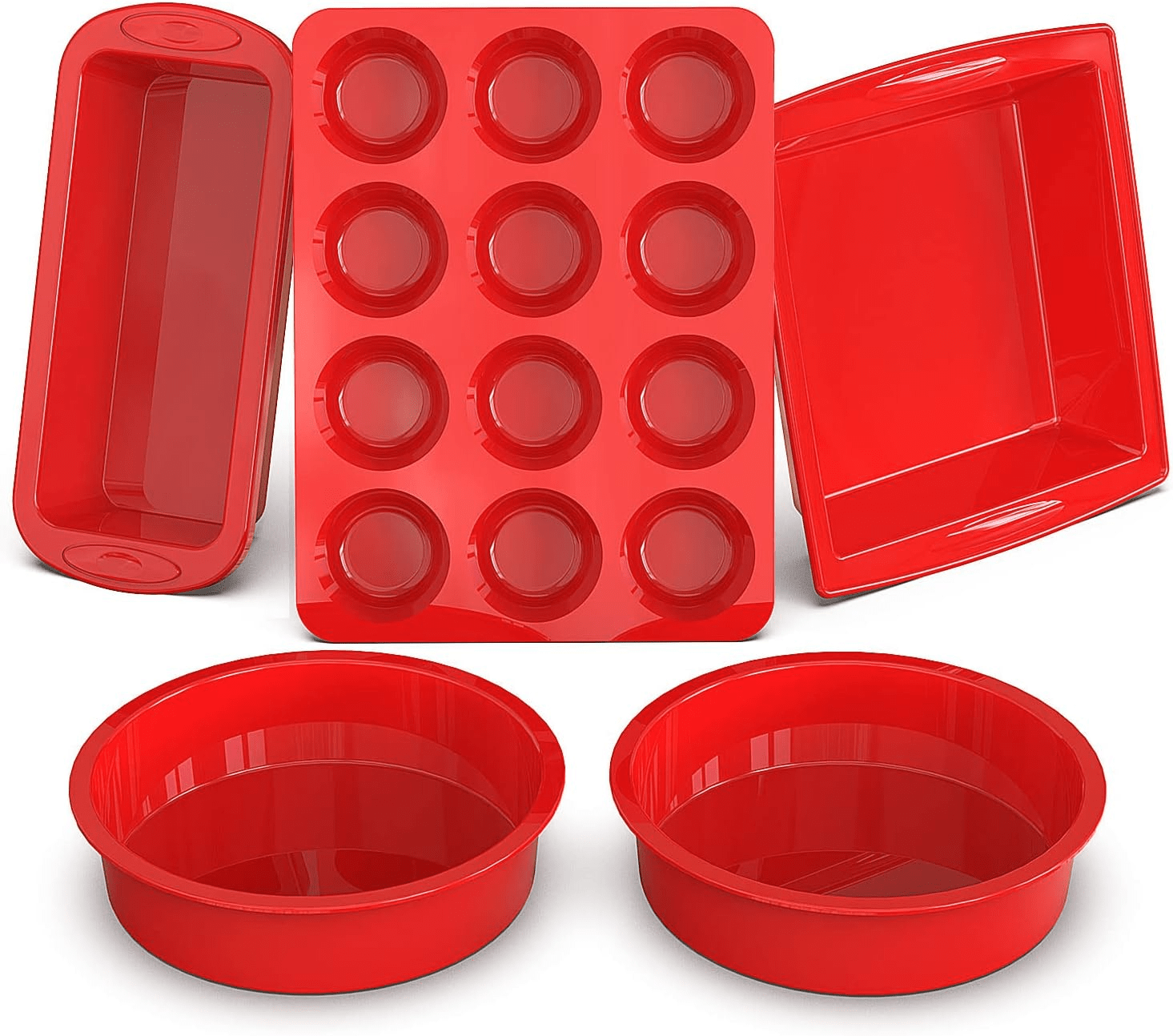
5-Piece Bakeware Kit: The 5 piece silicone bakeware sets includes (1-Pcs) Bread Loaf Pan, (1-Pcs) 12-Cup Muffin Pan, (1-Pcs) 8-inch Square Brownie Pan, (2-Pcs) 8-inch Round Cake Pans.Perfect for baking breads, meatloaf, muffins, brownies, cupcakes, cakes. Great for occasions of christmas,birthday party, holiday party and wedding
Nonstick Bakeware Sets: The flexible silicone baking set with non-stick allows for easy and quick release of baked goodies and desserts.

 Decoding Biosphere