In a world increasingly conscious of sustainability and health, many people are turning to natural softeners for clothes as a safe, eco-friendly alternative to conventional fabric softeners. Commercial softeners may leave your laundry smelling fresh and feeling soft, but they often contain synthetic fragrances, preservatives, and chemicals that can irritate skin and harm the environment. If you’re looking for a natural way to keep your clothes soft, fresh, and chemical-free, you’re in the right place.
Why Choose Natural Fabric Softeners?
1. Health Benefits
Many commercial softeners contain phthalates, artificial fragrances, and other allergens that can cause respiratory issues and skin irritation. Natural softeners are free from these harmful additives, making them ideal for sensitive skin and baby clothes.
2. Environmental Impact
Standard fabric softeners are not biodegradable and often contain petrochemicals that pollute waterways. Natural alternatives are biodegradable and made from sustainable ingredients, reducing your carbon footprint and water pollution.
3. Cost-Effective
Most natural softeners for clothes can be made at home with inexpensive, readily available ingredients—saving you money in the long run.
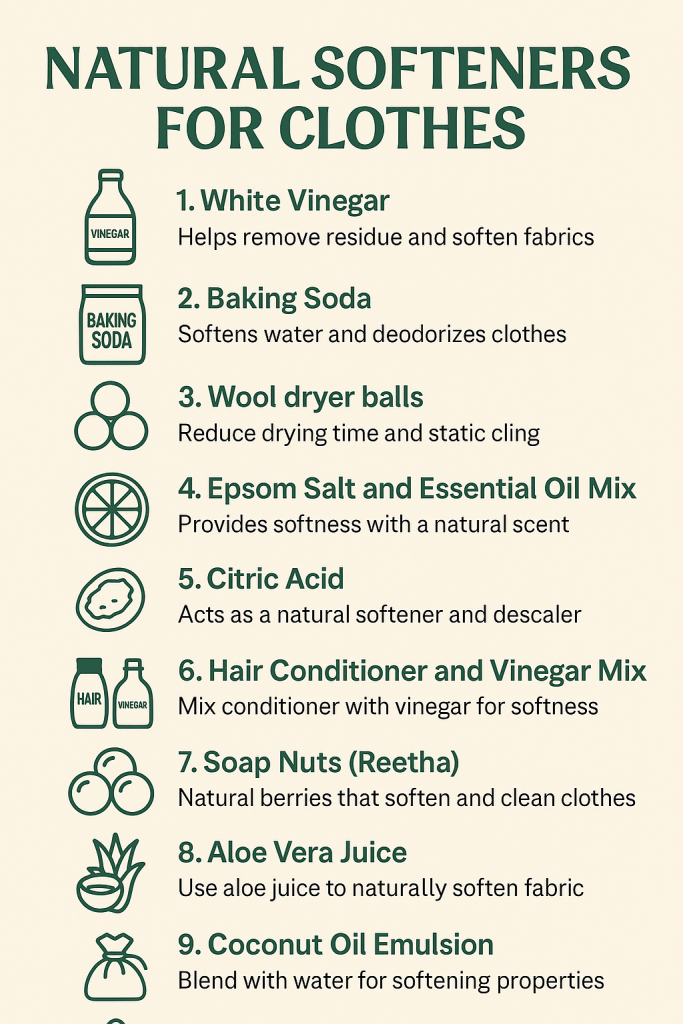
10 Best Natural Softeners for Clothes You Can Use Today
1. White Vinegar
One of the most popular and effective natural fabric softeners, white vinegar helps remove soap residue, reduces static, and softens fabrics. Simply add 1/2 to 1 cup to your machine’s rinse cycle.
Bonus Tip: Add a few drops of essential oil like lavender or eucalyptus to mask the vinegar smell.
2. Baking Soda
Baking soda is a natural cleanser and deodorizer that also works to soften water and clothes. Add 1/2 cup during the wash cycle for best results.
SEO Tip: Many people search for “baking soda as a natural softener for clothes,” so this method is not only effective but highly searched.
3. Wool Dryer Balls
Wool dryer balls reduce drying time, soften fabrics, and reduce static cling. You can reuse them for up to 1,000 loads, making them both eco-friendly and economical.
Extra Hack: Add essential oils to the balls for natural fragrance.
4. Epsom Salt and Essential Oil Mix
Epsom salt softens water and helps essential oils stick to your clothes. Mix 2 cups of Epsom salt with 20-30 drops of essential oil. Use 1/4 cup per load in the rinse cycle.
5. Citric Acid
A lesser-known option, citric acid can work as a natural softener and descale your washing machine. Use 1-2 tablespoons in the rinse cycle.
6. Hair Conditioner and Vinegar Mix
Mix 2 cups white vinegar with 1 cup natural hair conditioner (sulfate-free, silicone-free) and 6 cups water. Shake well before use. It gives the softness of conditioner without synthetic ingredients.
7. Soap Nuts (Reetha)
Soap nuts are natural berries that release saponins—a natural cleaning agent—when soaked in water. They not only clean but also soften clothes gently.
8. Aloe Vera Juice
Add 1/4 cup of pure aloe vera juice during the rinse cycle to moisturize and soften fabric naturally.
9. Coconut Oil Emulsion
Blend 1 tbsp coconut oil with warm water and a mild essential oil. Use sparingly to soften delicate garments and add a tropical scent.
10. DIY Herbal Sachets
Add herbal sachets filled with lavender, chamomile, or rosemary to your dryer. They naturally scent and soften clothes during the drying process.
How to Make Your Own DIY Natural Fabric Softener
Here’s a simple recipe you can try at home:
DIY Natural Fabric Softener Recipe:
Ingredients:
- 2 cups white vinegar
- 1/2 cup baking soda
- 15 drops of essential oil (lavender, lemon, or eucalyptus)
- 1 liter warm water
Instructions:
- In a large container, slowly mix vinegar and baking soda.
- Add essential oils and warm water.
- Stir well and store in a sealed jar.
- Use 1/4 cup per load in the rinse cycle.
Frequently Asked Questions (FAQs)
Q: Do natural softeners work as well as chemical ones?
A: Yes, especially for regular household laundry. They may not offer the “artificially silky” finish of commercial softeners, but they effectively soften and deodorize without harmful residues.
Q: Will my clothes smell like vinegar?
A: No. The vinegar smell dissipates quickly, especially if you use essential oils or dry your clothes outside.
Q: Can I use natural softeners in HE (high-efficiency) machines?
A: Absolutely! Most natural softeners, like vinegar and baking soda, are low-sudsing and perfectly safe for HE machines.
Final Thoughts: Make the Switch to Natural Softeners for Clothes
Switching to natural softeners for clothes is one of the easiest and most impactful changes you can make for a healthier lifestyle and a cleaner planet. Whether you prefer vinegar, baking soda, wool dryer balls, or essential oils, these eco-friendly alternatives offer a chemical-free way to keep your laundry soft and fresh.
Start small, experiment with what works best for your fabrics and lifestyle, and enjoy the peace of mind that comes with choosing a safer, greener laundry routine.
Pin This

 Decoding Biosphere