
In this diverse world of life, each organism has its own unique role to play. From the mighty predators to the smallest microbes, every living being occupies a specific ecological niche within an ecosystem. In this article, we will explore the concept of an ecological niche, look at its definition, components, and the importance of understanding these specialized roles for ecological balance.

What is an Ecological Niche?
An ecological niche refers to the specific role and position occupied by an organism within its ecosystem. Think of it as a species’ profession or occupation within its ecosystem. It’s not just about where a creature lives; it’s about what it does, what it eats, and how it interacts with other species and its environment.
The Habitat vs. the Niche
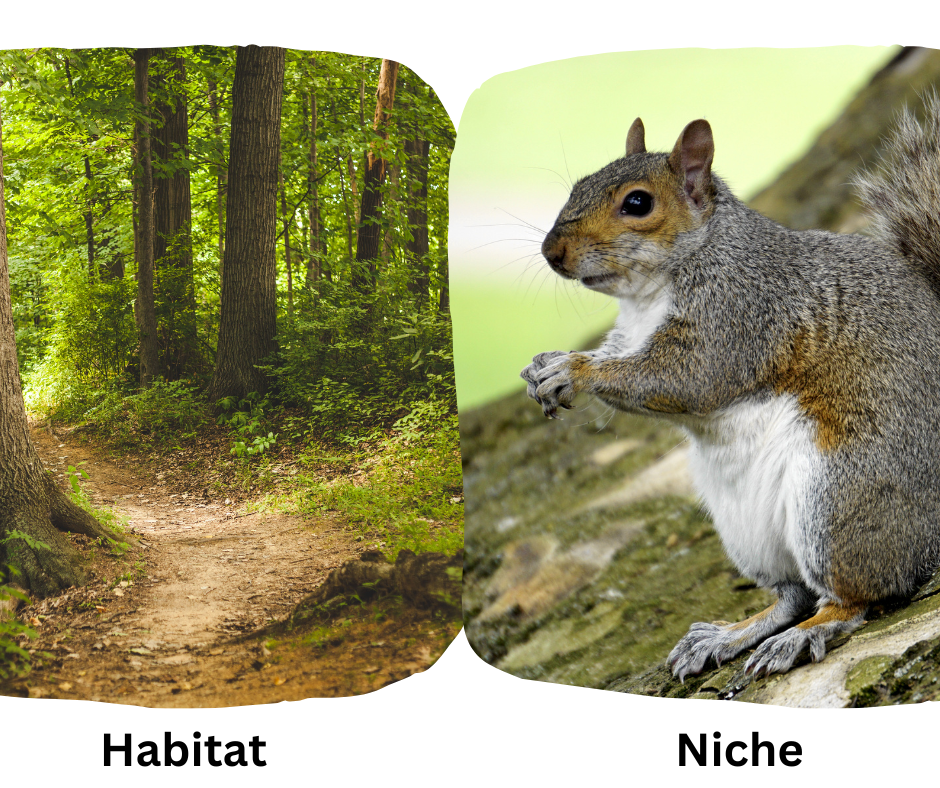
At first glance, a habitat and a niche might seem similar, but they’re distinct concepts. A habitat is like an address; it’s where an organism lives. A niche, on the other hand, is more like a creature’s job description. It encompasses everything about a species: its preferred food, where it gets its water, and even how it fits into the food chain.
Types of Ecological Niches
There are several types of ecological niches:
- Fundamental Niche: This is the full range of environmental conditions where a species can potentially survive and reproduce.
- Realized Niche: In reality, species often share resources and space with others. The realized niche is the actual portion of the fundamental niche a species occupies due to competition and interactions with other species.
- Specialist Niche: Some species have highly specialized roles, such as the giant panda, which primarily eats bamboo. Their niches are narrow and specific.
- Generalist Niche: Generalists, like raccoons, have broader niches. They can adapt to various conditions and diets, making them more versatile.
Components of an Ecological Niche:
Habitat:
The habitat is the physical environment where an organism lives. It includes the specific geographical location, climate, and biotic factors that provide the necessary resources and conditions for the organism’s survival. For example, a desert lizard’s niche is tied to its arid habitat, while a deep-sea anglerfish’s niche is determined by the dark depths of the ocean.
Food and Resources:
The food and resources an organism relies on are integral components of its niche. Different species have evolved to exploit various food sources and utilize specific resources based on their physiological and behavioral adaptations. This could range from herbivores consuming plants, carnivores hunting prey, or decomposers breaking down organic matter.
Reproductive Strategy:
Reproductive strategies are a fundamental aspect of an organism’s niche. It involves factors such as breeding behaviors, reproductive timing, and the number of offspring produced. Some organisms have high reproductive rates, while others have fewer offspring but invest more time and energy into their care. These strategies ensure the survival and continuation of the species within their respective niches.
Interactions with Other Species:
The relationships an organism has with other species, both cooperative and competitive, play a crucial role in defining its niche. This includes interactions such as predation, mutualism, competition for resources, and symbiotic relationships. These interactions shape the dynamics of the ecosystem and influence the distribution and abundance of organisms.
Importance of Understanding Ecological Niches:
Biodiversity Conservation:
Understanding ecological niches is essential for the conservation of biodiversity. Each niche represents a specialized adaptation that contributes to the overall ecological balance. By comprehending the unique requirements of different species, conservation efforts can be tailored to preserve specific niches and protect vulnerable organisms.
Ecosystem Stability:
Ecological niches contribute to the stability and resilience of ecosystems. When each organism occupies a specific niche, it reduces competition for resources and promotes coexistence. The loss of a niche due to species extinction or disruption can have cascading effects on the entire ecosystem, potentially leading to imbalances and ecosystem degradation.
Species Interactions:
Studying ecological niches helps us understand the intricate web of interactions between species. By examining how organisms rely on each other for resources, prey-predator relationships, and mutual dependencies, we gain insights into the complex dynamics that shape ecosystems. This knowledge can aid in predicting and managing the impacts of environmental changes and human activities.
Take Away Points:
Ecological niches are the puzzle pieces that fit together to create a thriving and diverse ecosystem. Each organism has its own specialized role and adaptations that enable its survival and contribute to the intricate balance of nature. By understanding and valuing ecological niches, we can appreciate the complexity of life on Earth and work towards preserving and restoring these unique roles for a sustainable future.
multiple-choice questions (MCQs) about ecological niches
- What is an ecological niche?
- a. The address of a species’ habitat
- b. A species’ unique role within its ecosystem
- c. The temperature range a species can tolerate
- d. The size of a species’ population
- How does a species’ fundamental niche differ from its realized niche?
- a. The fundamental niche is broader than the realized niche.
- b. The fundamental niche is where a species actually lives.
- c. The realized niche includes interactions with other species.
- d. The realized niche is always larger than the fundamental niche.
- Which of the following is an example of a specialist niche?
- a. A raccoon that can eat a variety of foods
- b. A panda that primarily consumes bamboo
- c. An eagle that hunts different types of prey
- d. A squirrel that lives in various habitats
- What role does competition play in shaping ecological niches?
- a. Competition has no impact on ecological niches.
- b. Competition can lead to species evolving the same niche.
- c. Competition can drive species to adapt and occupy different niches.
- d. Competition only affects the habitat, not the niche.
- Why is the conservation of ecological niches essential for biodiversity?
- a. Ecological niches have no impact on biodiversity.
- b. Conservation of niches ensures uniformity in ecosystems.
- c. It reduces competition among species.
- d. It allows different species to coexist and contributes to biodiversity.
- Which type of niche is more adaptable and flexible in different environments?
- a. Fundamental niche
- b. Realized niche
- c. Specialist niche
- d. Generalist niche
- How can human activities, like deforestation, impact ecological niches?
- a. They have no effect on ecological niches.
- b. They create more niches for species to thrive.
- c. They disrupt and endanger ecological niches.
- d. They help species adapt to new niches.
- What is the primary reason for species shifting their ecological niches over time?
- a. Lack of food resources
- b. Climate change and environmental shifts
- c. Predatory pressures
- d. Genetic mutations
- Why should we protect ecological niches?
- a. To limit biodiversity
- b. To reduce species interactions
- c. To maintain the balance of ecosystems and preserve biodiversity
- d. To encourage competition among species
- Which of the following is an example of a realized niche?
- a. A bear’s preference for berries in a forest
- b. A lion’s ability to adapt to different prey
- c. A squirrel’s nesting behavior in trees
- d. A plant’s photosynthesis process
Answers:
- b. A species’ unique role within its ecosystem
- c. The realized niche includes interactions with other species.
- b. A panda that primarily consumes bamboo
- c. Competition can drive species to adapt and occupy different niches.
- d. It allows different species to coexist and contributes to biodiversity.
- d. Generalist niche
- c. They disrupt and endanger ecological niches.
- b. Climate change and environmental shifts
- c. To maintain the balance of ecosystems and preserve biodiversity
- a. A bear’s preference for berries in a forest
You May Also Like

 Decoding Biosphere