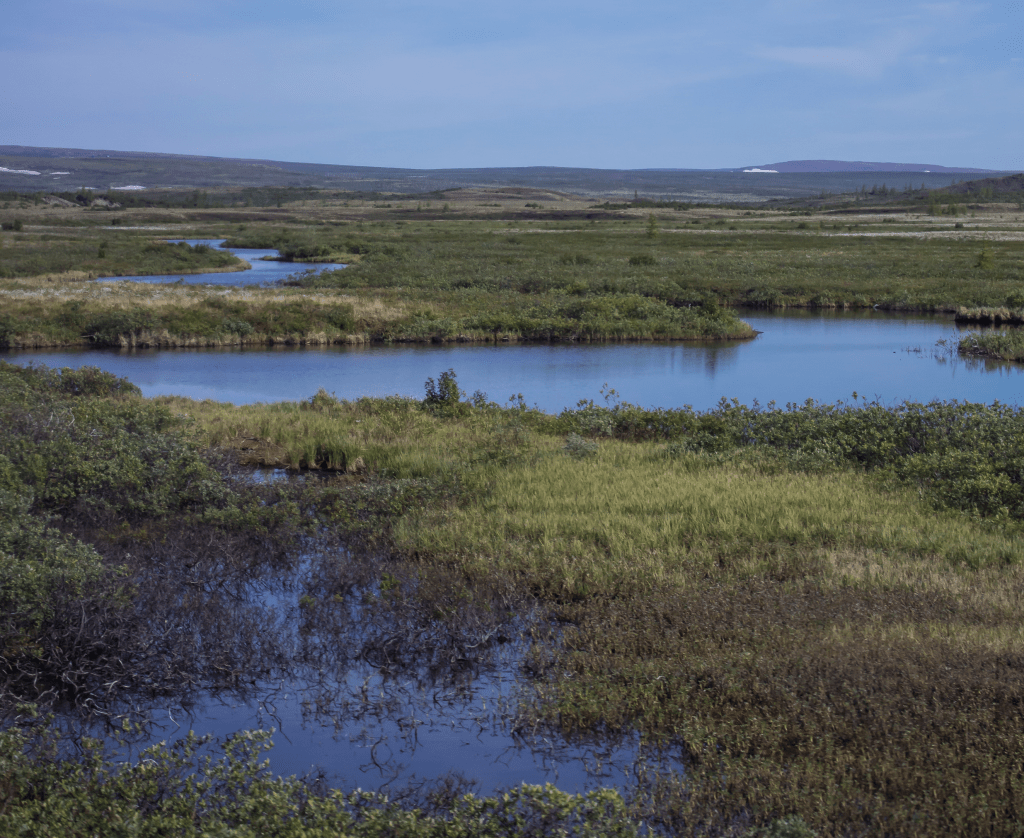
The marshy tundra is a unique ecosystem in the polar regions. It shows how nature can adapt and survive in challenging conditions. It has wet ground, few plants, and frozen soil, creating a fragile but resilient environment. Marshy tundra ecosystems may seem far away and not very welcoming, but they are actually very important locally and globally. These ecosystems are vital homes for many different plants and animals. Some of these species have developed special ways to survive in the tough tundra environment. Additionally, marshy tundra is crucial for controlling the Earth’s climate, as it stores carbon and affects local weather patterns.
The marshy tundra is different from other land ecosystems because of the permafrost, which is permanently frozen soil. This affects the landscape and how water moves in the area. It leads to waterlogged conditions in summer, which help specialized plants grow.
Location and Distribution
Marshy tundra ecosystems are primarily found in regions encircling the Arctic and Antarctic Circles, spanning vast expanses of the northern and southern polar regions. Within these latitudes, marshy tundra landscapes emerge in areas characterized by low temperatures, permafrost, and ample moisture from melting snow and ice during the brief summer season.
Geographically, marshy tundra habitats can be observed in several key regions, including northern Canada, Alaska, Greenland, Scandinavia, and parts of Siberia in the Northern Hemisphere. In the Southern Hemisphere, marshy tundra ecosystems can be found in the Antarctic Peninsula, as well as in subantarctic islands such as South Georgia and the South Sandwich Islands.
The distribution of marshy tundra ecosystems is influenced by a myriad of factors, each contributing to the unique characteristics and boundaries of these environments. Temperature plays a pivotal role, with the presence of permafrost acting as a defining feature of marshy tundra landscapes. The extent and duration of permafrost influence the availability of water and nutrients in the soil, shaping the composition and distribution of plant and animal communities.
Precipitation patterns also play a significant role in determining the distribution of marshy tundra ecosystems. Areas with higher levels of precipitation, whether in the form of snow or rainfall, tend to support more extensive marshy tundra habitats due to increased water availability. Conversely, regions with lower precipitation levels may feature drier tundra ecosystems dominated by shrubs and grasses.
Climate and Environmental Conditions
The climate in marshy tundra regions is characterized by long, cold winters and short, cool summers. During the winter months, temperatures plummet well below freezing, with average lows often reaching -30°C (-22°F) or lower. The landscape becomes blanketed in snow and ice, creating a frozen and desolate environment where few organisms can survive.
Seasonal variations in marshy tundra regions are pronounced, with stark differences between winter and summer temperatures. In the summer, temperatures rise, allowing the top layer of permafrost to thaw temporarily. This thawing creates waterlogged conditions, as melting snow and ice saturate the soil, creating pools and wetlands across the landscape.
Temperature ranges in marshy tundra regions can vary significantly throughout the year. In the summer, temperatures may reach highs of only 10°C to 15°C (50°F to 59°F), providing a brief window of warmth for plant growth and biological activity. However, even during the summer months, temperatures can fluctuate widely, with chilly nights and sudden weather changes not uncommon.
Biodiversity and Wildlife
Overview of Plant Species
Plant life in marshy tundra regions is characterized by low-growing vegetation adapted to the waterlogged soils and short growing seasons. Common plant species found in marshy tundra ecosystems include mosses, lichens, sedges, grasses, and small shrubs. These plants have evolved specialized adaptations to survive and thrive in the harsh tundra environment.
Mosses and lichens are among the most abundant plant species in marshy tundra regions. These small, non-vascular plants play a crucial role in stabilizing the soil, capturing moisture, and providing habitat for a variety of microorganisms and invertebrates. Mosses and lichens can tolerate extreme cold and waterlogged conditions, making them well-suited to the tundra environment.
Sedges and grasses are also common in marshy tundra ecosystems, often forming dense mats across the landscape. These plants have fibrous roots that help anchor them in the waterlogged soil, allowing them to withstand strong winds and fluctuations in water levels. Additionally, sedges and grasses are important food sources for many herbivorous animals that inhabit the tundra.
Small shrubs such as willows and birches can also be found in marshy tundra regions, particularly in areas where the permafrost is less extensive. These woody plants provide shelter and food for a variety of wildlife species and contribute to the overall biodiversity of the ecosystem.
Also Read:
Adaptations of Plants to Waterlogged Conditions and Permafrost
Plants in marshy tundra ecosystems have evolved a range of adaptations to cope with the challenging environmental conditions. Many species have shallow root systems that spread horizontally near the surface of the soil, allowing them to access nutrients and water in the waterlogged substrate.
Some plants produce specialized structures called pneumatophores or “air roots” that protrude above the waterlogged soil, facilitating gas exchange with the atmosphere. These structures help prevent suffocation of roots in oxygen-deprived conditions and allow plants to survive in waterlogged environments.
Permafrost also influences the distribution and growth of plant species in marshy tundra ecosystems. Plants must contend with the shallow depth of the active layer above the permafrost, which thaws seasonally and limits root penetration. Some species have adapted by growing close to the surface or developing shallow root systems that can quickly access nutrients and water during the short growing season.
Description of Animal Species
Marshy tundra ecosystems support a variety of animal species, including birds, mammals, insects, and fish. Many of these species are migratory, traveling long distances to breed and feed in the tundra during the short summer months.
Birds such as waterfowl, shorebirds, and songbirds are common inhabitants of marshy tundra regions. These birds rely on the wetlands and open water for nesting, feeding, and raising their young. Species such as ducks, geese, and swans migrate to the tundra to breed in the summer, taking advantage of the abundant food resources and relatively low predation pressure.
Mammals such as caribou, muskoxen, and Arctic foxes are also found in marshy tundra ecosystems. These animals have adapted to the cold climate and sparse vegetation, relying on their thick fur coats and fat reserves to survive the harsh winters. In addition to larger mammals, marshy tundra habitats are home to a variety of small mammals, including lemmings, voles, and shrews, which play important roles as prey for carnivorous species.
Insects such as mosquitoes, black flies, and midges are abundant in marshy tundra regions, particularly during the summer months. These insects serve as important food sources for birds, fish, and other insectivorous animals, contributing to the overall biodiversity of the ecosystem.
Fish species such as Arctic char and salmon inhabit the rivers, lakes, and ponds that dot the marshy tundra landscape. These fish migrate from the ocean to spawn in freshwater habitats, taking advantage of the nutrient-rich waters and abundant food resources available in the tundra ecosystem.
Ecosystem Functions and Services
Carbon Sequestration and Storage
One of the most significant functions of marshy tundra ecosystems is their role in carbon sequestration and storage. The waterlogged soils and cold temperatures of the tundra environment create conditions that slow down the decomposition of organic matter, allowing carbon to accumulate in the soil over time. This accumulation of carbon takes the form of peat, a dense layer of partially decomposed plant material that can accumulate over centuries or even millennia.
Peat acts as a carbon sink, trapping carbon dioxide from the atmosphere and storing it in the soil. The slow decomposition rate in marshy tundra ecosystems prevents carbon from being released back into the atmosphere, making these environments important reservoirs for carbon storage.
Contribution to the Global Carbon Cycle
The marshy tundra plays a crucial role in the global carbon cycle, helping to regulate the concentration of carbon dioxide in the atmosphere. As plants grow and photosynthesize in the tundra, they absorb carbon dioxide from the atmosphere and convert it into organic matter through photosynthesis. This organic matter is then incorporated into the soil, where it becomes part of the carbon storage pool.
In addition to carbon storage, marshy tundra ecosystems also influence the exchange of greenhouse gases between the soil and the atmosphere. Permafrost in the tundra acts as a barrier, preventing the release of methane—a potent greenhouse gas—from microbial decomposition processes in the soil. However, as temperatures rise and permafrost thaws, there is a risk that stored carbon and methane could be released back into the atmosphere, contributing to further climate change.
The marshy tundra is a unique and valuable ecosystem that supports a diverse array of plant and animal life. Despite its harsh conditions, this environment plays a vital role in the global climate system and provides habitat for numerous species.
You May Also Like

 Decoding Biosphere