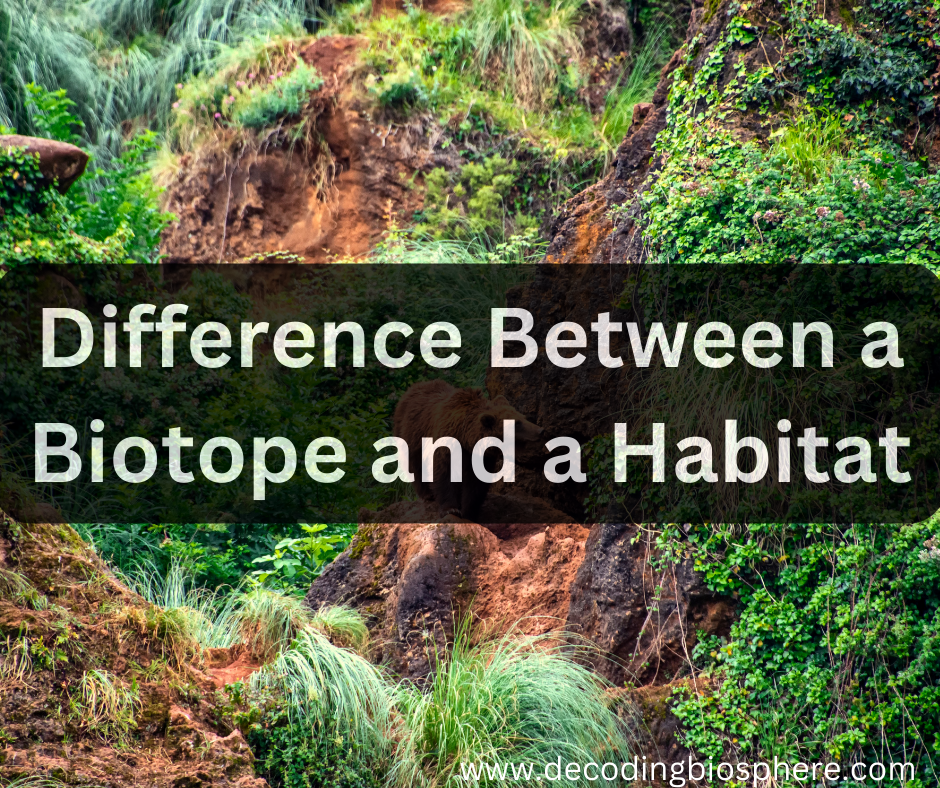
When it comes to understanding the ecosystems and the relationship between organisms and their environment, two key terms often come into play: biotope and habitat. While these terms are related to the ecological niche of living organisms, they have distinct meanings and implications. In this article, we will explore the difference between a biotope and a habitat to understand the fundamental concepts.
I. Defining Biotope:
A. What are Biotopes?
A biotope refers to a specific, homogeneous, and naturally occurring environment where a particular community of organisms thrives. It encompasses the physical and climatic conditions, such as soil type, temperature, and moisture levels, which dictate the types of species that can inhabit the area. In essence, a biotope is a well-defined space with consistent environmental features that shape the ecological dynamics within its boundaries.
B. Characteristics of a Biotope:
- Physical Features: The defining aspect of a biotope is its physical attributes, including abiotic factors like geology, climate, and topography. These features create a distinctive setting that influences the types of organisms that can inhabit the space.
- Homogeneity: Biotopes are characterized by a certain uniformity in environmental conditions, fostering the establishment of specific plant and animal communities adapted to those conditions.
- Stable Environment: A biotope typically maintains a relative stability in its environmental parameters over time, providing a consistent setting for its resident species.
II. Defining Habitat:
A. What are Habitats?
While biotopes emphasize the physical and climatic characteristics of an environment, habitats extend beyond, encapsulating both living and non-living components. A habitat is the natural home or environment of an organism, encompassing not only the physical conditions but also the interactions between organisms and the resources available to them.
B. Characteristics of a Habitat:
- Living Components: Habitats include the entire spectrum of living beings, such as plants, animals, fungi, and microorganisms. The interactions among these organisms define the complex web of life within a habitat.
- Ecological Niche: Habitats consider the ecological roles of organisms, including their feeding habits, reproductive strategies, and interactions with other species. This holistic perspective emphasizes the interdependence of different organisms within a habitat.
- Dynamic Nature: Habitats are dynamic and subject to change over time due to natural processes, human activities, or climatic shifts. This dynamism allows for adaptations and ecological succession within the habitat.
III. Bridging the Gap: Key Differences:
A. Conceptual Foundation:
The fundamental difference between a biotope and a habitat lies in their conceptual foundation. A biotope focuses on the physical and climatic aspects of an environment, emphasizing the abiotic factors that define a specific space. In contrast, a habitat integrates both abiotic and biotic components, providing a more comprehensive view of an organism’s living space.
B. Inclusivity:
While a biotope is relatively exclusive, emphasizing a specific set of physical conditions, a habitat is inclusive, considering the entire spectrum of living and non-living elements that contribute to an organism’s environment. Habitats encompass the ecological relationships and community dynamics within a given space.
C. Adaptability:
Biotopes are characterized by stability and uniformity, whereas habitats exhibit adaptability and change over time. Habitats allow for the coexistence of different species, with the ability to evolve and adjust to shifting environmental conditions.
IV. Real-world Examples:
A. Biotope Examples:
- A high-altitude alpine meadow with specific soil composition, temperature, and precipitation patterns.
- An intertidal zone along a rocky coastline, characterized by consistent tidal fluctuations and nutrient availability.
B. Habitat Examples:
- A tropical rainforest habitat, encompassing a myriad of plant and animal species in a complex web of interactions.
- A freshwater pond habitat, teeming with diverse aquatic life and influenced by seasonal changes in temperature and nutrient availability.
In summary, while related to the ecological niche of organisms, biotopes and habitats have distinct meanings. A biotope refers to the physical and geographical area defined by its abiotic features, while a habitat refers to the living environment that supports a particular species. Biotopes provide the backdrop of environmental conditions, while habitats focus on the interactions between organisms and their surroundings.
Here are some multiple-choice questions (MCQs) to test your knowledge on the difference between a biotope and a habitat:
- What does a biotope refer to in ecology?
- a) The living environment where a species naturally occurs
- b) The physical and geographical area with uniform environmental conditions
- c) The interactions between organisms and their surroundings
- d) The specific food resources available to a particular species
- Which of the following is an example of a biotope?
- a) A coral reef
- b) A bird’s nest
- c) A bear’s den
- d) A flowering plant
- What does a habitat encompass in ecology?
- a) The physical and geographical area with uniform environmental conditions
- b) The interactions between organisms and their surroundings
- c) The specific food resources available to a particular species
- d) The living environment where a species naturally occurs
- Which term focuses more on the abiotic aspects of an ecosystem?
- a) Biotope
- b) Habitat
- Which term focuses more on the interactions between organisms and their environment?
- a) Biotope
- b) Habitat
- True or False: A habitat can exist within multiple biotopes.
- a) True
- b) False
- Which of the following is an example of a habitat?
- a) A mountain range
- b) A bee’s hive
- c) A specific tree species
- d) A river ecosystem
- True or False: Biotopes and habitats are synonymous terms and can be used interchangeably.
- a) True
- b) False
- What information can the study of biotopes and habitats provide to ecologists?
- a) Distribution patterns of species
- b) Adaptations of organisms to different environments c) Overall functioning of ecosystems d) All of the above
- What is the importance of understanding the difference between biotopes and habitats?
- a) To better conserve and manage ecosystems
- b) To classify organisms into different species
- c) To study the genetic diversity of populations
- d) To determine the age of fossils
Answers:
- b) The physical and geographical area with uniform environmental conditions
- a) A coral reef
- d) The living environment where a species naturally occurs
- a) Biotope
- b) Habitat
- a) True
- d) A river ecosystem
- b) False
- d) All of the above
- a) To better conserve and manage ecosystems
You May Also like:
- How Plastic Pollution Is Choking Our Oceans And 12 Real Ways You Can Fix It

- 2025 Outlook: Top Global Trends Shaping the Future of Tech, Lifestyle, Sustainability and Culture

- 10 Eco-Friendly Gift Ideas for People Who Care About the Planet

- Audiobooks vs E-books: Which Is More Eco-Friendly?
- Why Audiobooks Are the Most Sustainable Way to Learn


 Decoding Biosphere