Have you ever wondered about the elements that make up our world? One intriguing element that deserves attention is caesium. While it might not be a household name, caesium plays a significant role in science and technology. In this article, we will know more about caesium and explore its unique properties and applications.
What is Caesium?
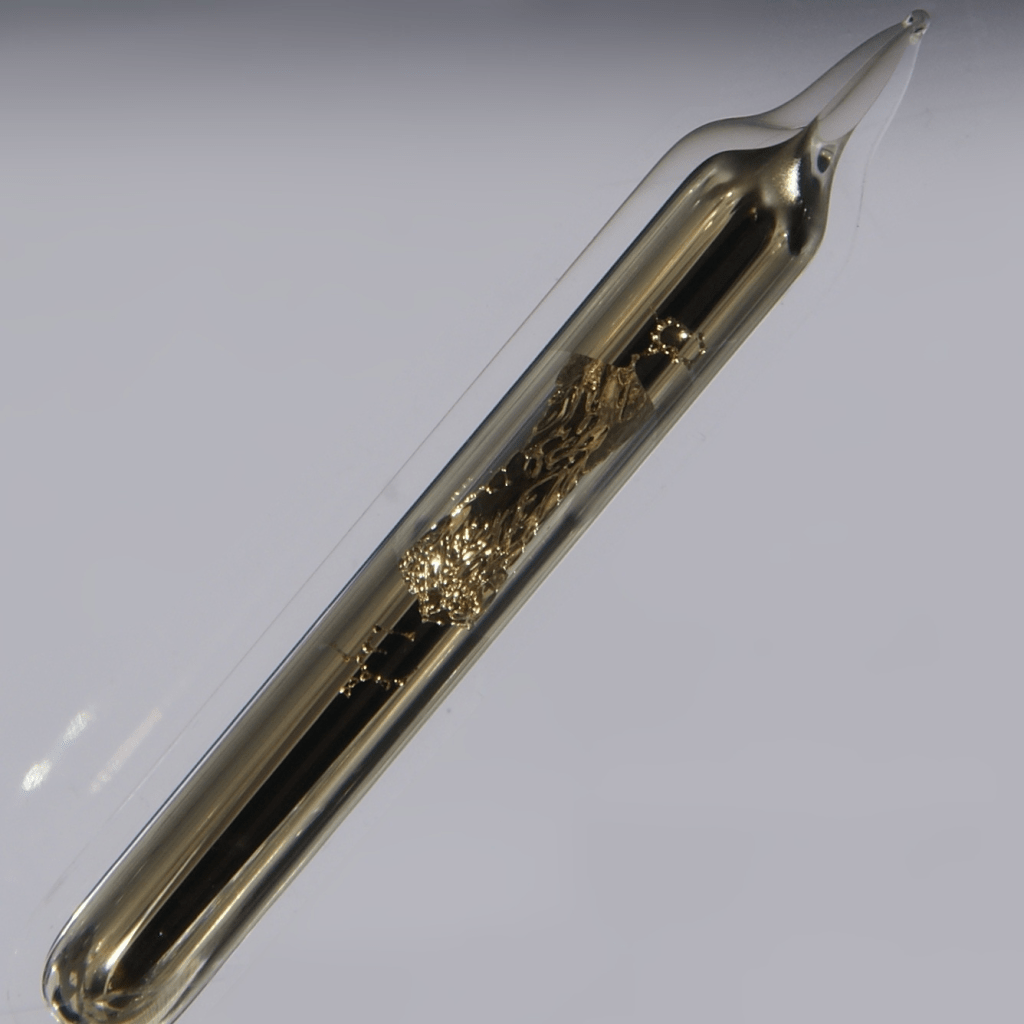
Caesium (also spelled cesium) is a chemical element represented by the symbol Cs on the periodic table. It is an alkali metal, belonging to Group 1, which includes elements like lithium, sodium, and potassium. Caesium is a silvery-white metal that is highly reactive and has a low melting point.
Remarkable Properties:
- Extreme Reactivity: Caesium is one of the most reactive elements. It readily reacts with water, igniting spontaneously and producing hydrogen gas. Due to its high reactivity, caesium is stored and handled with caution in laboratories.
- Soft and Malleable: Caesium is a soft metal that can be easily cut with a knife. It is also malleable, meaning it can be shaped or flattened without breaking. However, due to its reactivity with air and moisture, caesium is typically stored in sealed containers.
- Unusual Melting Point: Caesium possesses an unusually low melting point for a metal. At just above room temperature (28.5 degrees Celsius or 83.3 degrees Fahrenheit), caesium can melt into a liquid state. This low melting point contributes to its potential applications in certain technologies.
Applications and Uses:
- Atomic Clocks: Caesium plays a crucial role in atomic clocks, which are extremely accurate timekeeping devices. Atomic clocks measure time by counting the vibrations of caesium atoms. The International System of Units (SI) officially defines one second as 9,192,631,770 vibrations of a caesium-133 atom.
- Ion Thrusters: Caesium is used in advanced propulsion systems, particularly in ion thrusters used in spacecraft. These ion thrusters generate thrust by electrically charging caesium ions and expelling them at high speeds. This technology allows for precise and efficient maneuvering in space missions.
- Photocells: Certain types of photocells, which are devices that convert light into electricity, contain caesium. When caesium is exposed to light, it emits electrons that can be harnessed for electrical energy. This property makes caesium useful in some photoelectric cells and other light-sensing applications.
- Research and Spectroscopy: Caesium is utilized in scientific research and spectroscopy studies. Spectroscopy involves analyzing the interaction of light with matter to gain insights into its composition and properties. Caesium is used as a reference standard for calibrating and verifying the accuracy of spectroscopic instruments.
Some Frequently asked questions about Caesium
Is Caesium Radioactive?
Yes, caesium can be radioactive. The most common naturally occurring isotope of caesium, caesium-133, is stable and non-radioactive. However, other isotopes, such as caesium-137, are radioactive and can be produced during nuclear reactions or as a result of human activities.
Is Caesium a Metal?
Yes, caesium is a metal. It belongs to the group of alkali metals, which are known for their metallic properties such as luster, electrical conductivity, and malleability.
Is Caesium Liquid at Room Temperature?
No, caesium is not liquid at room temperature. It has a relatively low melting point of 28.5 degrees Celsius (83.3 degrees Fahrenheit), meaning it would melt into a liquid state slightly above room temperature.
Is Caesium the Most Reactive Metal?
Caesium is indeed one of the most reactive metals. It reacts vigorously with water, igniting spontaneously and releasing hydrogen gas. Its high reactivity requires special precautions when handling and storing it.
Is Caesium Reactive?
Yes, caesium is highly reactive. It readily reacts with many elements, including air, water, and halogens. Due to its reactivity, it is stored and handled with caution in controlled environments.
Is Caesium a Metalloid?
No, caesium is not considered a metalloid. It is classified as a metal due to its metallic properties, such as its ability to conduct electricity and form positive ions.
Is Caesium Dangerous or Harmful to Humans?
Caesium, in its natural state and low concentrations, is generally not harmful to humans. However, exposure to high levels of radioactive caesium isotopes, such as caesium-137, can be hazardous to human health. Proper safety measures are necessary when handling radioactive materials.
Is Caesium Poisonous?
Caesium itself is not inherently poisonous. However, like many alkali metals, caesium can react violently with water, releasing flammable hydrogen gas. The resulting explosions can be dangerous. Caution must be exercised when working with caesium to prevent accidents.
You May Also Like
- How Plastic Pollution Is Choking Our Oceans And 12 Real Ways You Can Fix It

- 2025 Outlook: Top Global Trends Shaping the Future of Tech, Lifestyle, Sustainability and Culture

- 10 Eco-Friendly Gift Ideas for People Who Care About the Planet

- Audiobooks vs E-books: Which Is More Eco-Friendly?

- Why Audiobooks Are the Most Sustainable Way to Learn


 Decoding Biosphere