
Our planet is a complex tapestry of ecosystems, each uniquely shaped by its geographical features, climate, and inhabitants. One of the fundamental concepts in ecology is the biome, a large-scale ecological community characterized by distinct climate, vegetation, and animal life. From lush rainforests teeming with vibrant wildlife to sprawling deserts with their own unique adaptations, biomes are like the different chapters in a book that tell the story of our planet’s incredible biodiversity. Understanding what a biome is and recognizing its various types is essential to grasp the incredible diversity of life on Earth. In this article, we will look into the concept of biomes and explore their different categories.
What Is A Biome?
A biome can be defined as a vast ecological community characterized by distinct climatic conditions, specific types of vegetation, and unique assemblages of wildlife. These diverse and expansive regions encompass a range of ecosystems shaped by environmental factors such as temperature, precipitation, soil type, and altitude. Biomes serve as large-scale classifications that help us understand how different parts of the world share similar patterns of climate and life. The defining elements of biomes—climate, vegetation, and wildlife—interact intricately to create the varied landscapes and ecosystems that define our planet. By categorizing Earth’s ecosystems into biomes, scientists can better study and analyze the interplay between living organisms and their surrounding environments on a global scale.
Importance of Biomes
The importance of biomes lies in their profound impact on sustaining Earth’s ecological balance and supporting life in all its forms. Biomes play a vital role in maintaining biodiversity, harboring a vast array of plant and animal species that have evolved to thrive within specific climatic and environmental conditions. Beyond their role as natural habitats, biomes provide essential ecosystem services such as regulating climate patterns, conserving water resources, and mitigating carbon emissions. These intricate ecosystems contribute to carbon sequestration, influencing weather patterns, and supporting agriculture, medicine, and cultural practices.
Types of Biomes
Tropical Rainforest Biome:
Tropical rainforests are found near the equator and are known for their high levels of biodiversity. They receive heavy rainfall throughout the year and have consistently warm temperatures.
Characteristics: Dense vegetation with tall trees forming a canopy, understory plants, epiphytes (plants that grow on other plants), and a rich variety of animal species including insects, mammals, birds, and amphibians.
Examples: The Amazon Rainforest in South America is the largest tropical rainforest, while the Congo Rainforest in Africa is also a significant example.
Desert Biome:
Deserts are characterized by extremely low precipitation levels and can be hot or cold. They often have unique adaptations among plants and animals to conserve water.
Characteristics: Sparse vegetation, adapted plants like cacti and succulents, nocturnal animals, and specialized behaviors for coping with extreme temperatures.
Examples: The Sahara Desert in Africa and the Sonoran Desert in North America are iconic desert biomes.
Grassland Biome:
Grasslands have varying precipitation levels and are divided into temperate and tropical grasslands. They are dominated by grasses and often have a mix of herbivores and predators.
Characteristics: Grasses, few trees, grazing animals like bison and antelope, and carnivores like lions and cheetahs.
Examples: The North American Great Plains and the African Serengeti are notable grassland biomes.
Temperate Forest Biome:
Temperate forests experience four distinct seasons and receive moderate rainfall. They are known for their deciduous trees that shed leaves in the fall.
Characteristics: Deciduous trees like oak, maple, and beech, animals that hibernate or migrate, diverse bird species, and mammals like deer and squirrels.
Examples: The Eastern Deciduous Forest in North America and the temperate forests of Europe fall under this category.
Taiga Biome:
Taigas, also known as boreal forests, are found in cold climates with long winters. They are dominated by coniferous trees and are often characterized by snow-covered landscapes.
Characteristics: Coniferous trees like pine, fir, and spruce, cold-adapted animals like moose and reindeer, and migratory bird species.
Examples: The Canadian Boreal Forest and the Siberian Taiga are prominent taiga biomes.
Tundra Biome:
Tundras are cold and treeless regions with permafrost, making it difficult for large plants to grow. The growing season is short due to the harsh climate.
Characteristics: Low-growing vegetation like mosses and lichens, animals with thick fur or feathers, migratory birds, and adaptations for energy conservation.
Examples: The Arctic Tundra in the Northern Hemisphere and the Alpine Tundra on high mountain ranges are representative tundra biomes.
Aquatic Biomes:
Aquatic biomes include freshwater and marine ecosystems. They are categorized based on water salinity, depth, and flow rates.
Characteristics: Oceans are the largest biome and are divided into different zones like the intertidal zone and the abyssal zone. Coral reefs, lakes, rivers, and wetlands are other examples of aquatic biomes.
Examples: The Great Barrier Reef in Australia, the Amazon River in South America, and the Great Lakes in North America are prominent aquatic biomes.
Chaparral Biome:
Chaparrals are characterized by mild, rainy winters and hot, dry summers. They are often prone to wildfires due to the dry conditions.
Characteristics: Drought-resistant shrubs, scrubby vegetation, animals adapted to periodic fires, and adaptations to conserve water.
Examples: The Mediterranean Basin, parts of California, and regions around the Mediterranean Sea exhibit chaparral biome characteristics.
Tropical Savanna Biome:
Tropical savannas have distinct wet and dry seasons, with grasslands and scattered trees. They often occur in areas with seasonal rainfall patterns.
Characteristics: Grasses, acacia trees, large herbivores like elephants and giraffes, and predators like lions and hyenas.
Examples: The African Savannas, including the Serengeti and the Masai Mara, are classic examples of tropical savanna biomes.
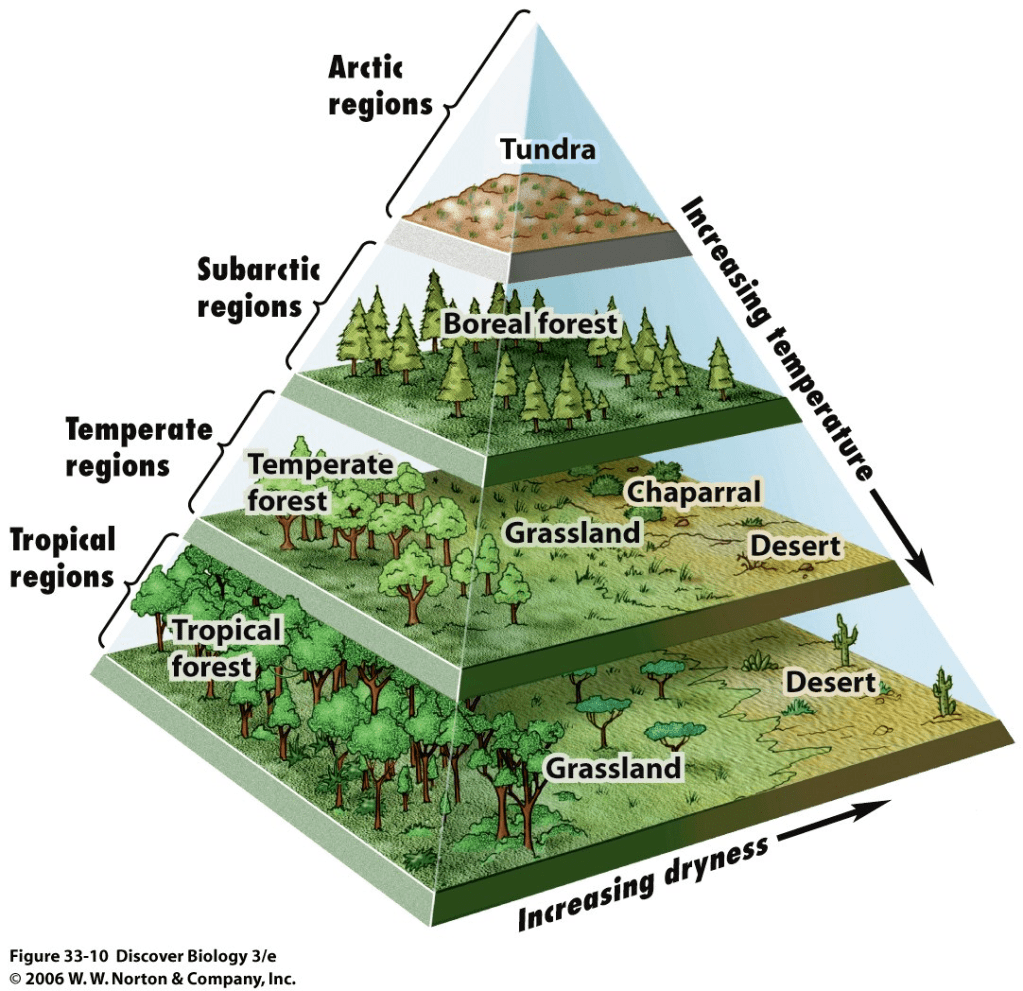
Each biome showcases the remarkable ways in which life adapts to its environment, creating diverse and interconnected ecosystems.
Biomes are essential components of Earth’s intricate ecological web. From the lush tropical rainforests to the frozen expanses of the tundra, each biome houses unique flora and fauna that have adapted to thrive in their respective environments.
You May Also Like

 Decoding Biosphere