In this natural world, survival often depends on adaptations and strategies that allow organisms to thrive while avoiding predation. One such fascinating strategy is Batesian mimicry, named after the renowned naturalist Henry Walter Bates. This phenomenon involves certain harmless or palatable species evolving to imitate the warning signals of harmful or unpalatable species, granting them protection from potential predators.
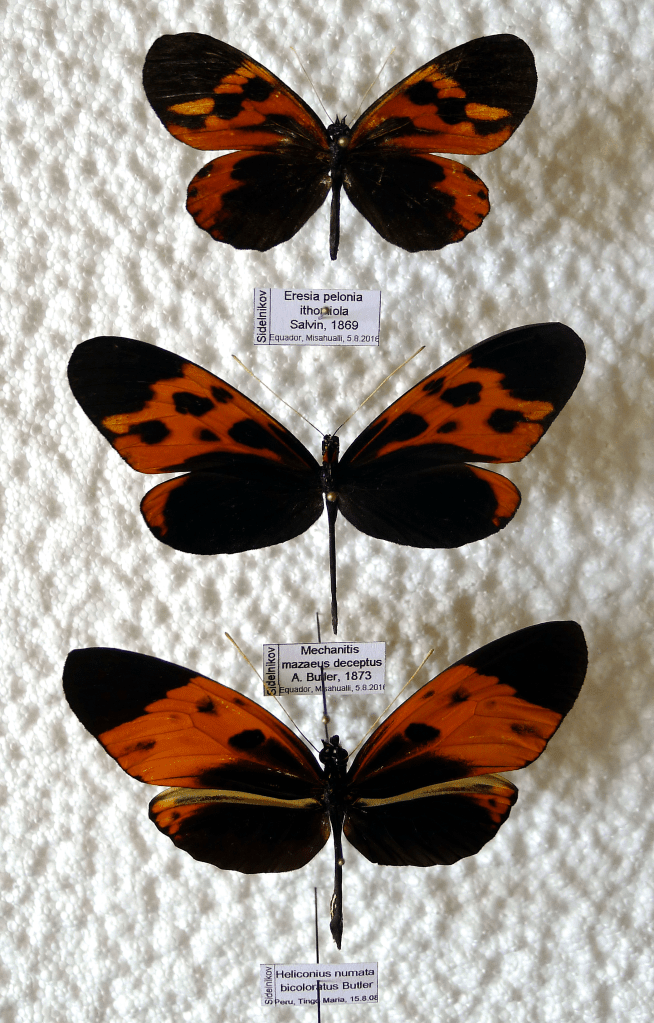
The Basics of Batesian Mimicry:
Batesian mimicry revolves around the concept of deception. In this process, a harmless or edible species, referred to as the mimic, evolves to resemble the appearance, behavior, or other conspicuous traits of a harmful or unpalatable species, known as the model. By imitating the model, the mimic gains a survival advantage by tricking potential predators into associating it with danger or toxicity. This strategy ultimately provides the mimic with protection from predation.
The Model-Mimic Relationship:
The success of Batesian mimicry depends on the existence of a pre-existing association between the model and a negative experience for predators. This connection is typically established through the model’s distinctive warning signals, such as bright colors, bold patterns, or specific behaviors. These signals act as a visual or sensory cue to predators, indicating potential danger, toxicity, or an unpleasant taste.
The mimic, through natural selection, develops traits that closely resemble those of the model, exploiting the predator’s learned aversion or avoidance response. By mimicking the model’s warning signals, the mimic effectively gains a “free ride” in terms of protection without incurring the costs associated with harmful defenses, such as venom or toxins.
Examples in the Natural World:
Batesian mimicry can be observed in various ecosystems and among a range of organisms. One famous example involves the viceroy butterfly (Limenitis archippus) and the monarch butterfly (Danaus plexippus). Monarch butterflies are known for their bright orange coloration and unpalatability due to toxic compounds obtained from their food source, milkweed plants. The viceroy butterfly, however, is edible and lacks the toxic defenses of the monarch. Remarkably, the viceroy has evolved to closely resemble the monarch’s coloration, benefiting from predators associating it with the unpalatability of the model.
Another notable example is the harmless scarlet kingsnake (Lampropeltis elapsoides), which mimics the venomous coral snake (Micrurus fulvius). Both snakes exhibit similar color patterns, but the harmless kingsnake lacks the potent venom possessed by the coral snake. The mimicry allows the kingsnake to deter potential predators that have learned to avoid the toxic coral snake.
Significance and Evolutionary Dynamics:
Batesian mimicry has significant implications for the survival and biodiversity of species. It acts as a driving force behind the evolution of diverse forms, colors, and patterns in nature. The process also serves as an evolutionary arms race, as predators that can discern the mimicry adaptation pose a threat to the mimic’s survival. Over time, this dynamic can lead to coevolution, where the mimic and model continually evolve in response to each other’s adaptations.
Batesian mimicry not only provides protection to the mimic but also has ecological implications. It influences predator-prey dynamics, shaping the behavior and foraging patterns of predators. The phenomenon also highlights the power of learning and adaptation in the natural world, as predators adjust their behavior based on previous experiences and encounters with harmful models.
In conclusion, Batesian mimicry showcases nature’s ingenuity and the remarkable strategies employed by organisms to ensure their survival. By adopting the appearance and signals of harmful or unpalatable species, mimics gain a deceptive advantage, deterring potential predators and thriving in their environment. The complex interactions between models and mimics demonstrate the intricate balance between survival, adaptation, and the perpetual dance of evolution in the diverse tapestry of life.
You May Also Like
- How Plastic Pollution Is Choking Our Oceans And 12 Real Ways You Can Fix It

- 2025 Outlook: Top Global Trends Shaping the Future of Tech, Lifestyle, Sustainability and Culture

- 10 Eco-Friendly Gift Ideas for People Who Care About the Planet

- Audiobooks vs E-books: Which Is More Eco-Friendly?

- Why Audiobooks Are the Most Sustainable Way to Learn


 Decoding Biosphere