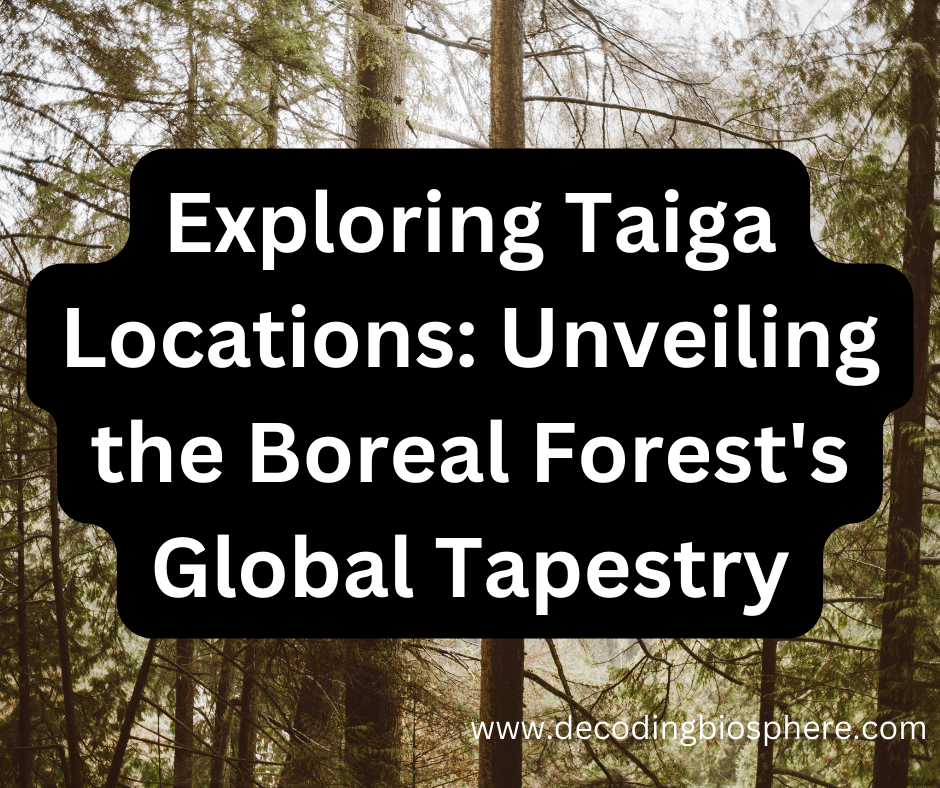
Taiga, also known as boreal forest or snow forest, is a captivating biome characterized by vast expanses of dense coniferous forests. Stretching across the high latitudes of the Northern Hemisphere, the taiga biome is home to a diverse array of plant and animal species. In this article, we will explore the locations and unique features of this remarkable biome.
Taiga Locations

The taiga biome spans across large portions of North America, Europe, and Asia. It encircles the Earth, forming a belt of coniferous forests just below the Arctic tundra. Some of the notable countries where the taiga is found include Canada, Russia, Sweden, Finland, Norway, and parts of the United States.
In North America, the taiga covers significant portions of Canada and Alaska. The Canadian taiga, also known as the Canadian boreal forest, is one of the largest intact forests on the planet. It extends from the eastern coast of Newfoundland and Labrador to the western reaches of British Columbia and Yukon. Notable locations within the Canadian taiga include the Boreal Shield, the Hudson Bay Lowlands, and the Boreal Plains.
In Russia, the taiga biome is immense, covering vast areas of Siberia. The Siberian taiga is the largest continuous forest in the world, occupying millions of square kilometers. It stretches from the Ural Mountains in the west to the Pacific Ocean in the east. Some significant locations within the Siberian taiga include the Russian Far East, the Central Siberian Plateau, and the Yenisei River Basin.
The taiga biome also extends into Scandinavia, where it is known as the Scandinavian boreal forest. Countries such as Sweden, Finland, and Norway have substantial taiga regions. The Scandinavian taiga is characterized by dense forests, numerous lakes, and rugged landscapes. Notable locations within this region include the Swedish Lapland, the Finnish Lakeland, and the northern regions of Norway.
Other countries with smaller taiga regions include parts of the United States, such as Alaska, where the taiga is referred to as the North American boreal forest. In Alaska, notable locations within the taiga include the Tongass National Forest, the Denali National Park and Preserve, and the Yukon River Basin.
Climate in Tiaga Biome
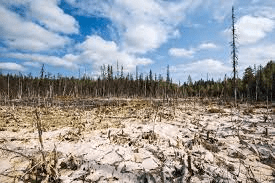
The taiga biome’s unique location in high latitudes brings with it distinct climatic conditions. Winters in the taiga are long, cold, and snowy, while summers are relatively short and mild. The temperatures can range from extremely cold in winter, dropping below freezing, to moderately warm in summer, with averages around 10 to 20 degrees Celsius (50 to 68 degrees Fahrenheit).
Vegetation in Tiaga Biome

The taiga’s vegetation is dominated by coniferous trees such as spruces, pines, and firs. These trees have adapted to the harsh climate by retaining their needle-like leaves throughout the year, allowing them to photosynthesize even during the long, cold winters. The taiga is also characterized by wetlands, bogs, and lakes, which provide crucial habitats for a variety of plant and animal species.
Speaking of animal life, the taiga is home to an impressive range of wildlife. Iconic taiga animals include large mammals like moose, reindeer, wolves, and brown bears. Smaller mammals such as lynx, foxes, squirrels, and ermines are also commonly found in the taiga. Bird species like owls, woodpeckers, and grouse inhabit the canopy, while rivers and lakes are home to fish like salmon and trout.
The taiga biome is not only important for its ecological significance but also for its role in mitigating climate change. The vast carbon storage capacity of taiga forests plays a crucial role in regulating global climate patterns.
To sum up, the taiga biome encompasses vast regions across North America, Europe, and Asia. From the Canadian boreal forests to the Siberian taiga, these locations are characterized by dense coniferous forests, unique climatic conditions, and diverse wildlife. Exploring the taiga locations offers a glimpse into the awe-inspiring beauty and ecological importance of this captivating biome.

 Decoding Biosphere