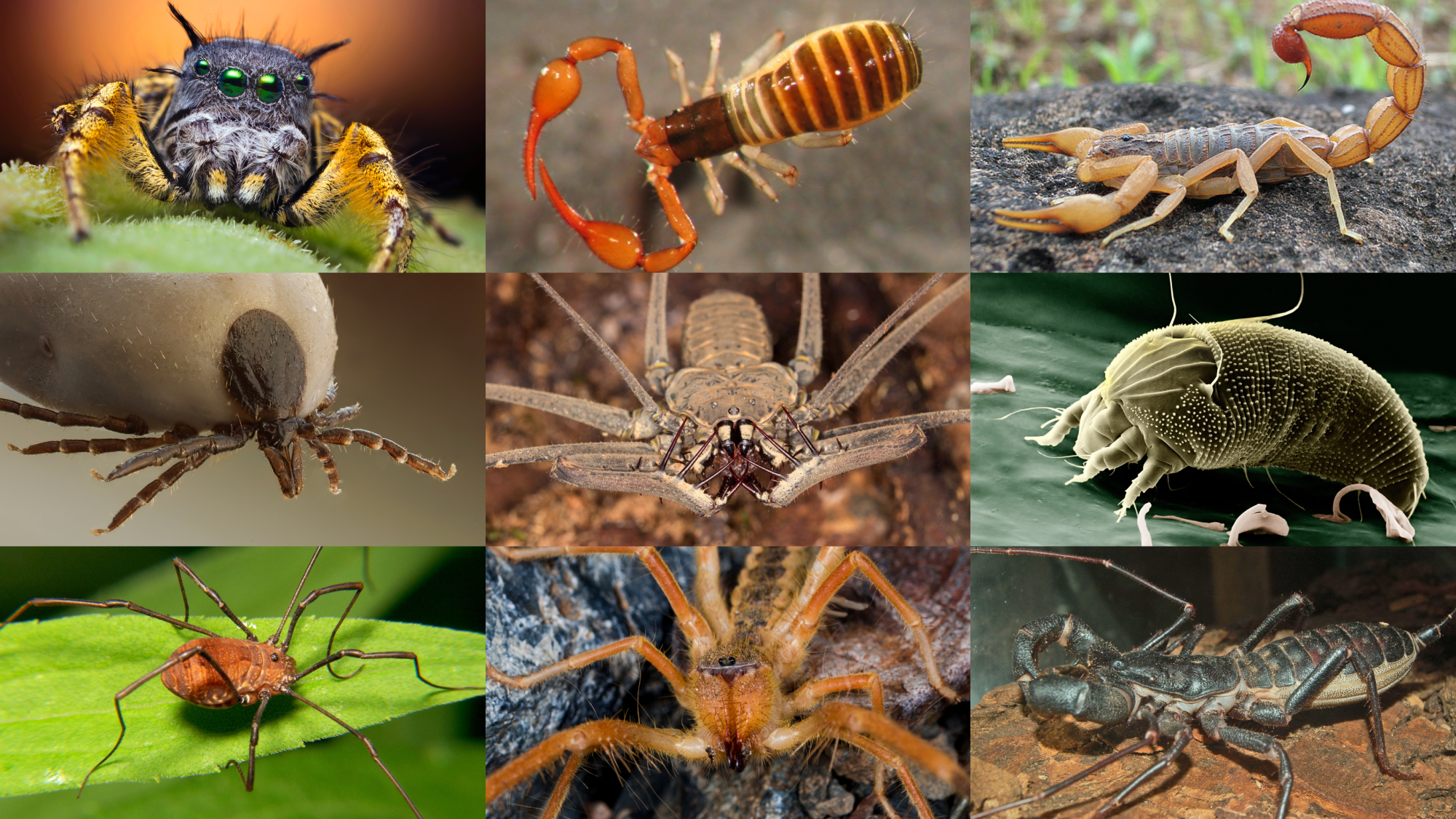
Arachnids are a diverse group of invertebrates known for their eight legs and characteristic body structure. These intriguing creatures belong to the class Arachnida, which includes spiders, scorpions, ticks, mites, and harvestmen. With their unique adaptations and predatory lifestyles, arachnids play vital roles in ecosystems worldwide. In this article, we will explore the fascinating world of arachnids, their characteristics, diversity, and their importance in the natural world.
Characteristics of Arachnids:
- Eight Legs: One of the defining features of arachnids is their possession of eight legs. These legs are attached to the cephalothorax, a fused body segment that houses the head and thorax.
- Two Body Segments: Arachnids have two main body segments: the cephalothorax and the abdomen. The cephalothorax contains the mouthparts, eyes, and legs, while the abdomen usually contains the reproductive organs and the respiratory and digestive systems.
- Chelicerae and Fangs: Most arachnids have specialized mouthparts called chelicerae, which are used for capturing and manipulating prey. In spiders and scorpions, the chelicerae are modified into fangs that inject venom into their prey or predators.
- Exoskeleton: Arachnids possess an exoskeleton, a hard outer covering that provides protection and support. This exoskeleton is made of a tough substance called chitin, which helps maintain the arachnids’ body shape and offers protection from predators and environmental conditions.
Diversity of Arachnids:
Arachnids exhibit remarkable diversity, with over 100,000 known species. Here are a few examples of arachnid groups:
- Spiders (Order Araneae): Spiders are perhaps the most well-known group of arachnids. They possess specialized silk-producing structures called spinnerets, which they use to create webs for capturing prey. Spiders are found in a wide range of habitats and display a remarkable variety of sizes, colors, and hunting techniques.
- Scorpions (Order Scorpiones): Scorpions are known for their distinctive curved tails and venomous stingers. They are nocturnal predators that use their pincers to capture prey and their venomous sting to immobilize or kill it. Scorpions can be found in various terrestrial habitats around the world.
- Ticks and Mites (Order Acari): Ticks and mites are small arachnids that play important roles in ecosystems as decomposers, parasites, and disease vectors. Ticks feed on the blood of mammals, birds, and reptiles, while mites have diverse lifestyles, including scavenging, parasitism, and symbiotic relationships with plants and animals.
Importance of Arachnids:
- Pest Control: Many arachnids, such as spiders and certain mites, are voracious predators that help control populations of insects and other arthropods. They play a significant ecological role by maintaining balance in ecosystems and reducing pest populations.
- Decomposition: Certain arachnids, including mites, contribute to the decomposition process by feeding on dead plant and animal matter. They break down organic material and recycle nutrients, playing a crucial role in nutrient cycling within ecosystems.
- Medical and Scientific Research: Arachnids, particularly spiders and scorpions, have attracted significant attention in medical and scientific research. Their venom contains a rich diversity of compounds with potential medicinal applications, including pain relief, treatment of neurological disorders, and antimicrobial properties.
- Ecological Interactions: Arachnids are involved in complex ecological interactions, such as predator-prey relationships, mutualistic associations with other organisms, and even seed dispersal. These interactions contribute to the overall functioning and biodiversity of ecosystems.
Take Away Points:
Arachnids are an incredible group of eight-legged creatures that exhibit a wide range of adaptations and play important ecological roles. From spiders weaving intricate webs to scorpions wielding venomous stingers, arachnids have captured our curiosity and fascination.
You May Also Like

 Decoding Biosphere