Introduction: The Invisible Invasion of Plastic
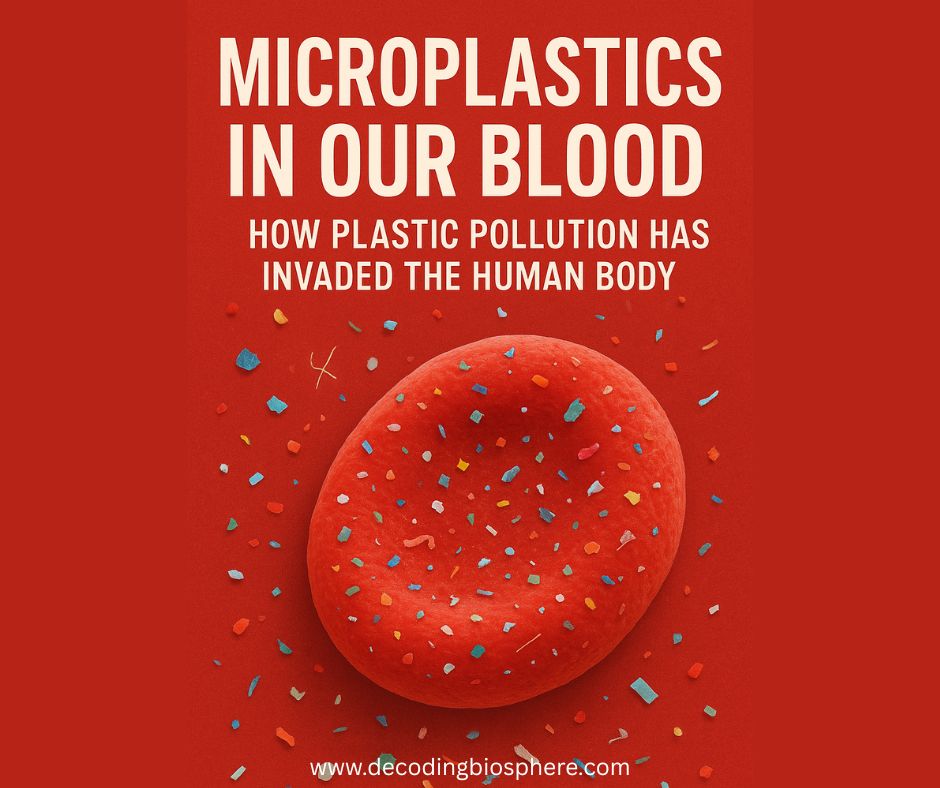
Plastic is everywhere — from the packaging around your vegetables to the fibers in your clothes. But perhaps the most disturbing discovery in recent years is that microplastics have made their way into the human body. Tiny particles, less than 5mm in size, are now found in human blood, lungs, breast milk, and even placentas.
This article unpacks the emerging science behind this invisible pollutant: how microplastics infiltrate our bodies, what health impacts they might cause, and the actions we can take to reduce our exposure.
What Are Microplastics?
Microplastics are tiny plastic particles that originate from the breakdown of larger plastic items or are manufactured at microscopic size (e.g., microbeads in cosmetics).
They are typically divided into two categories:
- Primary microplastics: Intentionally manufactured small plastics (used in exfoliants, industrial processes)
- Secondary microplastics: Resulting from the degradation of larger plastic products (bags, bottles, textiles)
These particles are now found across the planet: in Arctic snow, deep-sea sediments, and now, within our very bloodstream.
How Do Microplastics Enter the Human Body?
Research has identified three major exposure routes for microplastics:
☕ 1. Ingestion (Food and Water)
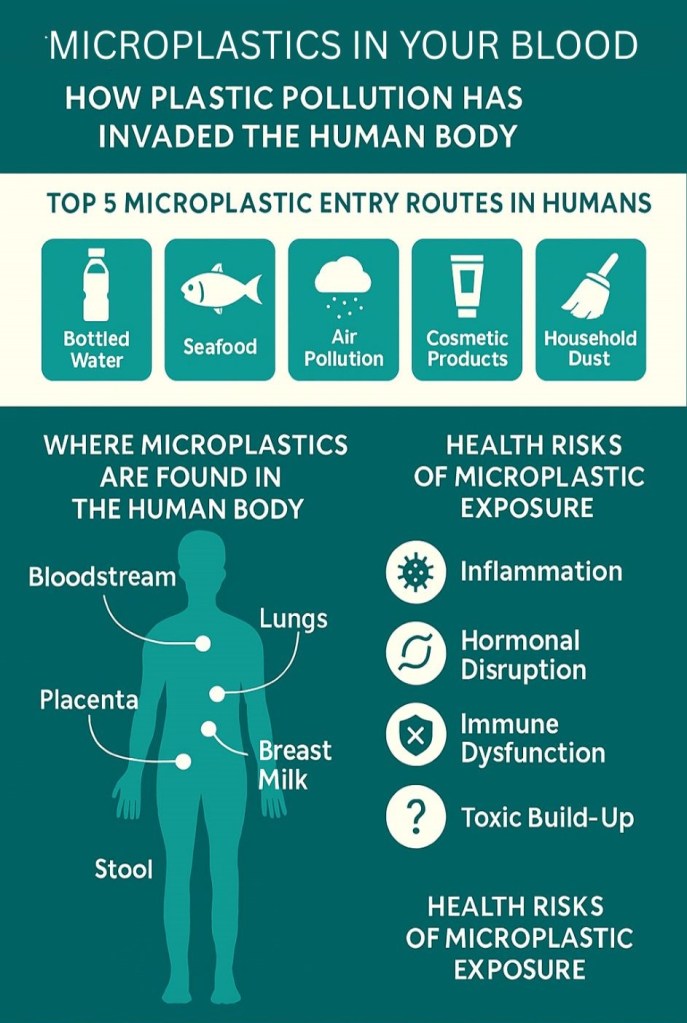
- Bottled water is a major contributor; studies show it can contain up to 10 times more microplastics than tap water.
- Seafood, especially shellfish and fish that ingest microplastics, introduces particles into our diets.
- Salt, honey, and vegetables have also been found to contain traces of microplastics.
☘ 2. Inhalation (Airborne Particles)
- Microplastics shed from synthetic clothes and upholstery enter indoor air.
- Urban residents may inhale thousands of plastic particles daily.
💇 3. Dermal Contact (Personal Care and Products)
- Use of microbead-containing skincare can lead to direct skin absorption, although the skin barrier limits deep penetration.
Scientific Breakthrough: Microplastics Found in Human Blood
A groundbreaking study published in Environment International (2022) confirmed that plastic particles were found in the blood of 80% of tested individuals. The most common types were PET (used in water bottles) and polystyrene (used in food packaging).
This finding means microplastics are circulating through our vascular system, potentially reaching vital organs and tissues.
Where Else Have Microplastics Been Detected in the Human Body?
Recent studies have found microplastics in:
- Lungs: Inhaled plastic fibers have been discovered embedded in lung tissues.
- Placentas: In 2020, Italian researchers detected plastic fragments in human placentas.
- Breast Milk: A 2022 study in Polymers journal found microplastics in 75% of breast milk samples.
- Feces: Plastics are excreted, but not entirely, indicating partial retention in the body.
Potential Health Risks of Microplastics
While the full impact is still under investigation, preliminary evidence links microplastics to several health concerns:
⚡ Inflammation and Cellular Stress
Plastic particles can trigger inflammatory responses in tissues, leading to cellular damage.
⚖ Endocrine Disruption
Many plastics contain bisphenol A (BPA) and phthalates, which mimic hormones and disrupt the endocrine system.
🪠 Immune System Impairment
Foreign particles in the bloodstream can lead to immune suppression or overreaction, causing autoimmune-like symptoms.
🌍 Bioaccumulation of Toxic Substances
Microplastics act like sponges, absorbing heavy metals, pesticides, and persistent organic pollutants, which are then released inside the body.
🧼 Unknown Long-Term Effects
Because this field is new, the long-term consequences of continuous exposure are unknown but potentially serious.
How to Reduce Personal Exposure to Microplastics
While complete avoidance is nearly impossible, here are evidence-based tips to lower your risk:
✅ Choose Tap Water Over Bottled
Use a high-quality filter if needed. Bottled water is consistently shown to have more microplastic contamination.
🌚 Limit Processed and Packaged Foods
Avoid plastic-wrapped produce and overly processed items.
🧼 Install HEPA Air Filters
These can reduce airborne plastic fibers in your home.
🛋 Switch to Natural Fibers
Wear clothes made from cotton, wool, or hemp to reduce microfiber shedding.
🌿 Opt for Plastic-Free Personal Care
Avoid products with polyethylene or polypropylene in the ingredients list.
Policy and Global Action: What Needs to Be Done?
This issue requires more than individual action. Key strategies include:
- Stricter plastic regulations and bans on microbeads
- Extended producer responsibility (EPR) for plastic manufacturers
- Increased investment in biodegradable materials and plastic alternatives
- Global monitoring of human exposure and health tracking
Governments and global institutions must work together to address plastic pollution as a public health crisis.
Conclusion: The Plastic Within Us
What was once an external environmental concern is now internal. The reality of microplastics in our bodies underscores the urgency of moving away from plastic dependency.
From rethinking packaging to redesigning textiles and food systems, every layer of society must respond. Because protecting the planet also means protecting ourselves — right down to the cells in our blood.


 Decoding Biosphere