Introduction: A Closet Full of Nothing to Wear?
You wake up, open your closet, and stare at a sea of clothes. Yet somehow, nothing feels quite right. So you scroll through your favorite shopping app—and before lunch, three new outfits are on the way.
Sound familiar?
This is the modern cycle of overconsumption in fashion. What used to be seasonal shopping has morphed into weekly hauls, fueled by influencers, fast fashion giants, and FOMO. But beneath the surface of those bargain buys lies a tangled web of environmental destruction, labor exploitation, and psychological traps.
In this guide, we’ll break down:
- What fashion overconsumption is
- Why we’re all caught in it
- What it’s doing to people and the planet
- And how we can step off the hamster wheel—without giving up style
“Cheap clothes aren’t free—they’re just paid for by someone else.”
1. What Is Overconsumption in Fashion?
Overconsumption in fashion is the excessive and unnecessary buying of clothing, driven by trends, marketing, and cultural pressure. It’s when the rate of purchasing and disposing of clothes exceeds both our actual needs and the Earth’s capacity to cope.
📌 Fact: In 2023, the average consumer bought 68 garments per year, many of which were worn less than 7 times (McKinsey, 2023).
This isn’t just about owning a few extra shirts. Overconsumption has created a fashion system that:
- Encourages disposability
- Devalues craftsmanship
- Rewards overproduction
- And punishes sustainability
2. Why Are We Consuming So Much?
A. The Fast Fashion Engine
Companies like Shein, Zara, Boohoo, and H&M have redefined how fast clothes get from design to doorstep—sometimes in as little as 5 days. They flood the market with thousands of styles each week, creating an illusion of scarcity and trend urgency.
📌 Shein alone releases 6,000+ new items a day.
B. Psychological Warfare
Fast fashion thrives on psychological manipulation:
- FOMO (Fear of Missing Out) drives panic buying
- Retail therapy becomes an emotional escape
- Hauls and unboxing videos fuel compulsive behavior
🧠 Fun Fact: The brain releases dopamine when we anticipate a new purchase. It’s not even the owning—it’s the wanting that hooks us.
C. “Trashion” and Microtrends
We’re no longer following seasons—we’re chasing aesthetics. From “coastal grandma” to “clean girl” to “mob wife,” microtrends barely last more than a few months. To keep up, consumers feel the need to constantly refresh their wardrobe.
3. The Real Cost: Environmental Impacts of Overconsumption
Fashion is one of the dirtiest industries in the world. Overproduction and waste are at the heart of the problem.
A. Waste & Landfills
- Over 92 million tonnes of textile waste are generated annually.
- In the US alone, 85% of clothes end up in landfills or incinerated.
Once trashed, most textiles don’t biodegrade—especially those made from polyester, nylon, or acrylic.
B. Water and Resource Depletion
- One cotton t-shirt = 2,700 liters of water (enough for 2.5 years of drinking)
- One pair of jeans = 7,500 liters of water
C. Carbon Footprint
Fashion is responsible for up to 10% of global CO₂ emissions—more than international flights and maritime shipping combined.
📌 Bonus Info: By 2050, the fashion industry could consume 25% of the world’s carbon budget if left unchecked (Ellen MacArthur Foundation).
D. Microplastic Pollution
Synthetic clothes shed tiny plastic fibers in the wash. These microplastics flow into oceans, harming marine life and entering the food chain—including ours.
4. Social and Ethical Fallout
The price of a cheap dress? Often someone else’s safety, dignity, or childhood.
- Low wages: Garment workers in Bangladesh earn as little as $95/month.
- Child labor: Still prevalent in textile production across Asia and Africa.
- Unsafe conditions: The 2013 Rana Plaza collapse in Dhaka killed 1,134 workers—reminding us that low prices often mean high human costs.
5. Signs That You’re Caught in the Overconsumption Trap
- You frequently say “I have nothing to wear” despite a full closet
- You shop weekly or during every sale
- You buy clothes to wear once—for an event or photo
- You don’t know how many pieces of clothing you own
- Your wardrobe changes more often than the weather
🧠 Are You a Conscious Shopper?
Tick off the statements that apply to you:


Scoring tip: If you ticked 3 or more, you’re on the sustainable path!
6. How to Escape: Practical Steps Toward Conscious Fashion
🧭 A. Curate a Capsule Wardrobe
A minimalist, intentional wardrobe made up of high-quality basics and versatile pieces.
🛑 B. Shop with Intention
Ask yourself before every purchase:
- Do I truly need this?
- Will I wear this at least 30 times?
- Can I borrow, swap, or thrift it instead?
🛍️ C. Embrace Secondhand and Rental Fashion
Apps like Poshmark, Depop, and Rent the Runway make it easier to reuse and share clothing.
🧵 D. Learn to Repair and Repurpose
Mend a tear. Replace a button. Turn old jeans into a bag. These small acts extend a garment’s life and reduce waste.
🌿 E. Support Ethical Brands
Look for certifications:
- Fair Trade
- GOTS (Global Organic Textile Standard)
- B Corp
These labels indicate better environmental and labor practices.
7. Changing the Narrative: From Consumers to Citizens
To fight overconsumption, we need a cultural shift—from “I shop, therefore I am” to “I wear what I believe.”
Start small. Share knowledge. Normalize outfit repeating. Praise durability over novelty.
Remember: Sustainable fashion isn’t about perfection—it’s about progress.
Conclusion: Redefining Style in a World on Fire
Fashion should be fun, expressive, and creative—not exploitative or destructive. Overconsumption in fashion may be the norm, but that doesn’t mean it’s the future.
By shifting how we buy, use, and value our clothes, we can build a world where style doesn’t cost the Earth.
🌍 Join the Challenge: 30 Days, No New Clothes
Take the #BuyLessChallenge! For the next 30 days, pledge not to buy any new clothes. Rediscover your wardrobe, style old outfits in new ways, and journal your journey.
💚 I Take the Pledge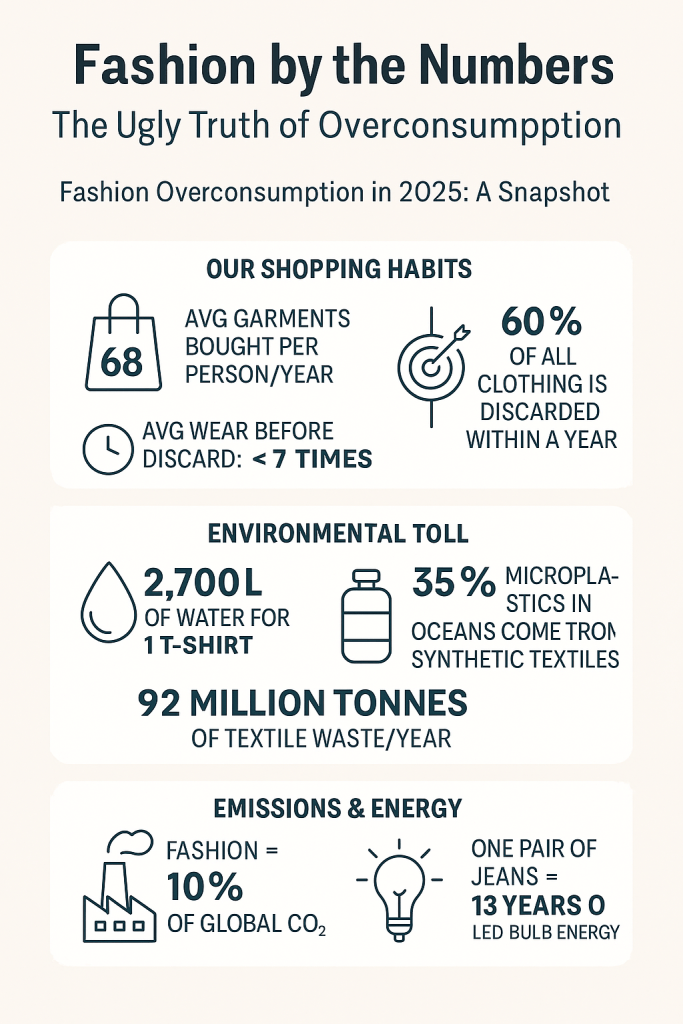


 Decoding Biosphere