Tantalum, a rare and valuable metal, has generated a curiosity among scientists, engineers, and enthusiasts alike. One common question that arises regarding tantalum is whether it is magnetic. In this article, we will understand about tantalum, exploring its properties, applications, and, most importantly, its magnetic behavior.
What is Tantalum?
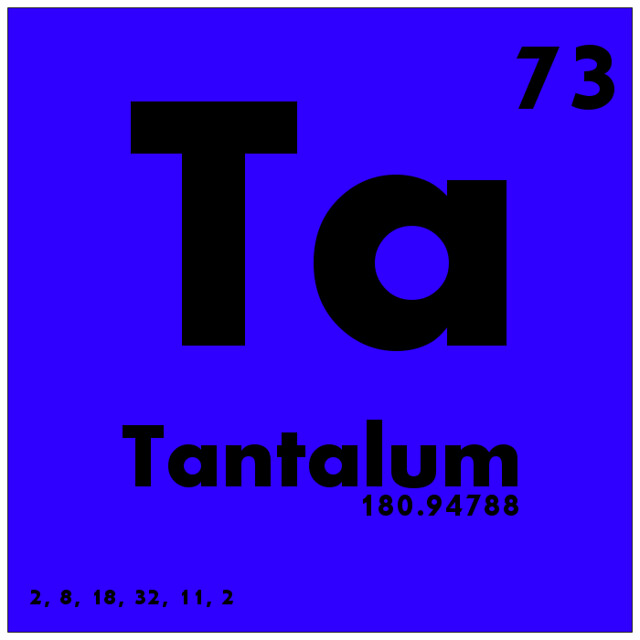
Tantalum is a chemical element with the symbol Ta and atomic number 73. It belongs to the transition metal group on the periodic table, alongside other elements such as titanium, niobium, and tungsten. Tantalum is a lustrous and dense metal with excellent corrosion resistance, making it highly desirable for a wide range of industrial applications.
Properties of Tantalum
Before we explore tantalum’s magnetic properties, let’s first examine some of its key characteristics:
- Density: Tantalum is a dense metal, with a density of approximately 16.6 grams per cubic centimeter (g/cm³). Its high density gives it substantial weight and makes it suitable for applications where durability and strength are essential.
- Melting Point: Tantalum has an exceptionally high melting point, exceeding 3,000 degrees Celsius (5,400 degrees Fahrenheit). This high melting point allows tantalum to withstand extreme temperatures without losing its structural integrity.
- Corrosion Resistance: One of tantalum’s most remarkable properties is its exceptional resistance to corrosion. Tantalum forms a stable oxide layer on its surface, which protects it from chemical reactions with acids, alkalis, and other corrosive substances.
- Ductility: Tantalum is relatively ductile, meaning it can be drawn into thin wires or sheets without breaking. Its ductile nature makes it useful for applications requiring intricate shapes or fine details.

Is Tantalum Magnetic?
Now, let’s address the question at hand: Is tantalum magnetic? The short answer is no, tantalum is not magnetic in its pure form. Unlike some other metals such as iron, nickel, and cobalt, which exhibit strong magnetic properties, tantalum does not possess magnetic properties under normal conditions.
Understanding Magnetism
To understand why tantalum is not magnetic, it’s essential to explore the underlying principles of magnetism. Magnetism is the phenomenon whereby certain materials exert attractive or repulsive forces on other materials. This behavior arises from the alignment of magnetic moments within the material’s atomic structure.
In ferromagnetic materials such as iron, nickel, and cobalt, the magnetic moments of individual atoms align spontaneously, creating a magnetic field. These materials exhibit strong magnetic properties and can be magnetized permanently.
In contrast, non-magnetic materials, including tantalum, have their magnetic moments oriented in a random fashion, resulting in little to no overall magnetic field. As a result, non-magnetic materials are not attracted to magnets and do not exhibit magnetic behavior.
Factors Affecting Magnetism
While pure tantalum is not magnetic, it’s essential to consider that the magnetic properties of a material can be influenced by various factors, including temperature, impurities, and external magnetic fields.
- Temperature: Changes in temperature can affect the magnetic behavior of materials. In some cases, certain materials may exhibit magnetic properties at low temperatures but lose them as the temperature increases. This phenomenon, known as the Curie temperature, is characteristic of ferromagnetic materials.
- Impurities: The presence of impurities or alloying elements can alter a material’s magnetic properties. While pure tantalum is non-magnetic, tantalum alloys containing magnetic elements may exhibit magnetic behavior to some extent.
- External Magnetic Fields: External magnetic fields can induce temporary magnetism in materials that are otherwise non-magnetic. However, this induced magnetism is typically weak and temporary, disappearing once the external magnetic field is removed.
Applications of Tantalum
Despite its lack of magnetic properties, tantalum finds widespread use in various industries due to its unique combination of properties. Some common applications of tantalum include:
- Electronics: Tantalum capacitors, made from tantalum powder, are widely used in electronic devices such as smartphones, computers, and automotive electronics. Tantalum capacitors offer high capacitance and reliability, making them ideal for critical electronic components.
- Chemical Processing: Tantalum’s exceptional corrosion resistance makes it well-suited for use in chemical processing equipment, including reactors, heat exchangers, and piping systems. Tantalum’s ability to withstand corrosive environments makes it indispensable in industries such as pharmaceuticals, petrochemicals, and specialty chemicals.
- Medical Devices: Tantalum implants are used in various medical applications, including orthopedic implants, dental implants, and surgical instruments. Tantalum’s biocompatibility, inertness, and resistance to corrosion make it an excellent choice for medical devices that come into contact with bodily fluids and tissues.
- Aerospace and Defense: Tantalum’s high melting point and mechanical strength make it suitable for aerospace and defense applications, including aircraft components, rocket engines, and missile systems. Tantalum’s durability and reliability in extreme environments make it a preferred material for critical aerospace and defense applications.
Conclusion
In conclusion, tantalum is a remarkable metal with a wide range of applications, from electronics and chemical processing to medical devices and aerospace. While tantalum is not magnetic in its pure form, its unique combination of properties, including high corrosion resistance, ductility, and biocompatibility, make it indispensable in numerous industries.
FAQs About Tantalum
1. What is tantalum used for?
Tantalum is used in various industries for its unique properties. Some common applications include electronics (such as tantalum capacitors), chemical processing equipment, medical devices, aerospace components, and superalloys for high-temperature applications.
2. Is tantalum magnetic?
No, pure tantalum is not magnetic. Tantalum does not exhibit magnetic properties under normal conditions. However, certain tantalum alloys containing magnetic elements may exhibit magnetic behavior to some extent.
3. Is tantalum rare?
Yes, tantalum is considered a rare metal. While it is relatively abundant in the Earth’s crust, it is challenging to extract and refine due to its chemical properties. Tantalum is typically obtained as a byproduct of tin mining, and its scarcity contributes to its value in industrial applications.
4. What are the benefits of using tantalum capacitors?
Tantalum capacitors offer several advantages, including high capacitance, small size, and excellent stability over a wide temperature range. They are commonly used in electronic devices where space is limited and reliability is essential, such as smartphones, computers, and automotive electronics.
5. Is tantalum environmentally friendly?
Tantalum is known for its excellent corrosion resistance and inertness, making it environmentally friendly in many applications. Tantalum’s durability and longevity reduce the need for frequent replacement, contributing to sustainable practices in various industries.
6. Are there any ethical concerns associated with tantalum mining?
Tantalum mining can be associated with ethical concerns, particularly in regions where conflict minerals, including tantalum, are mined and traded. The extraction and trade of conflict minerals can contribute to human rights abuses and armed conflict in affected regions. Efforts are underway to promote responsible sourcing practices and eliminate the use of conflict minerals in global supply chains.
7. How is tantalum recycled?
Tantalum can be recycled from scrap materials, including tantalum capacitors, electronic components, and industrial waste. Recycling tantalum helps conserve natural resources, reduce environmental impact, and minimize the need for new mining activities. Various recycling processes, including chemical and metallurgical methods, are used to recover tantalum from scrap materials.
8. What are some alternative materials to tantalum?
In some applications, alternative materials such as ceramic capacitors, aluminum capacitors, and polymer capacitors may be used as substitutes for tantalum capacitors. However, each type of capacitor has its advantages and limitations, and the choice of material depends on specific performance requirements and application needs.
You May Also Like

 Decoding Biosphere