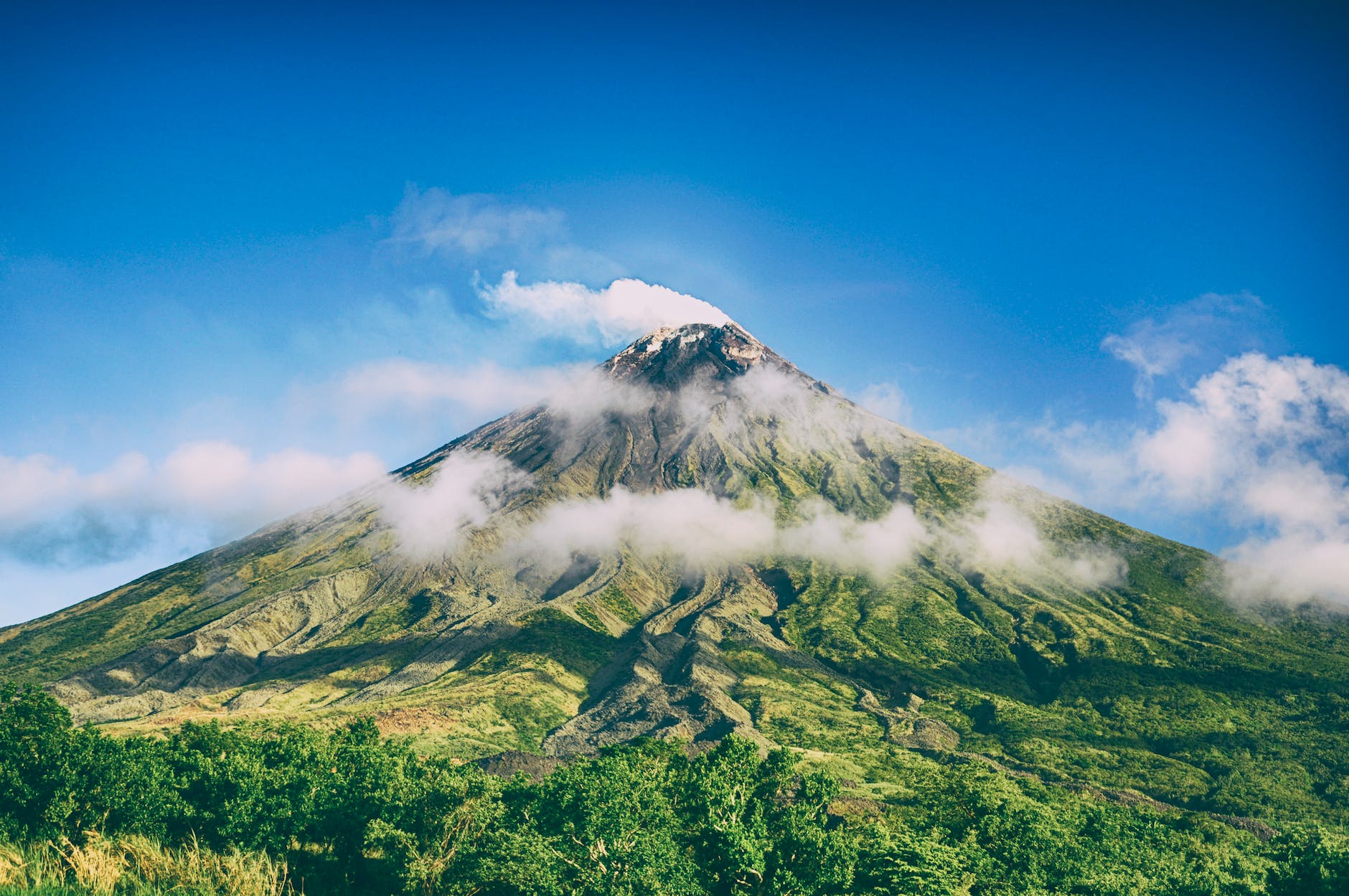
Volcanoes, often described as nature’s most dramatic displays of Earth’s power, are awe-inspiring geological features that have captured the imagination of people for centuries. From towering peaks to bubbling lava flows, volcanoes are dynamic symbols of the Earth’s restless forces. In this article, we will look into what volcanoes are, how they form, and the key characteristics.
What is a Volcano?
A volcano is a vent or opening in the Earth’s crust through which molten rock, gases, and volcanic ash are ejected during volcanic eruptions. Volcanoes can take various forms, ranging from towering stratovolcanoes and shield volcanoes to volcanic cones and calderas. While some volcanoes are active and erupt regularly, others are dormant or extinct, with no recent history of volcanic activity.
How are Volcanoes Formed?
Volcanoes are formed through a combination of geological processes and tectonic activity that shape the Earth’s crust and mantle. The formation of volcanoes involves the following key mechanisms:
1. Plate Tectonics
Plate tectonics, the theory that Earth’s outer shell is divided into several large, rigid plates that move relative to one another, plays a central role in the formation and distribution of volcanoes. Volcanoes often occur at tectonic plate boundaries, where plates converge, diverge, or slide past each other, leading to volcanic activity.
2. Subduction Zones
Subduction zones, where one tectonic plate is forced beneath another into the Earth’s mantle, are common locations for volcanic activity. As the descending plate melts under high temperature and pressure, magma is generated and rises to the surface, forming volcanic arcs and chains of stratovolcanoes.
3. Mid-Ocean Ridges
Mid-ocean ridges, underwater mountain ranges that form at divergent plate boundaries, are sites of volcanic activity where magma wells up from the mantle and erupts onto the ocean floor. The continuous spreading and upwelling of magma along mid-ocean ridges contribute to the formation of submarine volcanoes and seafloor lava flows.
4. Hotspots
Hotspots are areas of localized volcanic activity that occur away from tectonic plate boundaries, often within the interior of a tectonic plate. Hotspots are thought to be caused by plumes of hot mantle material, known as mantle plumes, that rise from deep within the Earth’s mantle and create volcanic islands, seamounts, and volcanic chains as the overlying crust moves over the stationary hotspot.
5. Magma Chamber
Beneath the surface of a volcano lies a magma chamber, a reservoir of molten rock and gases that feeds volcanic eruptions. Magma accumulates within the magma chamber over time, building pressure until it is released through volcanic vents and fissures during eruptions.
Types of Volcanoes
Volcanoes exhibit a wide range of shapes, sizes, and eruptive styles, reflecting variations in magma composition, eruption dynamics, and tectonic setting. The following are some common types of volcanoes:
1. Stratovolcanoes (Composite Volcanoes)
Stratovolcanoes are tall, conical volcanoes characterized by steep slopes and alternating layers of hardened lava, volcanic ash, and pyroclastic debris. These volcanoes are associated with explosive eruptions and viscous magma that can form lava domes, pyroclastic flows, and lahars.
2. Shield Volcanoes
Shield volcanoes are broad, gently sloping volcanoes with low profiles and extensive lava flows that spread outwards from the central vent. Shield volcanoes are typically formed by the eruption of low-viscosity basaltic lava, which flows easily and produces lava fields, lava tubes, and volcanic shields.
3. Cinder Cones
Cinder cones are small, steep-sided volcanoes composed of loose volcanic fragments, known as cinders or scoria, ejected during explosive eruptions. These volcanoes often form rapidly around a vent or fissure and may be associated with Strombolian or Hawaiian-style eruptions.
4. Lava Domes
Lava domes are bulbous mounds or steep-sided masses of viscous lava that accumulate around volcanic vents or within crater depressions. Lava domes are typically formed by the extrusion of thick, sticky lava, such as dacite or rhyolite, which piles up around the vent and may form lava spines, cryptodomes, or lava flows.
5. Calderas
Calderas are large, circular depressions formed by the collapse of the summit of a volcano following a massive eruption or the emptying of a magma chamber. Calderas may be filled with water to form crater lakes or host secondary volcanic activity, such as resurgent domes and hydrothermal vents.
Characteristics of Volcanoes
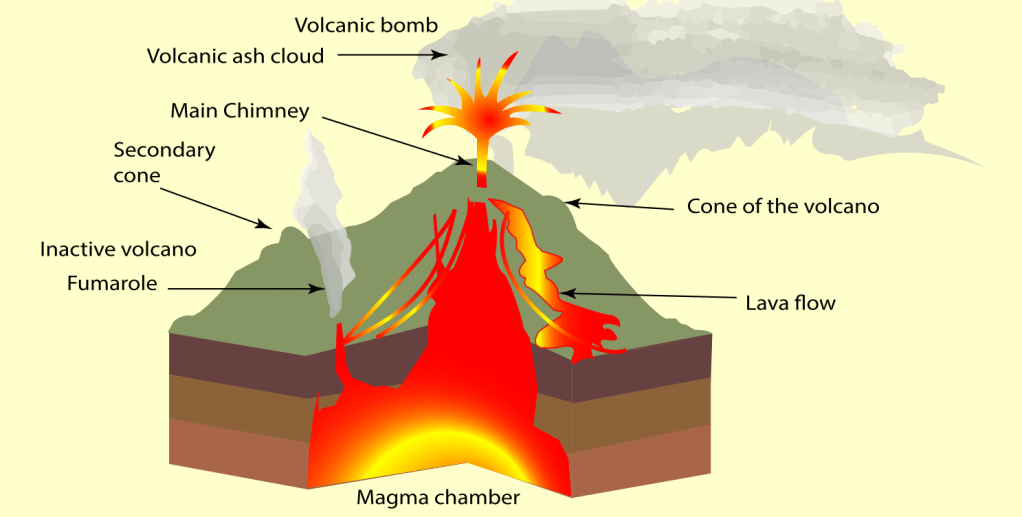
Volcanoes exhibit several distinctive features and phenomena that are characteristic of their eruptive behavior and geological structure:
1. Vent
The vent of a volcano is the opening through which magma, gases, and volcanic ash are expelled during eruptions. Vents may take the form of a central crater, fissures, or secondary vents located along the flanks of the volcano.
2. Crater
The crater is a bowl-shaped depression at the summit of a volcano that forms as a result of explosive eruptions or the collapse of volcanic material. Craters may contain lava lakes, fumaroles, and hydrothermal features associated with ongoing volcanic activity.
3. Lava Flows
Lava flows are streams of molten rock that flow downhill from volcanic vents or fissures, covering the surrounding landscape with layers of solidified lava. Lava flows may take various forms, including pahoehoe (smooth, rope-like lava), aa (rough, blocky lava), and pillow lava (rounded, pillow-shaped lava).
4. Pyroclastic Deposits
Pyroclastic deposits are accumulations of volcanic fragments, ash, and debris ejected during explosive eruptions. Pyroclastic deposits may form volcanic ash clouds, pyroclastic flows, and volcanic tephra layers that blanket the surrounding terrain and can travel long distances from the eruptive source.
5. Lahars
Lahars are fast-moving mudflows or debris flows composed of volcanic ash, rock fragments, and water that flow downhill from volcanoes during or after eruptions. Lahars can be triggered by heavy rainfall, snowmelt, or the destabilization of volcanic debris, posing significant hazards to downstream communities and infrastructure.
Conclusion
In conclusion, volcanoes are remarkable geological features that shape the Earth’s surface and influence our environment in profound ways. From their formation at tectonic plate boundaries to their diverse shapes and eruptive styles, volcanoes are dynamic manifestations of Earth’s internal processes and the forces that drive them.
While volcanoes can be sources of awe and wonder, they also pose significant hazards to human life, property, and the environment. By understanding the mechanisms of volcano formation, the types of volcanic hazards, and the risks associated with volcanic activity, we can better prepare for and mitigate the impacts of volcanic eruptions on vulnerable populations and regions. Effective volcano monitoring, hazard assessment, and emergency preparedness are essential components of volcano risk management strategies.
You May Also Like

 Decoding Biosphere