
In today’s fast-paced world, the quality of the air we breathe is becoming an increasingly important concern. With the rise of urbanization, industrialization, and climate change, understanding the Air Quality Index (AQI) has become crucial to protect our health and the environment. In this article, we’ll explore the concept of the AQI, its significance, and how it affects our daily lives.
What is the Air Quality Index (AQI)?
The Air Quality Index (AQI) is a standardized system used to assess and communicate the quality of the air in a specific location. It provides vital information about the concentration of various air pollutants and their potential health effects. Governments and environmental agencies across the world use the AQI to inform the public about air pollution levels and to implement appropriate measures to protect public health.
How is the AQI Measured?
To determine the AQI, several key air pollutants are measured at monitoring stations located in different areas. These pollutants include:
- Particulate Matter (PM10 and PM2.5): Tiny particles suspended in the air, which can penetrate deep into the respiratory system and cause health issues.
- Ozone (O3): A harmful gas created by the reaction of sunlight with pollutants like nitrogen oxides and volatile organic compounds.
- Nitrogen Dioxide (NO2): A gas produced by combustion processes, such as vehicle emissions and industrial activities.
- Sulfur Dioxide (SO2): A gas primarily released during fossil fuel combustion and industrial processes.
- Carbon Monoxide (CO): A colorless, odorless gas produced by incomplete combustion of carbon-containing fuels.
Each pollutant is measured in real-time, and the highest concentration among them is used to determine the overall AQI for that location. The AQI is then categorized into specific bands or color codes to communicate the air quality’s health implications easily.
Understanding the AQI Categories
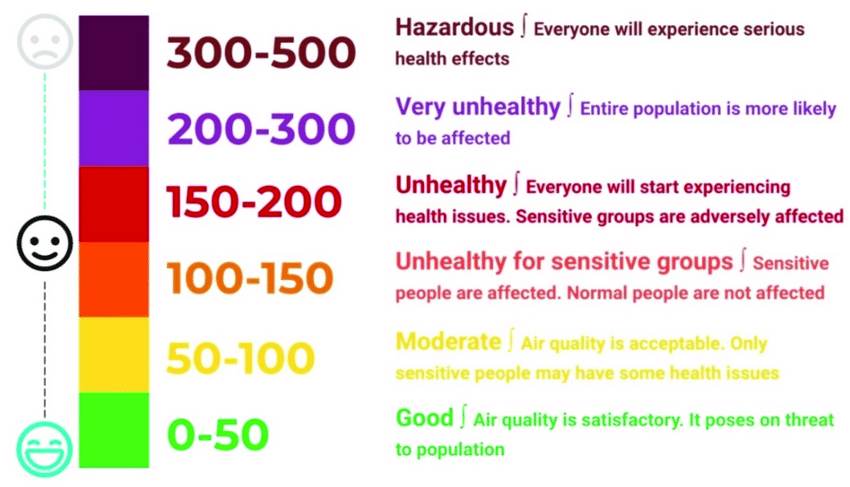
The AQI scale typically ranges from 0 to 500, with specific breakpoints defining different air quality categories. These categories often include:
- Good (0-50): Air quality is considered satisfactory, and air pollution poses little or no risk.
- Moderate (51-100): Air quality is acceptable; however, certain pollutants may be a concern for a small number of vulnerable individuals.
- Unhealthy for Sensitive Groups (101-150): Members of sensitive groups (e.g., children, the elderly, and individuals with respiratory or heart conditions) may experience health issues, but the general public is less likely to be affected.
- Unhealthy (151-200): Everyone may begin to experience adverse health effects, and sensitive groups may experience more serious health problems.
- Very Unhealthy (201-300): Health warnings of emergency conditions. The entire population is more likely to be affected.
- Hazardous (301-500): Serious health effects or even life-threatening conditions for the entire population.
Health Impacts of AQI Levels
The AQI provides valuable information about the potential health effects associated with varying pollution levels. Short-term exposure to high AQI levels can result in respiratory problems, aggravated asthma, decreased lung function, and an increased risk of heart attacks and strokes. Long-term exposure to elevated AQI levels can lead to chronic respiratory and cardiovascular diseases, and it has even been linked to reduced life expectancy.
Protecting Yourself and the Environment
Being aware of the AQI levels in your area empowers you to take appropriate precautions to protect your health and the environment. Here are some steps you can take:
- Stay Informed: Check the AQI regularly, especially if you belong to sensitive groups. Many weather websites and smartphone apps provide real-time AQI information.
- Reduce Outdoor Activities: When the AQI is high, limit outdoor activities, especially during peak pollution hours.
- Use Public Transportation: Reduce vehicle emissions by using public transportation, carpooling, or biking when possible.
- Support Clean Energy: Advocate for clean energy sources and policies that promote sustainable practices and reduce air pollution.
The Air Quality Index is an essential tool that helps us understand the quality of the air we breathe and its potential impact on our health. By staying informed about AQI levels and taking necessary precautions, we can work towards improving air quality and ensuring a healthier environment.
Some FAQs on Air Quality Index
Q: What is the Air Quality Index (AQI)?
A: The Air Quality Index (AQI) is a numerical scale used to communicate the quality of the air in a specific location. It provides information about the concentration of various air pollutants and their potential health effects.
Q: How is the AQI measured?
A: The AQI is determined by measuring the concentrations of key air pollutants, such as particulate matter (PM10 and PM2.5), ozone (O3), nitrogen dioxide (NO2), sulfur dioxide (SO2), and carbon monoxide (CO) at monitoring stations. The highest concentration among these pollutants is used to calculate the AQI.
Q: What are the main pollutants considered in the AQI?
A: The primary pollutants measured in the AQI are particulate matter, ozone, nitrogen dioxide, sulfur dioxide, and carbon monoxide. These pollutants are commonly associated with air pollution and have significant health impacts.
Q: How is the AQI categorized?
A: The AQI scale typically ranges from 0 to 500 and is divided into different categories or color codes. These categories include Good, Moderate, Unhealthy for Sensitive Groups, Unhealthy, Very Unhealthy, and Hazardous.
Q: What does a “Good” AQI mean?
A: A “Good” AQI (0-50) indicates that the air quality is satisfactory, and the air pollution poses little or no risk. It is the best level of air quality.
Q: What precautions should be taken during “Unhealthy” AQI levels?
A: During “Unhealthy” AQI levels (151-200), everyone may begin to experience adverse health effects. It is recommended to limit outdoor activities, especially for sensitive groups, and wear masks to reduce exposure to pollutants.
Q: How does air quality affect human health?
A: Poor air quality can lead to respiratory problems, aggravated asthma, decreased lung function, and an increased risk of heart attacks and strokes. Long-term exposure to elevated AQI levels can result in chronic respiratory and cardiovascular diseases.
Q: Where can I find the current AQI for my area?
A: The current AQI for your area can be found on various websites, mobile apps, or local weather reports. Many environmental agencies and meteorological services provide real-time AQI data.
Q: What actions can individuals take to improve air quality?
A: Individuals can help improve air quality by reducing their emissions, such as using public transportation, carpooling, and supporting clean energy initiatives. Advocating for policies that promote sustainable practices and reduce air pollution can also have a positive impact.
Q: How often should I check the AQI?
A: It’s a good idea to check the AQI regularly, especially if you belong to sensitive groups or live in an area with known air pollution issues. Daily monitoring can help you plan your outdoor activities and take necessary precautions.

 Decoding Biosphere