
The theory of continental drift, proposed by German meteorologist Alfred Wegener in the early 20th century, revolutionized our understanding of Earth’s geological history and the dynamic nature of its surface. At its core, the theory posits that Earth’s continents were once part of a single supercontinent, which later fragmented and drifted apart over millions of years. In this article, we will look into the causes behind the theory of continental drift and examine the compelling evidence that supports this groundbreaking concept.
Understanding the Theory of Continental Drift
The theory of continental drift suggests that Earth’s continents were once joined together as a single landmass known as Pangaea, surrounded by a vast oceanic expanse called Panthalassa. According to this hypothesis, Pangaea began to break apart approximately 200 million years ago during the Mesozoic era, eventually giving rise to the modern continents we recognize today. This process of continental fragmentation and movement is driven by several key geological mechanisms and phenomena.
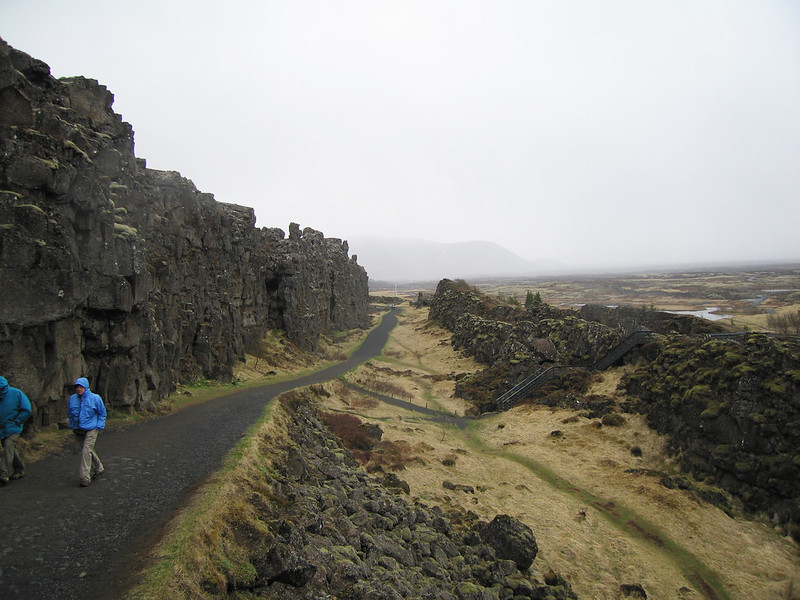
Causes of Continental Drift
- Plate Tectonics: Central to the theory of continental drift is the concept of plate tectonics, which proposes that Earth’s lithosphere is divided into several rigid plates that float on the semi-fluid asthenosphere below. These tectonic plates are in constant motion, driven by the heat and convection currents generated within Earth’s mantle. As these plates move, they interact with one another at their boundaries, leading to the formation of new crust, volcanic activity, and seismic events.
- Mantle Convection: Beneath Earth’s lithosphere lies the mantle, a layer of hot, semi-fluid rock that exhibits convective motion driven by heat from the planet’s interior. These mantle convection currents circulate in a cyclical manner, causing the movement and migration of tectonic plates across the Earth’s surface. The upwelling of magma at mid-ocean ridges and the subduction of oceanic plates at deep-sea trenches are manifestations of mantle convection and plate movement.
- Ridge Push and Slab Pull: Two primary forces driving plate motion are ridge push and slab pull. Ridge push occurs at mid-ocean ridges, where newly formed oceanic crust is buoyant and pushes older crust away from the ridge axis. Slab pull, on the other hand, occurs at subduction zones, where dense oceanic plates sink into the mantle under the force of gravity, pulling the rest of the plate along with it.
- Gravity and Isostasy: Gravity also plays a role in the movement of tectonic plates, exerting downward force on the denser oceanic crust and driving the process of subduction. Isostasy, the concept of buoyant equilibrium between Earth’s lithosphere and asthenosphere, influences the elevation and subsidence of continents and ocean basins in response to changes in crustal thickness and density.
Evidence Supporting Continental Drift
- Geological Fit: One of the most compelling pieces of evidence supporting continental drift is the remarkable geological fit between the coastlines of continents, particularly along the Atlantic Ocean basin. The outlines of South America and Africa, for example, appear to fit together like pieces of a jigsaw puzzle, suggesting that they were once contiguous landmasses.
- Fossil Distribution: The distribution of fossil species across continents provides additional evidence for continental drift. Similar fossil assemblages and geological formations have been found on continents that are now widely separated by oceans, indicating that these landmasses were once connected in the past. For example, the presence of identical plant and animal fossils in South America and Africa supports the hypothesis of a shared geological history.
- Paleoclimatic Evidence: Paleoclimatic evidence, including the distribution of glacial deposits, coal beds, and sedimentary rock formations, provides further support for continental drift. Geological features such as ancient glacial striations and till deposits found in regions like Africa and India suggest that these areas were once situated near the South Pole during periods of glaciation, a scenario that is only feasible if continents have moved over time.
- Paleomagnetic Data: Paleomagnetic studies have revealed that Earth’s magnetic field has undergone periodic reversals over geological time scales. When rocks solidify from molten magma, they record the orientation of Earth’s magnetic field at the time of their formation. By analyzing the magnetic orientation of rocks from different continents, scientists have found evidence of apparent polar wander, indicating that continents have drifted relative to Earth’s magnetic poles.
- Seafloor Spreading: Seafloor spreading, observed along mid-ocean ridges such as the Mid-Atlantic Ridge and the East Pacific Rise, provides direct evidence for the movement of tectonic plates. As new oceanic crust forms at mid-ocean ridges and spreads laterally away from the ridge axis, it creates symmetrical patterns of magnetic anomalies on either side of the ridge, reflecting changes in Earth’s magnetic field over time.
FAQs on theory of continental drift
- What is continental drift? Continental drift is a geological theory proposed by Alfred Wegener in the early 20th century, which suggests that Earth’s continents were once part of a single supercontinent called Pangaea, which later broke apart and drifted to their current positions.
- What evidence supports the theory of continental drift? Evidence supporting continental drift includes the geological fit of continents, distribution of fossil species across continents, paleoclimatic data such as glacial deposits and coal beds, paleomagnetic studies, and observations of seafloor spreading at mid-ocean ridges.
- How did Alfred Wegener propose continents moved? Alfred Wegener proposed that continents moved through a process he called “continental drift,” driven by forces such as mantle convection, ridge push, slab pull, and gravity. He suggested that continents plowed through the oceanic crust like icebreakers, gradually drifting to their present-day positions.
- What is the role of plate tectonics in continental drift? Plate tectonics theory, which emerged in the mid-20th century, provides a mechanistic explanation for continental drift. It suggests that Earth’s lithosphere is divided into several rigid plates that float on the semi-fluid asthenosphere below, driven by heat and convection currents in the mantle.
- Why was continental drift initially met with skepticism? When Alfred Wegener first proposed the theory of continental drift in the early 20th century, it was met with skepticism from the scientific community due to a lack of supporting evidence and a plausible mechanism for how continents could move. It wasn’t until the development of plate tectonics theory that continental drift gained widespread acceptance.
- How has the theory of continental drift influenced our understanding of Earth’s geology? The theory of continental drift has revolutionized our understanding of Earth’s geological history, explaining the formation of mountain ranges, ocean basins, and other geological features. It has also provided insights into past climates, species distribution, and the evolution of life on Earth.
- What are some modern techniques used to study continental drift? Modern techniques used to study continental drift include GPS (Global Positioning System) technology, satellite imaging, paleomagnetic studies, seismic tomography, and computer modeling of plate tectonics and mantle convection.
- How does continental drift impact human societies and ecosystems? Continental drift has had profound impacts on human societies and ecosystems, shaping the distribution of landmasses, climates, and habitats. It has influenced the evolution of species, migration patterns, and the formation of natural resources such as mineral deposits and fossil fuels.
- Are there any ongoing geological processes related to continental drift? Yes, continental drift is an ongoing geological process driven by plate tectonics and mantle convection. Continents continue to move at rates of a few centimeters per year, leading to ongoing geological activity such as earthquakes, volcanic eruptions, and mountain building.
- What are some future areas of research in continental drift? Future research in continental drift may focus on understanding the dynamics of plate boundaries, interactions between tectonic plates, the role of mantle plumes and hotspots in plate movement, and the long-term implications of continental drift on Earth’s climate and environment.
You May Also Like

 Decoding Biosphere