In the fast-paced world of technology, cell phones have become an essential part of our lives. But what happens when we upgrade to a new device, leaving our old cell phones behind? Recycling comes to the rescue, offering a sustainable solution to give our old companions a new lease on life. Let’s take a look at the recycling process of an old cell phone and discover how it contributes to a greener and cleaner environment.
Step 1: Collection – The Beginning of the Journey
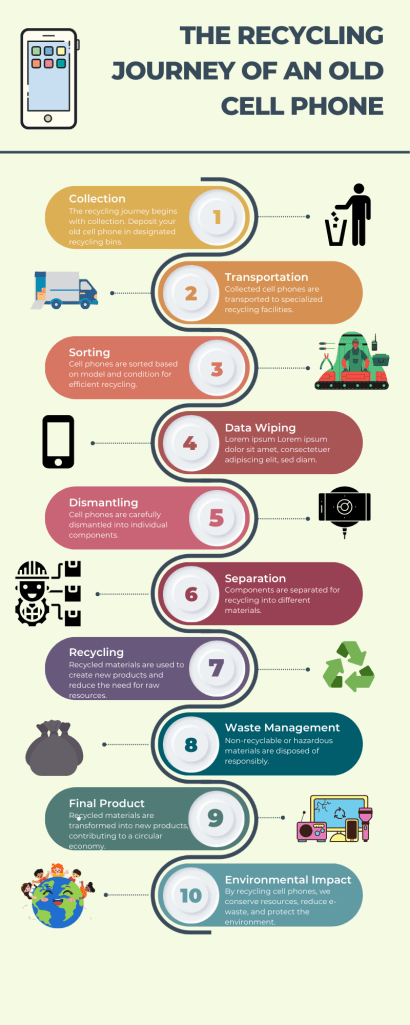
The recycling journey starts with collection. When you decide to recycle your old cell phone, you can drop it into designated recycling bins at various locations, such as electronics stores or community centers. These bins act as portals to a world of environmental benefits, ensuring your device is put to good use instead of ending up in landfills.
Step 2: Transportation – On the Move
Once collected, the old cell phones are transported to specialized recycling facilities. Trucks and transportation networks carry these devices to the next phase of their recycling adventure. The journey has just begun, but the impact on our planet is already taking shape.
Step 3: Sorting – Organizing for Efficiency
At the recycling facility, the cell phones go through a sorting process. Skilled workers meticulously separate them based on their models and conditions. This careful organization streamlines the recycling process, making it more efficient and effective.
Step 4: Data Wiping – Safeguarding Your Privacy
Before recycling, a crucial step is to wipe out any personal data from the old cell phones. Your privacy is of utmost importance, and recycling facilities ensure that all personal information is thoroughly erased, giving you peace of mind as your device embarks on its eco-friendly journey.
Step 5: Dismantling – Taking Things Apart
Now comes the fascinating part: dismantling the old cell phones. At this stage, the devices are taken apart, revealing their intricate components. The battery, circuit board, screen, and other parts are carefully separated, paving the way for their transformation into valuable resources.
Step 6: Separation – Dividing for Renewal
Next, the components undergo separation. Different materials like plastic, metals, and other recyclable parts are sorted into distinct groups. This process is essential to recycle each element efficiently and minimize waste.
Step 7: Recycling – A Second Chance for Materials
Here comes the magic of recycling! The separated materials are sent for recycling, where they are processed and transformed into raw materials. These recycled materials are then used to create new products, ranging from new electronic devices to jewelry and much more.
Step 8: Waste Management – Handling Responsibly
During recycling, there might be some materials that cannot be recycled or hazardous substances. But fret not! Responsible waste management ensures that these materials are handled safely and properly, avoiding any harm to the environment.
Step 9: Final Product – A Reborn Creation
The recycling journey reaches its peak as the recycled materials take on a new form. From innovative electronics to eco-friendly accessories, these recycled components breathe life into various new products, contributing to a circular economy.
Step 10: Environmental Impact – Making a Difference
By recycling your old cell phone, you become a superhero for the environment. The recycling journey you initiated helps conserve valuable resources, reduce electronic waste, and significantly lessen the environmental burden.
Infographic on The Recycling Journey of an Old Cell Phone

 Decoding Biosphere