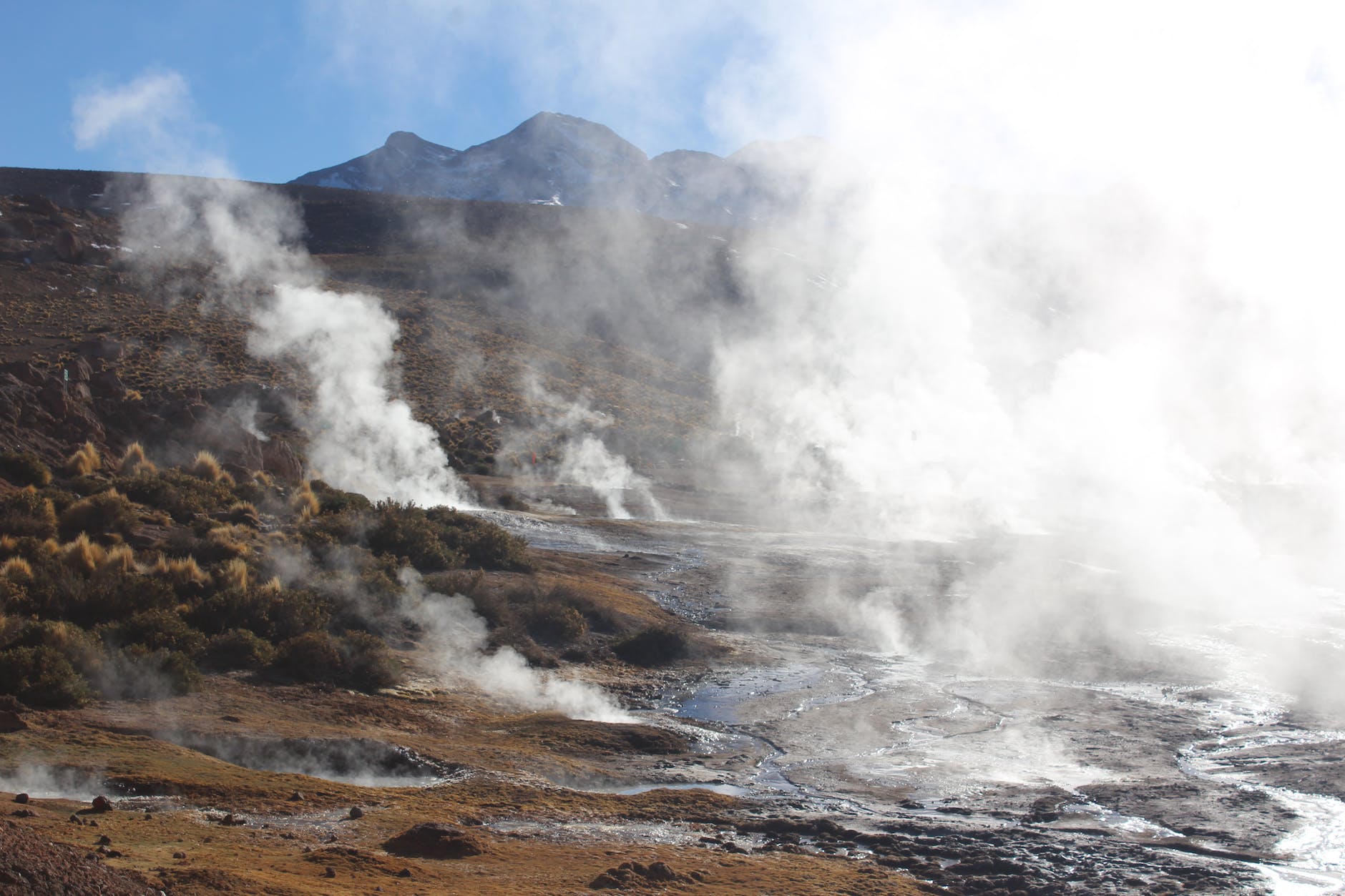
In the search for sustainable energy sources, geothermal power plants have emerged as a potential solution. By tapping into the Earth’s natural heat, these plants generate clean electricity with minimal environmental impact. In this article, we explore all about the geothermal power plants, understanding their working principles, benefits, and the different types that harness the Earth’s geothermal energy.
What are Geothermal Power Plants?
Geothermal power plants harness the Earth’s internal heat to generate electricity. The Earth’s core generates an abundance of heat due to radioactive decay and residual heat from its formation. This thermal energy seeps through the Earth’s crust, creating geothermal reservoirs that consist of hot water and steam.
Types of Geothermal Power Plants:
Dry Steam Power Plants:
Dry steam power plants are the oldest and most straightforward type of geothermal power plants. They are ideally suited for areas with high-temperature geothermal reservoirs that naturally produce dry steam. The process involves:
Tapping the Reservoir: A well is drilled to access the underground geothermal reservoir and release the high-pressure dry steam.
Steam Diversion: The dry steam is directly channeled into a steam turbine, where it expands and rotates the turbine to generate electricity.
Condensation: After passing through the turbine, the low-pressure steam is condensed back into water, and the cycle is repeated.
Flash Steam Power Plants:
Flash steam power plants are the most common type of geothermal power plants globally. They utilize high-temperature geothermal reservoirs that produce a mixture of hot water and steam. The process involves:
Reservoir Tapping: Similar to dry steam plants, wells are drilled to access the geothermal reservoir.
Flashing: The high-pressure hot water from the reservoir is released to a lower pressure environment through a separator. This causes some of the water to flash into steam.
Turbine Operation: The flashed steam is directed to a steam turbine, rotating it to produce electricity.
Condensation: The low-pressure steam is condensed back into water and recycled to the separator for reuse.
Binary Cycle Power Plants:
Binary cycle power plants are suitable for lower-temperature geothermal reservoirs. Unlike dry steam and flash steam plants, binary cycle plants use a secondary working fluid with a lower boiling point to generate electricity. The process involves:
Reservoir Tapping: Wells are drilled to access the geothermal reservoir and extract hot water.
Heat Exchange: The hot water from the reservoir heats the secondary working fluid (commonly an organic compound), causing it to vaporize.
Vapor Expansion: The vaporized working fluid is directed to a turbine, where it expands and generates electricity.
Condensation: After passing through the turbine, the low-pressure vapor is condensed back into a liquid and reused in the cycle.
Advantages of Geothermal Power Plants:
Renewable and Clean: Geothermal power plants produce clean electricity without burning fossil fuels, contributing to reduced greenhouse gas emissions.
Consistent and Reliable: Geothermal energy provides a stable and reliable power supply, unaffected by weather conditions or time of day.
Minimal Land Use: Geothermal power plants have a small land footprint, making them suitable for diverse geographical locations.
Long Lifespan: Geothermal power plants have a long operational lifespan, requiring minimal maintenance.
Geothermal Power Plant Efficiency
The efficiency of a geothermal power plant refers to the ratio of useful electrical energy generated to the amount of geothermal heat extracted from the Earth’s crust. Geothermal power plants are known for their relatively high efficiency compared to many other forms of power generation. The efficiency of geothermal power plants can vary based on the type of plant, the technology used, and the specific geothermal resource.
Dry steam power plants, which utilize high-temperature dry steam directly from the geothermal reservoir, typically have high efficiency rates. They can achieve efficiency levels ranging from 70% to 85%. The direct use of dry steam eliminates the need for additional heat exchangers, increasing the overall efficiency.
Flash steam power plants, which use high-temperature geothermal water that produces steam when the pressure is lowered, also exhibit good efficiency. These plants generally achieve efficiency rates between 10% to 20% higher than binary cycle plants. Their efficiency ranges from 70% to 80%, making them one of the most commonly used geothermal power plant types due to their widespread availability.
Binary cycle power plants, which use a secondary working fluid with a lower boiling point to generate electricity, typically have slightly lower efficiency compared to dry steam and flash steam plants. Their efficiency ranges from 10% to 15% lower than that of flash steam plants. Binary cycle power plants generally achieve efficiency levels between 10% to 20% and are often utilized in areas with lower-temperature geothermal resources.
Geothermal Power Plant Layout
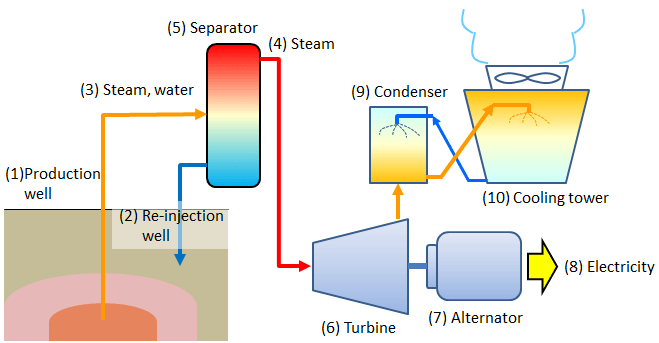
The layout of a geothermal power plant is designed to efficiently extract the Earth’s geothermal energy and convert it into electricity. The layout may vary depending on the specific type of geothermal power plant, such as dry steam, flash steam, or binary cycle, but there are common elements found in most geothermal power plants. Here is a general overview of the layout of a geothermal power plant:
- Geothermal Reservoir: The heart of a geothermal power plant is the geothermal reservoir, which is a subsurface area containing hot water and steam. The reservoir is accessed by drilling one or more production wells to extract the geothermal fluids.
- Production Wells: Production wells are drilled deep into the Earth’s crust to access the geothermal reservoir. These wells allow the geothermal fluids (e.g., hot water, steam) to be brought to the surface for power generation.
- Separator: In flash steam and binary cycle power plants, the geothermal fluids (a mixture of hot water and steam) are directed to a separator. The separator separates the steam from the hot water, allowing the steam to be used for power generation while the water is either reinjected back into the reservoir or used for other purposes.
- Power Generation System: The power generation system converts the geothermal energy into electricity. The system typically consists of the following components:
- a. Turbine: The steam from the separator is directed to a steam turbine. The high-pressure steam expands as it passes through the turbine blades, causing the turbine to rotate.
- b.Generator: The rotating turbine is connected to an electricity generator. The mechanical energy from the turbine is converted into electrical energy through electromagnetic induction.
- c. Cooling System: After passing through the turbine, the low-pressure steam is condensed back into water using a cooling system. In binary cycle power plants, the secondary working fluid is also condensed back to its liquid state.
- Transmission Lines: The electricity generated by the geothermal power plant is transmitted through high-voltage transmission lines to the electrical grid, where it can be distributed to consumers.
- Reinjection Wells (In Some Cases): In flash steam and binary cycle power plants, after the steam has been separated from the geothermal fluids, the remaining hot water (brine) is often reinjected into the geothermal reservoir through injection wells. This helps sustain the reservoir’s pressure and ensures the long-term sustainability of the geothermal resource.
- Auxiliary Systems: Geothermal power plants also include various auxiliary systems, such as water treatment systems, cooling towers, pumps, and control systems, to optimize the efficiency and operation of the plant.
Examples of Geothermal Power Plants
- The Geysers, California, USA: The Geysers is the world’s largest geothermal field located in Northern California, USA. It consists of multiple geothermal power plants operated by Calpine Corporation and other companies. The plants at The Geysers utilize flash steam technology to generate electricity from the high-temperature steam extracted from the geothermal reservoir. Together, these plants have a combined capacity of over 1,500 megawatts (MW) and provide clean and renewable energy to millions of homes and businesses.
- Hellisheidi Geothermal Power Plant, Iceland: Located near Reykjavik, Iceland, the Hellisheidi Geothermal Power Plant is one of the largest geothermal facilities in the world. It is operated by Orkuveita Reykjavikur, the Reykjavik Energy Utility. The power plant utilizes both flash steam and binary cycle technology to generate electricity and provides about 300 MW of electricity and 133 MW of thermal energy for district heating. Iceland is known for its extensive use of geothermal energy, and the Hellisheidi plant is a prime example of how geothermal resources can contribute significantly to a country’s energy needs.
- Larderello Geothermal Complex, Italy: The Larderello Geothermal Complex, located in Tuscany, Italy, is one of the oldest geothermal power production sites in the world. It has been operational since the early 20th century and is operated by Enel Green Power. The complex uses a combination of dry steam and flash steam technologies to produce electricity. With an installed capacity of over 770 MW, the Larderello complex is a significant contributor to Italy’s renewable energy portfolio.
- Nesjavellir Geothermal Power Station, Iceland: Another noteworthy geothermal power plant in Iceland is the Nesjavellir Geothermal Power Station, situated close to Reykjavik. It utilizes the binary cycle technology and has a capacity of approximately 120 MW of electricity and 300 MW of thermal energy for district heating. The plant plays a crucial role in providing sustainable heating and electricity for the capital region of Iceland.
- Olkaria Geothermal Power Plant, Kenya: Olkaria is a geothermal power plant complex located in the Great Rift Valley, Kenya. It is operated by KenGen, Kenya’s state-owned power generating company. The Olkaria complex harnesses the region’s abundant geothermal resources through flash steam and binary cycle technologies. The combined capacity of the plants in the Olkaria complex exceeds 600 MW, making it one of the largest geothermal power generation sites in Africa.
Geothermal power plants offer a sustainable and eco-friendly solution to our energy needs. By tapping into the Earth’s geothermal reservoirs, these power plants generate reliable electricity with minimal environmental impact. Whether it’s dry steam, flash steam, or binary cycle, each type of geothermal power plant plays a crucial role in advancing our transition towards cleaner and more sustainable energy sources.
MCQs on Geothermal Power Plants
- Geothermal power plants generate electricity by harnessing energy from:
- a) Sunlight
- b) Wind
- c) Earth’s internal heat
- d) Ocean waves
- Which type of geothermal power plant uses high-temperature dry steam from the geothermal reservoir?
- a) Dry Steam Power Plant
- b) Flash Steam Power Plant
- c) Binary Cycle Power Plant
- d) Triple Flash Power Plant
- The world’s largest geothermal field, known for its flash steam and dry steam power plants, is called:
- a) The Sahara Desert
- b) The Geysers
- c) The Grand Canyon
- d) The Great Barrier Reef
- Which component of a geothermal power plant is responsible for rotating the electricity generator?
- a) Turbine
- b) Separator
- c) Condenser
- d) Pump
- The most common type of geothermal power plant globally, utilizing a mixture of hot water and steam, is known as:
- a) Dry Steam Power Plant
- b) Binary Cycle Power Plant
- c) Flash Steam Power Plant
- d) Hybrid Geothermal Power Plant
- In a binary cycle power plant, the secondary working fluid is typically:
- a) Dry steam
- b) Hot water
- c) Cold air
- d) An organic compound with a low boiling point
- What is the primary advantage of geothermal power plants over fossil fuel-based power plants?
- a) Lower efficiency
- b) High greenhouse gas emissions
- c) Non-renewable energy source
- d) Minimal greenhouse gas emissions
- The condensation process in a geothermal power plant:
- a) Releases heat to the atmosphere
- b) Increases the temperature of the geothermal reservoir
- c) Converts steam to hot water
- d) Recycles steam back to the turbine
- Geothermal power plants are considered an excellent source of electricity generation because they:
- a) Rely on fossil fuels for operation
- b) Offer a steady and reliable power supply
- c) Require a large land footprint for installation
- d) Produce significant greenhouse gas emissions
Answers:
- c) Earth’s internal heat
- a) Dry Steam Power Plant
- b) The Geysers
- a) Turbine
- c) Flash Steam Power Plant
- d) An organic compound with a low boiling point
- d) Minimal greenhouse gas emissions
- a) Releases heat to the atmosphere
- b) Gujarat
- b) Offer a steady and reliable power supply
You May Also like

 Decoding Biosphere
