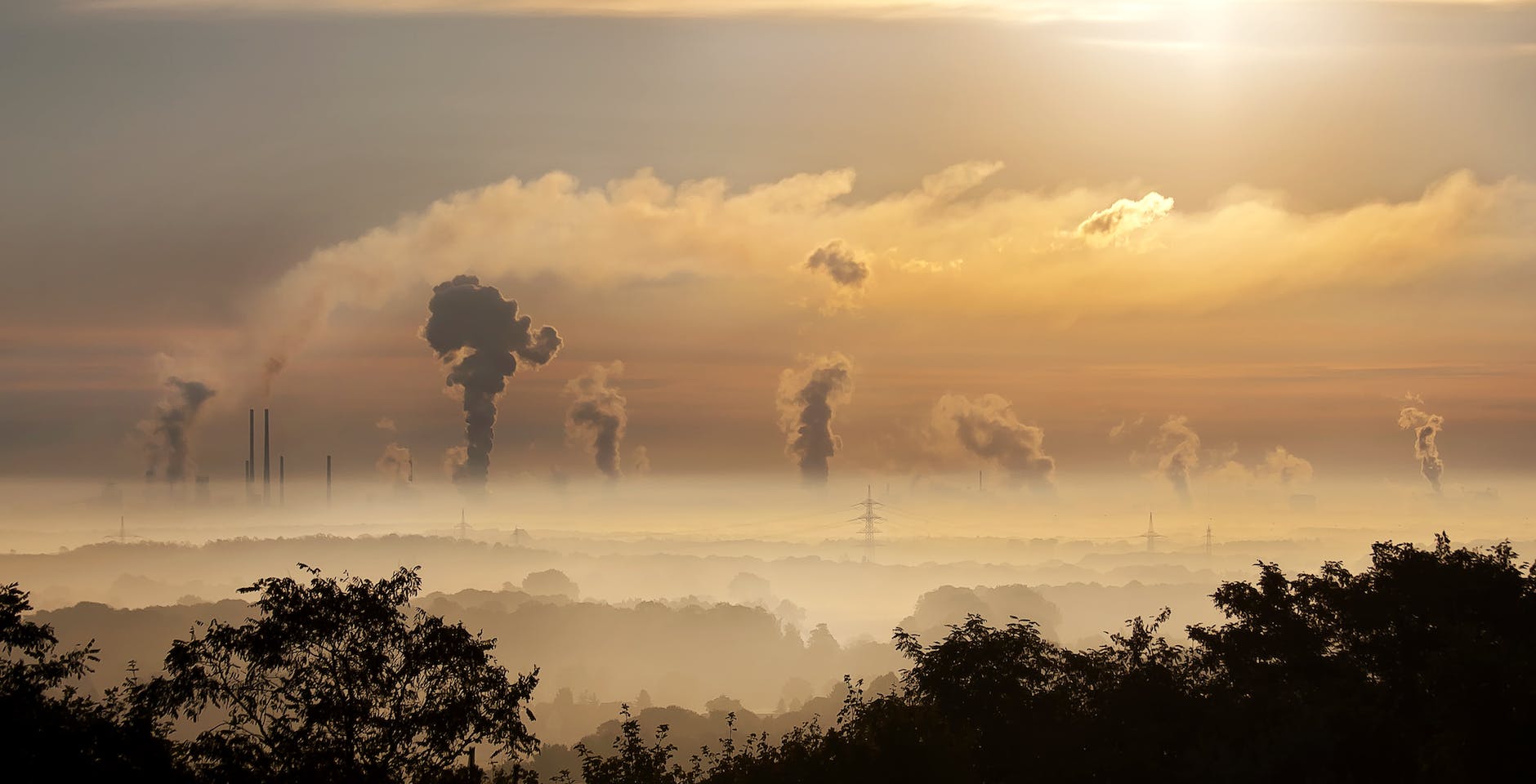
Air pollution is a global environmental concern with far-reaching impacts on human health, ecosystems, and climate. The field of air pollution meteorology studies the complex relationship between atmospheric processes and the dispersion of pollutants, offering valuable insights into the patterns, sources, and consequences of air pollution. Factors such as wind, temperature structure, atmospheric stability, and dispersion mechanisms play a pivotal role in shaping air quality and determining pollution levels. This article explores the science behind air pollution meteorology and how it influences our understanding of pollution dynamics and mitigation strategies.
Wind as a Crucial Factor
Wind is a fundamental meteorological parameter that significantly influences the dispersion and transport of air pollutants. The movement of air masses, driven by wind patterns, plays a central role in distributing pollutants both horizontally and vertically within the atmosphere. The speed and direction of winds determine the extent to which pollutants are transported away from their source regions.
Wind patterns can be classified into several categories:
- Local Winds: These winds are driven by local temperature differences, terrain, and pressure variations. Examples include sea and land breezes, valley winds, and mountain winds. Local winds can affect the concentration of pollutants in specific regions.
- Global Wind Systems: Prevailing global wind patterns, such as the trade winds and westerlies, play a critical role in redistributing pollutants on a larger scale. These winds transport pollutants across continents and oceans, influencing air quality on a global scale.
- Synoptic Winds: Synoptic-scale winds, driven by pressure gradients associated with weather systems, impact the dispersion of pollutants over regional scales. The movement of high- and low-pressure systems can influence the transport of pollutants from one region to another.
Temperature Structure and Vertical Mixing
The temperature structure of the Earth’s atmosphere plays a crucial role in shaping atmospheric dynamics, weather patterns, and the dispersion of air pollutants.
Temperature Lapse Rate: Changes in Altitude
The temperature structure of the atmosphere is characterized by the temperature lapse rate, which describes how temperature changes with increasing altitude. On average, temperature decreases with height in the troposphere, the lowest layer of the atmosphere where weather and atmospheric processes primarily occur. This normal lapse rate is roughly 6.5°C per 1000 meters (3.6°F per 1000 feet).
However, variations in temperature lapse rate occur due to local, regional, and global factors. For example, near the Earth’s surface, temperature is influenced by factors such as solar radiation, surface type (land or water), and local weather conditions. As altitude increases, temperature variations become more influenced by larger-scale atmospheric processes and circulation patterns.
Implications for Vertical Mixing
Vertical mixing refers to the process by which air masses of different temperatures, humidity levels, and compositions interact and exchange properties in the vertical direction. The temperature structure of the atmosphere directly influences vertical mixing, and this interaction has profound implications for air quality, atmospheric stability, and the distribution of pollutants.
1. Atmospheric Stability and Mixing:
Atmospheric stability is a key concept in understanding vertical mixing. Stability refers to the tendency of air parcels to either remain in place (stable conditions) or rise and disperse (unstable conditions). The temperature lapse rate plays a crucial role in determining atmospheric stability. When the lapse rate is steep (temperature decreases rapidly with altitude), the atmosphere is unstable, and vertical mixing is enhanced. In contrast, when the lapse rate is shallow (temperature changes slowly with altitude), stable conditions inhibit vertical mixing, potentially leading to the accumulation of pollutants near the surface.
2. Nocturnal Temperature Inversions:
One notable phenomenon related to the temperature structure is the occurrence of temperature inversions. During clear and calm nights, the Earth’s surface cools rapidly, and the air in contact with the surface also cools. This cooling can lead to the formation of a temperature inversion, where a layer of warmer air lies above cooler air near the surface. Inversions can trap pollutants close to the ground, reducing vertical mixing and leading to poor air quality. Cities and urban areas are particularly prone to temperature inversions due to the heat-absorbing properties of buildings and surfaces.
3. Diurnal Variation and Mixing:
The diurnal variation in temperature (day-night temperature cycle) influences the extent of vertical mixing. During the day, solar radiation heats the Earth’s surface, leading to the warming of the lower atmosphere. This heating promotes vertical mixing as warm air rises and interacts with cooler air aloft. At night, the Earth’s surface cools, and the temperature structure becomes more stable, restricting vertical mixing and allowing pollutants to accumulate near the surface.
4. Atmospheric Waves and Mixing:
Large-scale atmospheric waves, such as gravity waves and Rossby waves, can disrupt the typical temperature lapse rate and introduce variations in temperature at different altitudes. These waves can enhance or inhibit vertical mixing, depending on their properties and the specific atmospheric conditions.
Atmospheric Stability and its Role
Atmospheric stability, a measure of how readily air can mix vertically, plays a critical role in determining air quality and pollution dispersion. Different stability conditions result from the interaction between temperature, pressure, and humidity. The three main stability categories are:
- Stable Atmosphere: In a stable atmosphere, cooler, denser air near the surface resists vertical mixing. Pollutants released at ground level may remain trapped, leading to poor air quality. Stable conditions are common during nighttime and under high-pressure systems.
- Neutral Atmosphere: In a neutral atmosphere, the temperature lapse rate is similar to the normal lapse rate. Vertical mixing is relatively uninhibited, allowing pollutants to disperse more easily.
- Unstable Atmosphere: An unstable atmosphere occurs when warmer, less dense air is located near the surface. This promotes vertical mixing and dispersion of pollutants. Unstable conditions are common during daytime heating and under low-pressure systems.
Understanding atmospheric stability is crucial for predicting how pollutants will disperse and accumulate. Meteorologists use stability indices, such as the Richardson number or the Brunt–Väisälä frequency, to assess the likelihood of vertical mixing and the potential for air pollution events.
Dispersion of Air Pollutants
The dispersion of air pollutants refers to the spreading and mixing of pollutants within the atmosphere.
Several key factors influence the dispersion of air pollutants:
- Wind Patterns: Wind speed and direction are primary drivers of dispersion. Higher wind speeds promote faster pollutant transport over longer distances. Wind direction determines the trajectory of pollutants, impacting the areas affected by pollution plumes.
- Atmospheric Stability: Atmospheric stability influences vertical mixing and the height to which pollutants rise. Stable conditions can trap pollutants near the surface, while unstable conditions promote vertical mixing and dispersion.
- Topography: The presence of hills, mountains, valleys, and urban structures can affect wind patterns and create turbulence, leading to variations in dispersion. Valleys and low-lying areas may experience stagnant air and reduced dispersion.
- Emission Height: The height at which pollutants are released influences their initial dispersion. Pollutants emitted closer to the ground are subject to lower wind speeds and may impact nearby areas more significantly.
- Pollutant Characteristics: The physical and chemical properties of pollutants, such as their size, density, and reactivity, affect how they disperse in the atmosphere. Heavier particles tend to settle closer to the emission source, while lighter particles may travel longer distances.
- Meteorological Conditions: Weather conditions such as temperature, humidity, and pressure gradients influence atmospheric stability and turbulence, directly affecting dispersion patterns.
Mechanisms of Pollutant Dispersion
Pollutant dispersion involves the transport, mixing, and spreading of pollutants throughout the atmosphere. Several mechanisms contribute to this process:
- Advection: Advection is the horizontal transport of pollutants by the movement of air masses. Prevailing wind patterns carry pollutants over long distances, impacting areas far from their sources. Global and regional wind systems play a significant role in advection.
- Turbulent Diffusion: Turbulence in the atmosphere results from wind shear and atmospheric instability. Turbulent eddies mix air masses vertically and horizontally, leading to the dispersion of pollutants. This process is particularly important near the source of emissions.
- Convection: Convection occurs when warm air rises and cool air sinks. During daytime heating, convection enhances vertical mixing, aiding the dispersion of pollutants. Conversely, during nighttime cooling, convection weakens, potentially leading to pollutant accumulation near the surface.
- Topographic Effects: Terrain features such as hills, valleys, and buildings can alter wind patterns and create localized turbulence. Pollutants can be trapped in valleys or stagnant areas, leading to concentration gradients.
Implications for Air Quality and Health
The dispersion of air pollutants has significant implications for air quality and human health:
- Air Quality: Dispersion determines the distribution of pollutants, leading to spatial variability in air quality. Areas close to emission sources experience higher concentrations, while downwind areas are exposed to diluted pollutants.
- Health Impact: Areas with poor dispersion can experience elevated levels of pollutants, leading to adverse health effects. Long-term exposure to high concentrations of pollutants is linked to respiratory diseases, cardiovascular issues, and even premature death.
- Urban Air Quality: Urban areas are especially vulnerable to poor dispersion due to localized emissions and complex topography. Stagnant air conditions in urban canyons can trap pollutants, exacerbating air quality problems.
Mitigation Strategies and Future Directions
Understanding air pollution meteorology is crucial for designing effective air quality management strategies. Meteorological data, combined with air quality monitoring, can help predict pollution episodes, implement timely interventions, and develop long-term policies for pollution reduction. Strategies such as urban planning, emission controls, and transportation management are all influenced by meteorological conditions and their impact on pollutant dispersion.
As climate change continues to alter atmospheric patterns, it is important to consider how shifting wind patterns, temperature profiles, and atmospheric stability conditions will affect air pollution dynamics. Research in air pollution meteorology plays a pivotal role in understanding these changes and their implications for air quality, human health, and ecosystems.
Final Words
Air pollution meteorology bridges the gap between atmospheric science and environmental health, shedding light on the relationships between meteorological factors and air quality. Wind patterns, temperature structure, atmospheric stability, and dispersion mechanisms collectively determine the distribution and fate of air pollutants.
(MCQs) on air pollution meteorology:
- Which of the following factors plays a significant role in the dispersion of air pollutants?
- a) Soil composition
- b) Ocean currents
- c) Solar radiation
- d) Wind patterns
- Atmospheric stability refers to the tendency of an air parcel to:
- a) Remain in place
- b) Move vertically
- c) Rotate horizontally
- d) Expand in volume
- During stable atmospheric conditions, pollutants are more likely to:
- a) Disperse widely
- b) Accumulate near the surface
- c) Move upwards rapidly
- d) Dissolve in water bodies
- The rate at which temperature changes with altitude is known as:
- a) Atmospheric pressure
- b) Wind speed
- c) Lapse rate
- d) Ozone concentration
- Which of the following weather conditions promotes vertical mixing and dispersion of pollutants?
- a) Clear and calm nights
- b) Strong temperature inversion
- c) Stable atmosphere
- d) Unstable atmosphere
- What is the primary mechanism responsible for transporting pollutants over long distances?
- a) Convection
- b) Turbulence
- c) Advection
- d) Radiation
- Which type of wind pattern is driven by pressure gradients associated with weather systems?
- a) Local winds
- b) Trade winds
- c) Advection winds
- d) Synoptic winds
- Temperature inversions are characterized by:
- a) Warm air at higher altitudes
- b) Cool air at the surface
- c) Rapid vertical mixing
- d) Unstable atmospheric conditions
- Which dispersion model simulates the behavior of individual pollutant particles as they move through the atmosphere?
- a) Gaussian plume model
- b) Lagrangian model
- c) Numerical model
- d) Radiative transfer model
- Vegetation and green spaces in urban areas can help enhance dispersion by:
- a) Blocking wind patterns
- b) Increasing pollution emissions
- c) Promoting temperature inversions
- d) Breaking up stagnant air
Answers:
- d) Wind patterns
- a) Remain in place
- b) Accumulate near the surface
- c) Lapse rate
- d) Unstable atmosphere
- c) Advection
- d) Synoptic winds
- a) Warm air at higher altitudes
- b) Lagrangian model
- d) Breaking up stagnant air
You May Also Like

 Decoding Biosphere