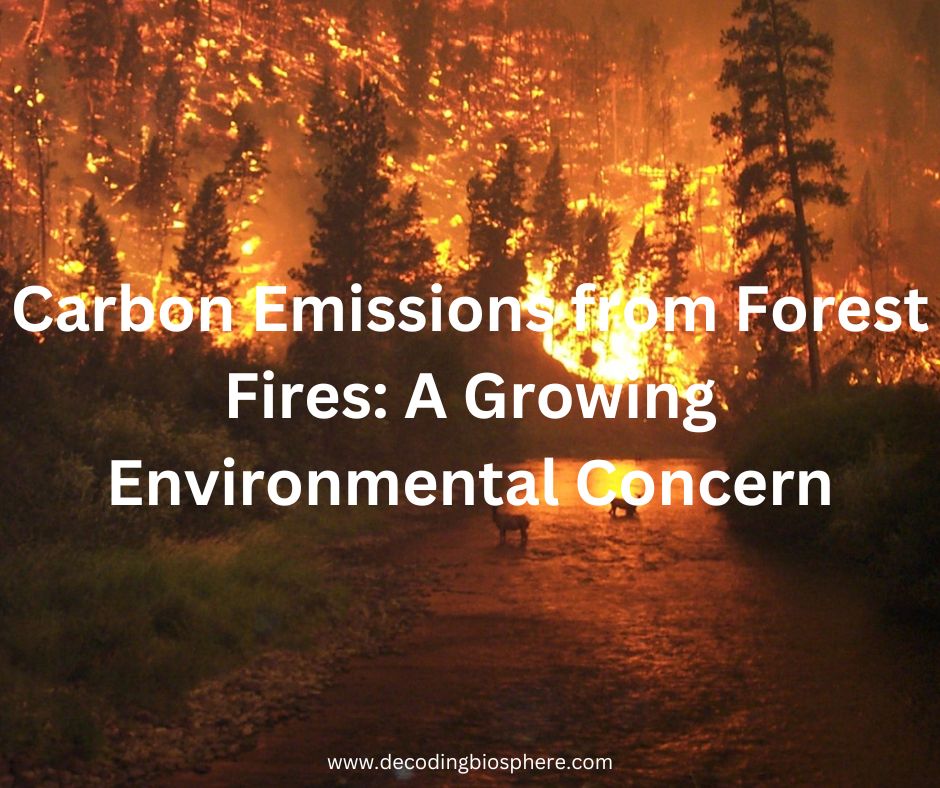
Forest fires, often referred to as wildfires, have become an alarming issue across the globe in recent years. These fires not only destroy vast expanses of natural habitat but also contribute significantly to carbon emissions, one of the leading causes of global climate change. Carbon emissions from forest fires occur when trees, plants, and soil organic matter burn, releasing stored carbon into the atmosphere in the form of carbon dioxide (CO₂) and other greenhouse gases. These emissions exacerbate the global warming crisis, making it essential to understand the problem and explore potential solutions.
What Are Forest Fires?
Forest fires are uncontrolled fires that occur in wildlands, forests, or grasslands. These fires can be caused by both natural factors, such as lightning strikes, and human activities, such as deforestation, agricultural clearing, and careless handling of fire sources. While some fires are part of natural ecosystems and can even be beneficial for regenerating forests, the increasing frequency and intensity of forest fires are contributing to environmental degradation and rising carbon emissions.
How Forest Fires Lead to Carbon Emissions
Forests act as carbon sinks, meaning they absorb and store carbon dioxide from the atmosphere during the process of photosynthesis. When a forest burns, the carbon stored in the trees, vegetation, and soil is released back into the atmosphere. In particular, the burning of trees results in large amounts of CO₂ being emitted, as trees are primarily made up of carbon compounds. Additionally, forest fires also produce other greenhouse gases such as methane (CH₄) and nitrous oxide (N₂O), which are even more potent than carbon dioxide in terms of their impact on global warming.
When forest fires occur, the balance between carbon sequestration (absorption of carbon) and carbon emission is disrupted. Instead of absorbing CO₂, the forest becomes a source of emissions, contributing to the overall increase in greenhouse gases in the atmosphere.
Global Statistics on Forest Fires and Carbon Emissions
In recent years, the world has witnessed an alarming increase in the occurrence and intensity of forest fires. According to the Global Forest Watch, in 2021 alone, over 9.3 million hectares (23 million acres) of forest were lost to fires, contributing significantly to carbon emissions. This has led to a growing concern about the impact of these fires on climate change.
A report by the Global Fire Emissions Database (GFED) estimates that global fire emissions in 2021 were approximately 8.1 gigatons of CO₂, with forest fires accounting for a significant portion of these emissions. The Amazon rainforest, often referred to as the “lungs of the Earth,” has been severely affected by wildfires in recent years. In 2019, for example, fires in the Amazon released over 200 million metric tons of CO₂, according to Brazil’s National Institute for Space Research (INPE).
Other regions, such as Australia, California in the United States, and Siberia in Russia, have also been hard hit by devastating wildfires. The Australian bushfires of 2019-2020, often referred to as “Black Summer,” released an estimated 400 million tons of CO₂ into the atmosphere. Similarly, California’s wildfires in 2020 emitted over 112 million metric tons of CO₂, equivalent to the annual emissions of 24 million cars.
In addition to these regions, the Mediterranean has also experienced severe wildfires, with Greece and Turkey facing some of the worst fires in decades during the summer of 2021. These fires not only destroyed vast areas of forest but also displaced thousands of people and caused significant economic losses.
The Role of Climate Change in Exacerbating Forest Fires
One of the major factors driving the increasing frequency and intensity of forest fires is climate change. Rising global temperatures, prolonged droughts, and changing weather patterns have created ideal conditions for wildfires to ignite and spread. Higher temperatures dry out vegetation, making it more susceptible to ignition. In addition, extreme weather events such as heatwaves and strong winds can exacerbate the spread of fires, making them harder to control.
According to the Intergovernmental Panel on Climate Change (IPCC), the risk of forest fires is expected to increase in many parts of the world as global temperatures continue to rise. This creates a dangerous feedback loop: climate change leads to more frequent and intense forest fires, which in turn release more carbon into the atmosphere, further contributing to global warming.
The Impact of Forest Fire Emissions on the Environment
The carbon emissions from forest fires have far-reaching consequences for the environment. The release of large amounts of CO₂ and other greenhouse gases into the atmosphere contributes to the greenhouse effect, which leads to global warming and climate change. These emissions can also disrupt local ecosystems, as forests play a crucial role in regulating climate, maintaining biodiversity, and supporting water cycles.
The destruction of forests through wildfires also means the loss of critical carbon sinks, which help absorb CO₂ from the atmosphere. This further exacerbates the problem, as fewer forests are available to sequester carbon, leading to higher levels of CO₂ remaining in the atmosphere.
In addition to the direct impact on climate change, forest fires also result in air pollution. The smoke produced by wildfires contains harmful pollutants such as particulate matter, carbon monoxide, and volatile organic compounds. These pollutants can have serious health effects, especially for vulnerable populations, including children, the elderly, and individuals with respiratory conditions.
Solutions to Reduce Carbon Emissions from Forest Fires
While it may be impossible to prevent all forest fires, there are several strategies that can help reduce their frequency and intensity, as well as mitigate their carbon emissions:
- Forest Management and Fire Prevention: Proper forest management practices, such as controlled burns, thinning of dense vegetation, and creating firebreaks, can help reduce the risk of large-scale wildfires. Controlled burns, also known as prescribed fires, are intentionally set under controlled conditions to reduce the amount of flammable material in a forest. This can prevent the buildup of dry vegetation that can fuel wildfires.
- Reforestation and Afforestation: Planting trees in areas affected by forest fires, as well as in deforested regions, can help restore carbon sinks and absorb CO₂ from the atmosphere. Reforestation efforts can also help restore ecosystems and promote biodiversity.
- Climate Change Mitigation: Addressing the root cause of increasing forest fires requires taking action on climate change. Reducing greenhouse gas emissions through the use of renewable energy, improving energy efficiency, and transitioning to low-carbon technologies can help slow down global warming and reduce the conditions that lead to more frequent forest fires.
- Early Detection and Monitoring: Using advanced technologies, such as satellite imagery and remote sensing, to monitor forests can help detect fires early and prevent them from spreading uncontrollably. Early detection allows for quicker response times, minimizing the damage caused by fires and reducing carbon emissions.
- Community Education and Awareness: Educating communities about the dangers of forest fires and how to prevent them is crucial. Simple actions such as properly extinguishing campfires, avoiding the use of fire during dry seasons, and reporting suspicious activities can help prevent accidental wildfires.
Conclusion
Carbon emissions from forest fires are a significant contributor to global climate change, with devastating effects on the environment, ecosystems, and human health. The increasing frequency and intensity of forest fires, driven in part by climate change, make it crucial to take action to reduce their occurrence and mitigate their impact. By implementing effective forest management practices, promoting reforestation, and addressing climate change, we can reduce carbon emissions from forest fires and work toward a more sustainable and resilient future.
As we face the growing threat of forest fires and their impact on carbon emissions, it is essential to raise awareness and promote global cooperation to protect our forests and combat climate change.


 Decoding Biosphere