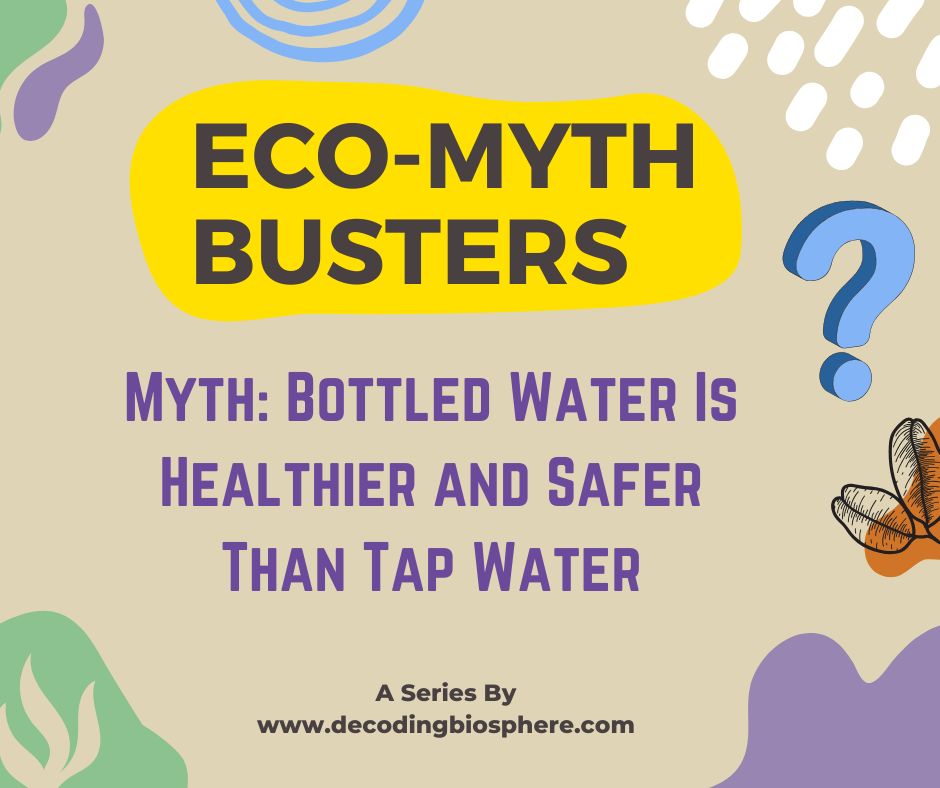
When it comes to staying hydrated, many people believe that bottled water is safer and healthier than tap water. This belief has been reinforced by marketing and packaging, which often depict bottled water as pure, natural, and free from any harmful contaminants. But is bottled water really better than tap water? Let’s bust this common eco-myth!
The Origins of the Myth
Bottled water companies have spent billions promoting the idea that their water comes from pristine mountain springs or other natural sources, making it cleaner and safer than tap water. On the other hand, tap water sometimes has a bad reputation due to concerns about pollution or aging infrastructure in some areas. However, in most developed countries, tap water is heavily regulated and often just as safe—if not safer—than bottled water.
The Truth About Bottled Water vs. Tap Water
Regulation and Safety Standards
Tap water in many countries, including India, the US, and most of Europe, is strictly regulated by government agencies. In the US, for instance, the Environmental Protection Agency (EPA) monitors tap water and ensures it meets stringent health standards. Tap water must be tested for harmful chemicals and bacteria multiple times a day.Bottled water, on the other hand, is regulated by different standards. In the US, the Food and Drug Administration (FDA) oversees bottled water, but their testing requirements are less strict than the EPA’s. For example, while tap water is tested for certain contaminants several times a day, bottled water is tested far less frequently. This means tap water may actually be more closely monitored for safety than bottled water.
Fact: In some studies, bottled water has been found to be less pure than tap water. A 2018 investigation by Orb Media found that 93% of bottled water brands contained microplastics.
Source of Bottled Water
Many people think bottled water comes from natural springs or remote mountains, but in reality, a significant portion of bottled water is simply repackaged tap water. Big brands like Aquafina and Dasani have admitted that their products come from municipal water sources, meaning they are essentially selling tap water in plastic bottles at a much higher price.
Fact: According to the Food and Water Watch, nearly 64% of bottled water sold in the US comes from municipal tap water sources.
Environmental Impact
One of the biggest downsides to bottled water is its impact on the environment. Plastic bottles are made from petroleum, and producing them consumes large amounts of energy and resources. Once used, most plastic bottles end up in landfills or polluting oceans, where they take hundreds of years to decompose.
Fact: Around 1 million plastic bottles are purchased every minute around the world, and only about 9% of them are recycled. This contributes to massive amounts of plastic waste. In fact, the average person uses 156 plastic bottles per year!In contrast, tap water has virtually no environmental footprint if consumed directly from the tap. By using a reusable bottle, you can avoid contributing to plastic pollution and reduce your carbon footprint significantly.
Cost Comparison
Bottled water is far more expensive than tap water. On average, bottled water costs around 2000 times more per gallon than tap water. For something that is often just repackaged tap water, the price difference is astonishing. Over time, this can add up to hundreds or even thousands of dollars per person.
Fact: A typical gallon of tap water costs less than 1 cent, while a gallon of bottled water can cost up to $9 or more.
Health Risks of Bottled Water
While bottled water is marketed as being clean and safe, the plastic bottles themselves can pose health risks. When plastic is exposed to heat or sunlight, chemicals like BPA (bisphenol A) can leach into the water. Studies have shown that BPA can disrupt hormones and may increase the risk of certain cancers, reproductive problems, and other health issues.
In contrast, tap water is typically delivered through pipes that don’t contain BPA, making it a safer option when it comes to avoiding harmful chemicals.
So, Which One Is Healthier?
For most people, tap water is just as safe—if not safer—than bottled water. It’s regulated more strictly, tested more frequently, and doesn’t come with the environmental or health concerns associated with plastic bottles. The perception that bottled water is healthier is largely driven by marketing, not facts.
What Can You Do?
If you’re concerned about the safety of your tap water, you can take simple steps to ensure it’s clean:
- Use a water filter: There are many affordable filters available that can remove contaminants, including chlorine and lead, from your tap water.
- Check your water quality: In many countries, water utilities provide detailed reports about the quality of local tap water. You can also have your water tested if you’re worried about specific contaminants.
- Boil your water: In areas where water quality is a concern, boiling water for a few minutes can kill harmful bacteria and viruses.
By drinking tap water and using a reusable bottle, you’re not only saving money, but also helping reduce plastic waste and protect the environment.
Conclusion
The idea that bottled water is inherently healthier and safer than tap water is a myth. In reality, tap water in many parts of the world is held to higher safety standards, costs much less, and doesn’t contribute to the plastic pollution crisis. So, next time you’re thirsty, grab a glass of tap water, fill up your reusable bottle, and take comfort in knowing you’re making a healthier choice for both yourself and the planet!


 Decoding Biosphere