
The kakapo (Strigops habroptilus) is one of the most unique birds on Earth. Known as the world’s heaviest parrot, this flightless bird is native to New Zealand. Its story is both fascinating and sad, as it shows how delicate the balance of nature can be. The kakapo has quirky traits, but its struggle for survival has made it a symbol of hope for many conservation efforts around the world.
What Makes the Kakapo So Special?
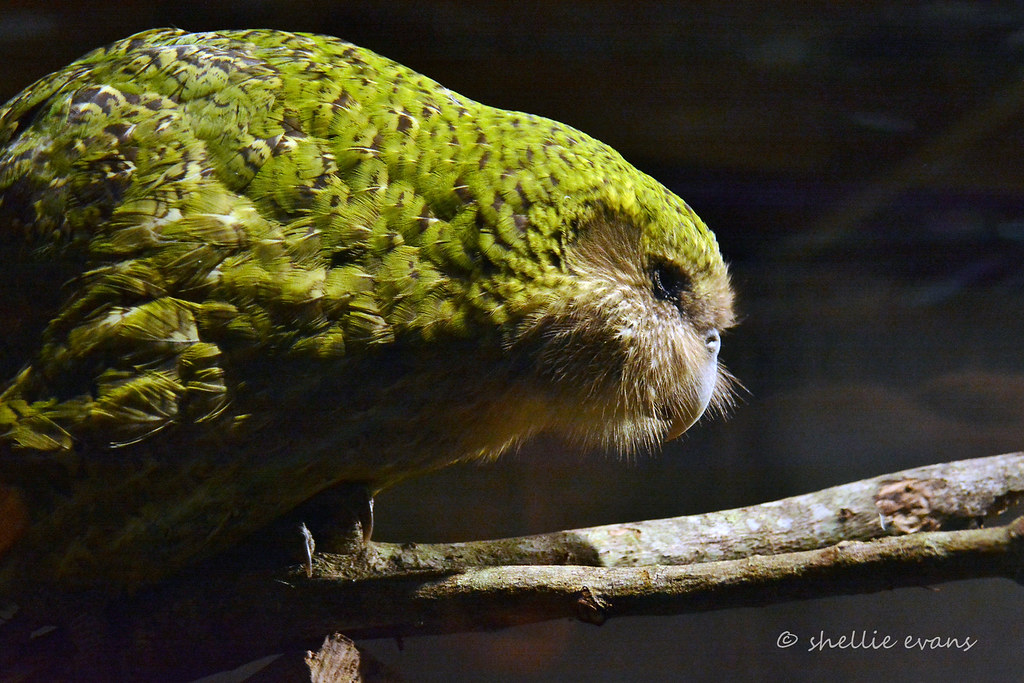
The kakapo is quite different from other parrots. For starters, it can’t fly. Instead, it uses its strong legs to walk around the forest floor or climb trees. Covered in soft, greenish feathers, the kakapo blends well with its surroundings, making it hard to spot. It’s a nocturnal bird, meaning it’s active at night and rests during the day. Its face looks a bit like an owl’s, which is why some people call it the “owl parrot.” On average, a kakapo can weigh around 4 kilograms, making it the heaviest parrot in the world.
Unlike most birds, the kakapo evolved in New Zealand where there were no land predators like cats or rats. Because of this, the kakapo didn’t need to fly to escape danger. It developed other traits, like a slow lifestyle and a long lifespan. Some kakapos can live for more than 90 years! However, they reproduce very slowly, with females only laying eggs once every two to four years, depending on the availability of food like the native rimu fruit.
The Threat of Predators
New Zealand’s isolation was great for the kakapo, but everything changed when humans arrived. Around 1,000 years ago, the first settlers, the Maori, brought rats with them, and later, European settlers brought cats, stoats, and other predators. These animals quickly hunted the kakapo and their eggs, leading to a sharp decline in their population. The kakapo, which couldn’t fly or defend itself, became highly vulnerable.
By the 1970s, only a few kakapos remained. The species was on the verge of extinction.
The Fight to Save the Kakapo
When conservationists realized the kakapo was nearing extinction, they jumped into action. They decided to move the remaining kakapos to predator-free islands where they could live safely without being hunted. This relocation effort marked the start of the Kakapo Recovery Program, one of the world’s biggest conservation efforts.
Scientists started tracking the birds using radio transmitters, which allowed them to monitor the birds’ movements and health. However, because the kakapo reproduces so slowly, conservationists had to get creative. They began using artificial insemination to help boost the population and hand-reared some chicks to ensure they survived.
These efforts have paid off. From just around 50 birds in the 1990s, the kakapo population has grown to roughly 250 today. While it’s still a critically endangered species, this increase gives hope that the kakapo might one day thrive again.
The Role of the Kakapo in New Zealand
Even though it can’t fly, the kakapo plays an important role in New Zealand’s forests. The bird helps spread seeds as it moves through the forest, contributing to the health and diversity of native plants. It’s also a part of Maori culture, where it was once used for traditional purposes like making ceremonial cloaks from its feathers.
Today, the Maori community is involved in the conservation efforts, helping to ensure that the kakapo remains part of New Zealand’s natural and cultural heritage.
Challenges Ahead
Although the kakapo population is slowly growing, it still faces many challenges. For one, diseases could wipe out the population quickly because of the birds’ limited genetic diversity. Climate change also threatens the native forests that kakapos rely on for food and shelter.
But the kakapo’s story is also one of hope. Thanks to the ongoing work of conservationists, scientists, and volunteers, the kakapo has been given a second chance. The Kakapo Recovery Program continues to look for new ways to help the species, from improving breeding techniques to protecting the birds from potential disease outbreaks.
A Symbol of Hope
The kakapo’s journey from near extinction to its slow recovery is a powerful reminder of how human actions can both harm and save the planet’s wildlife. While the kakapo’s future is still uncertain, its story shows us that with enough effort, even the most vulnerable species can be saved.
By spotlighting the kakapo, we not only highlight its incredible uniqueness but also emphasize the importance of conservation. Protecting the kakapo means protecting New Zealand’s rich natural heritage and ensuring that future generations can enjoy this amazing bird.


 Decoding Biosphere