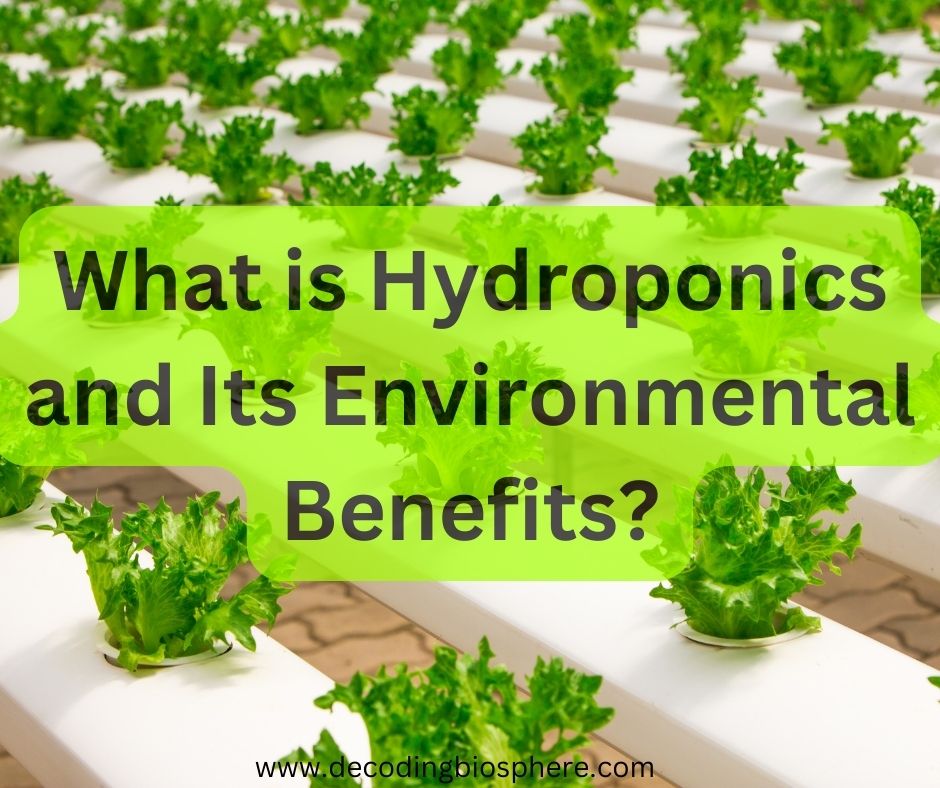
Hydroponics is a method of growing plants without soil, using nutrient-rich water solutions instead. This innovative agricultural technique offers a sustainable alternative to traditional farming, enabling efficient use of resources and minimizing environmental impact. This blog post explores the principles of hydroponics, its various systems, and the significant environmental benefits it provides.
What is Hydroponics?
Definition and Basics
Hydroponics is a soilless method of growing plants where the roots are immersed in or sprayed with nutrient solutions. These solutions contain all the essential minerals and nutrients required for plant growth. By eliminating soil, hydroponics allows for precise control over growing conditions, leading to faster growth rates and higher yields compared to traditional soil-based agriculture.
Historical Background
The concept of hydroponics dates back to ancient civilizations such as the Hanging Gardens of Babylon and the floating gardens of the Aztecs. Modern hydroponics began to develop in the early 20th century with the work of Dr. William Frederick Gericke, who coined the term “hydroponics” in the 1930s. Since then, advancements in technology and research have refined and expanded hydroponic systems, making them a viable option for commercial and home gardening.
Types of Hydroponic Systems
Wick System
The wick system is the simplest type of hydroponic setup, ideal for beginners. It relies on a wick to draw nutrient solution from a reservoir to the plant roots. While low-cost and easy to maintain, the wick system is best suited for small plants and herbs due to its limited nutrient delivery capacity.
Deep Water Culture (DWC)
In a DWC system, plant roots are suspended in a nutrient-rich water solution with continuous oxygenation provided by an air pump and air stone. This system promotes rapid growth and is relatively simple to set up. However, it requires constant monitoring to maintain optimal nutrient and oxygen levels.
Nutrient Film Technique (NFT)
The NFT system involves a thin film of nutrient solution flowing over the plant roots, which are housed in channels or troughs. This design ensures that roots receive ample oxygen and nutrients. NFT systems are efficient and suitable for a wide range of plants but require precise maintenance to prevent nutrient imbalances and pump failures.
Ebb and Flow (Flood and Drain)
The ebb and flow system periodically floods the plant roots with nutrient solution before draining it back into a reservoir. This cycle ensures that roots receive both nutrients and oxygen. Ebb and flow systems are versatile and can support a variety of plants but require careful timing and monitoring to avoid waterlogging or nutrient deficiencies.
Drip System
In drip systems, a slow-drip irrigation line delivers nutrient solution directly to the base of each plant. This method allows for precise control of nutrient delivery and is scalable for both small and large operations. Drip systems can be prone to clogging and require regular maintenance to ensure consistent flow.
Aeroponics
Aeroponics involves misting plant roots with a nutrient solution, allowing for maximum oxygenation and nutrient absorption. This advanced system supports rapid plant growth and is highly efficient in water and nutrient use. However, aeroponics systems are complex and require sophisticated equipment and monitoring.
Environmental Benefits of Hydroponics
Water Conservation
One of the most significant environmental benefits of hydroponics is its water efficiency. Traditional soil-based agriculture often suffers from water loss through runoff, evaporation, and inefficient irrigation methods. Hydroponic systems, in contrast, use up to 90% less water than conventional farming. Water in hydroponics is recirculated and reused, minimizing waste and conserving this precious resource.
Reduced Land Use
Hydroponics allows for vertical farming and high-density planting, which maximizes space utilization. This approach reduces the need for large tracts of arable land, making it possible to grow food in urban environments, deserts, and other areas unsuitable for traditional agriculture. By decreasing the pressure on land resources, hydroponics helps preserve natural habitats and biodiversity.
Minimal Soil Degradation
Soil degradation, caused by erosion, nutrient depletion, and chemical contamination, is a significant problem in conventional farming. Hydroponics eliminates the need for soil, thereby avoiding issues related to soil health. This method reduces the risk of soil erosion and maintains the integrity of natural ecosystems.
Reduced Chemical Use
Hydroponic systems require fewer pesticides and herbicides than traditional farming, as the controlled environment reduces the prevalence of pests and weeds. This reduction in chemical use minimizes the environmental impact of agriculture, including soil and water contamination and harm to beneficial insects and wildlife.
Lower Carbon Footprint
Hydroponics can significantly reduce the carbon footprint of food production. Since hydroponic farms can be located closer to urban areas, transportation distances are shortened, reducing fuel consumption and greenhouse gas emissions. Additionally, the efficient use of resources and reduced need for heavy machinery further lowers the carbon footprint associated with hydroponic farming.
Improved Food Security
Hydroponics offers a reliable and sustainable way to produce food, even in regions with challenging growing conditions. By providing a stable supply of fresh produce year-round, hydroponics can enhance food security and reduce dependence on imported goods. This local production reduces the environmental impact associated with long-distance food transportation.
Economic and Social Benefits
Increased Yields
Hydroponic systems can produce higher yields than traditional farming due to optimal growing conditions and continuous nutrient availability. This increased productivity can support local economies, provide fresh produce to urban populations, and contribute to sustainable food systems.
Reduced Labor Requirements
While initial setup and monitoring of hydroponic systems require technical knowledge, the overall labor requirements can be lower than traditional farming. Automated systems and controlled environments reduce the need for manual labor, making hydroponics an attractive option for urban and indoor farming operations.
Community Engagement
Hydroponic farms can be integrated into community projects, schools, and urban areas, fostering local engagement and education. These projects can raise awareness about sustainable agriculture, promote healthy eating habits, and provide hands-on learning opportunities.
Challenges and Considerations
Initial Costs
The setup costs for hydroponic systems can be high, particularly for advanced systems like aeroponics. Equipment, nutrient solutions, and energy requirements can be significant initial investments. However, these costs can be offset by higher yields, water savings, and reduced labor costs over time.
Technical Expertise
Hydroponic farming requires a certain level of technical expertise to manage nutrient levels, water quality, and system maintenance. Farmers and growers must be knowledgeable about plant physiology, hydroponic systems, and environmental controls. Ongoing education and training are essential for successful hydroponic farming.
Energy Consumption
Some hydroponic systems, especially those requiring artificial lighting and climate control, can have high energy demands. However, the use of renewable energy sources, energy-efficient equipment, and innovative designs can mitigate these energy costs and enhance the sustainability of hydroponic operations.
Future Directions in Hydroponics
Technological Advancements
Ongoing research and technological advancements are continually improving hydroponic systems. Innovations in LED lighting, automation, and nutrient delivery systems are making hydroponics more efficient and accessible. These developments can further reduce costs, enhance productivity, and expand the adoption of hydroponic farming.
Integration with Other Sustainable Practices
Hydroponics can be integrated with other sustainable practices, such as aquaponics, where fish farming and hydroponics are combined to create a closed-loop system. Waste from fish provides nutrients for plants, while plants help filter and clean the water for fish. This symbiotic relationship enhances resource efficiency and sustainability.
Policy Support and Incentives
Government policies and incentives can play a crucial role in promoting hydroponic farming. Support for research, education, and infrastructure development can facilitate the growth of hydroponic agriculture. Financial incentives, such as grants and tax breaks, can encourage investment in sustainable farming practices.
Conclusion
Hydroponics represents a forward-thinking approach to agriculture, offering numerous environmental, economic, and social benefits. By conserving water, reducing land use, minimizing chemical inputs, and lowering the carbon footprint, hydroponic farming addresses many of the challenges associated with traditional agriculture. As technological advancements and policy support continue to evolve, hydroponics holds great promise for creating a sustainable and resilient food system.
FAQs
1. What is hydroponics? Hydroponics is a soilless method of growing plants using nutrient-rich water solutions.
2. How does hydroponics conserve water? Hydroponics uses up to 90% less water than traditional farming by recirculating and reusing water in a closed system.
3. What are the types of hydroponic systems? Common hydroponic systems include wick systems, deep water culture (DWC), nutrient film technique (NFT), ebb and flow (flood and drain), drip systems, and aeroponics.
4. How does hydroponics reduce chemical use? Hydroponic systems require fewer pesticides and herbicides due to controlled growing environments, reducing chemical contamination of soil and water.
5. What are the economic benefits of hydroponics? Hydroponics offers higher yields, reduced labor requirements, and increased productivity, supporting local economies and sustainable food systems.
6. What challenges do hydroponic farmers face? Challenges include high initial setup costs, the need for technical expertise, and energy consumption, particularly for systems requiring artificial lighting and climate control.
7. How does hydroponics contribute to food security? Hydroponics provides a reliable and sustainable way to produce food year-round, enhancing food security and reducing dependence on imported goods.
8. What role can policy support play in promoting hydroponics? Government policies and incentives can support research, education, infrastructure development, and financial investment in hydroponic farming.
9. How can hydroponics be integrated with other sustainable practices? Hydroponics can be combined with practices like aquaponics, creating closed-loop systems that enhance resource efficiency and sustainability.
10. What is the future of hydroponics? Technological advancements, integration with sustainable practices, and policy support will continue to drive the growth and adoption of hydroponic farming, contributing to a sustainable and resilient food system.


 Decoding Biosphere