As the world faces environmental challenges, the concept of the circular economy has emerged as a beacon of hope. Unlike the traditional linear economy, which follows the ‘take-make-dispose’ model, the circular economy emphasizes resource efficiency, waste reduction, and the continual use of materials to create a sustainable future by transforming waste into wealth.
Understanding the Circular Economy
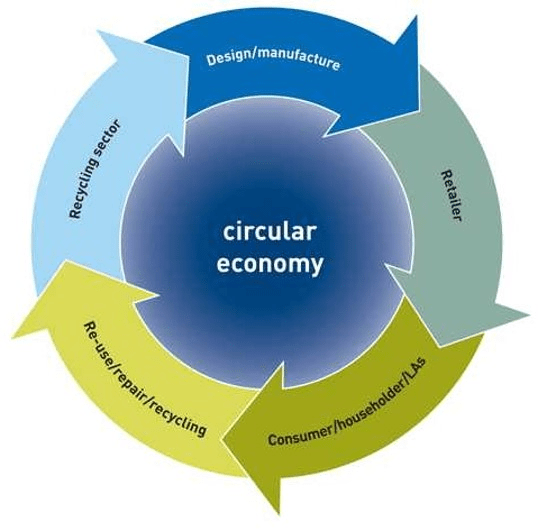
The circular economy is based on three fundamental principles: designing out waste and pollution, keeping products and materials in use, and regenerating natural systems. These principles aim to create a closed-loop system where resources are reused, refurbished, and recycled, minimizing environmental impact and fostering sustainability.
“The circular economy is not just a trend; it’s a necessity for the future of our planet,” says Jane Smith, Sustainability Expert at Green Innovations.
Key Circular Economy Strategies
1. Product Design for Longevity and Recyclability
Designing products with longevity and recyclability in mind is a cornerstone of the circular economy. Manufacturers can use durable materials, modular designs, and standardized components to extend the lifespan of products and facilitate easy disassembly and recycling.
Case Study: Fairphone
Fairphone, a company that produces modular smartphones, allows users to replace individual components, reducing electronic waste and promoting sustainability.
2. Resource Efficiency and Waste Minimization
Efficient resource use and waste minimization are critical for a circular economy. This can be achieved through lean manufacturing, waste-to-energy technologies, and the implementation of zero-waste policies.
Case Study: Interface
Interface, a global flooring company, has adopted a mission to achieve zero environmental impact. They use recycled materials, reduce waste, and even reclaim old carpets to create new ones.
3. Closed-Loop Supply Chains
Creating closed-loop supply chains involves designing supply chains where products are returned to the manufacturer at the end of their lifecycle for refurbishment, remanufacturing, or recycling. This approach reduces the need for virgin materials and minimizes waste.
Case Study: Ellen MacArthur Foundation
The Ellen MacArthur Foundation has collaborated with numerous companies to promote circular supply chains, encouraging businesses to take back and reuse their products.
4. Industrial Symbiosis
Industrial symbiosis involves the collaboration of different industries to use each other’s by-products and waste materials. This interconnected approach can lead to significant resource savings and waste reduction.
Case Study: Kalundborg Symbiosis
The Kalundborg Symbiosis in Denmark is a pioneering industrial symbiosis project where the waste of one company becomes the resource for another, creating a circular flow of materials and energy.
5. Circular Business Models
Adopting circular business models, such as product-as-a-service, can promote sustainability. In this model, companies retain ownership of products and lease them to customers, ensuring products are returned, refurbished, and reused.
Case Study: Philips Lighting
Philips Lighting offers lighting as a service, providing customers with lighting solutions without transferring ownership, ensuring that products are returned and recycled.
6. Consumer Engagement and Awareness
Educating and engaging consumers about the benefits of the circular economy is crucial for its success. Awareness campaigns, eco-labeling, and incentives for sustainable consumption can drive consumer behavior towards circular practices.
Case Study: Patagonia
Patagonia, an outdoor clothing brand, runs campaigns to encourage customers to repair, reuse, and recycle their products, fostering a culture of sustainability.
The Role of Policy and Regulation
Government policies and regulations play a vital role in promoting the circular economy. Implementing extended producer responsibility (EPR) laws, providing incentives for circular practices, and setting recycling targets can drive businesses towards sustainable practices.
Example: European Union’s Circular Economy Action Plan
The European Union’s Circular Economy Action Plan outlines measures to promote circularity, including mandatory recycling targets and eco-design requirements.
Challenges and Opportunities
While the circular economy offers numerous benefits, it also presents challenges, such as the need for significant investment, technological innovation, and changes in consumer behavior. However, these challenges also present opportunities for businesses and governments to innovate and lead the way towards a sustainable future.
Conclusion
The circular economy presents a transformative approach to sustainability by rethinking how we design, use, and dispose of products. By embracing circular economy strategies, we can reduce waste, conserve resources, and create a more sustainable and resilient future.
Join us in creating a sustainable future. Start by reducing, reusing, and recycling in your own home and supporting businesses that embrace the circular economy.
For more information on circular economy strategies, check out these resources:


 Decoding Biosphere