As the world faces increasingly intense heat waves, scientists and governments are exploring various methods to cool down the scorching temperatures. One such method is cloud seeding. But what exactly is cloud seeding, and how do planes help in this process? Let’s break it down and understand the science behind it.
What is Cloud Seeding?
Cloud seeding is a weather modification technique that aims to encourage clouds to produce rain or snow. The idea is to alter the microphysical processes within the clouds to make them more likely to release precipitation.
Why Use Cloud Seeding?
Extreme heat waves can cause serious problems such as drought, wildfires, and health issues. Cloud seeding can potentially provide relief by inducing rain, which can lower temperatures, increase water supply, and reduce the risk of fires.
How Does Cloud Seeding Work?
The process of cloud seeding involves several steps:
- Identifying Suitable Clouds: Not all clouds are suitable for seeding. Meteorologists look for clouds that have enough moisture and the right conditions to potentially produce rain.
- Seeding Agents: Substances called seeding agents are used to encourage the formation of raindrops. The most common seeding agents are silver iodide and salt. These particles act as nuclei around which moisture can condense to form raindrops.
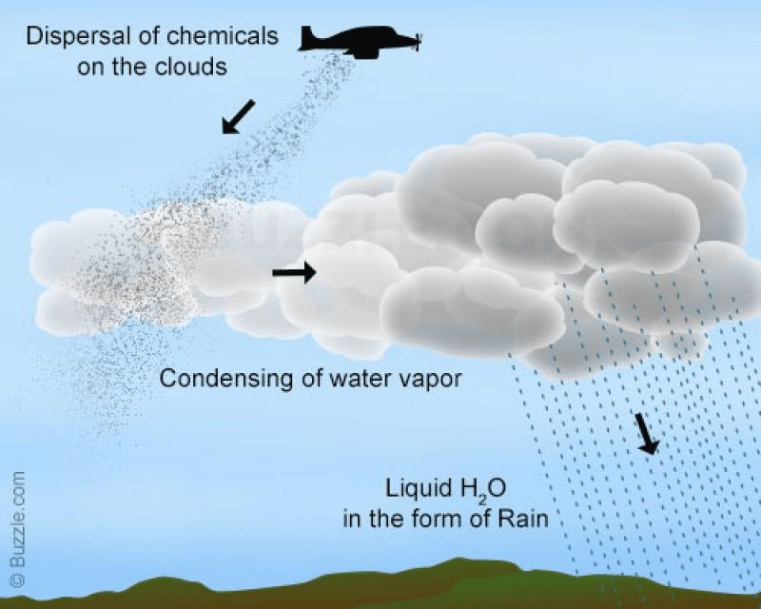
- Using Planes: Specially equipped planes are used to disperse the seeding agents into the clouds. These planes are fitted with flares or nozzles that release the seeding material either into the air or directly into the cloud.
- Releasing the Agents: The planes fly into the target area, often at high altitudes, and release the seeding agents. The particles spread out and mix with the cloud’s moisture.
- Cloud Response: Once the seeding agents are inside the cloud, they help the water droplets to cluster together. When these droplets become heavy enough, they fall as precipitation, which can be rain or snow, depending on the temperature.
Benefits of Cloud Seeding
- Cooling Down Temperatures: By inducing rain, cloud seeding can help cool down the surface temperature, providing relief during heat waves.
- Increasing Water Supply: Rain from cloud seeding can help refill reservoirs, rivers, and lakes, which is crucial during drought conditions.
- Reducing Wildfire Risk: Moisture from the rain can dampen dry vegetation, reducing the likelihood of wildfires.
Challenges and Considerations
While cloud seeding holds promise, it also comes with challenges and considerations:
- Effectiveness: The success of cloud seeding can be unpredictable. Not all attempts result in rain, and the amount of precipitation produced can vary.
- Environmental Impact: There are concerns about the long-term environmental impact of using substances like silver iodide, though studies have generally found these impacts to be minimal.
- Cost: Cloud seeding operations can be expensive, involving specialized equipment, planes, and trained personnel.
Real-World Applications
Several countries and regions have used cloud seeding as a tool to combat heat waves and droughts. For instance:
- United States: Various states, including California and Texas, have experimented with cloud seeding to manage water resources and reduce wildfire risk.
- China: China has one of the largest cloud seeding programs in the world and uses it to enhance rainfall and reduce air pollution.
- United Arab Emirates: The UAE has invested significantly in cloud seeding to address its water scarcity issues.
Future of Cloud Seeding
As climate change leads to more extreme weather patterns, cloud seeding may become a more common tool in our arsenal to manage weather-related challenges. Advances in technology and a better understanding of atmospheric science could improve the effectiveness and efficiency of cloud seeding.
In conclusion, cloud seeding is a fascinating and potentially valuable technique for providing heat wave relief by inducing rain. By using specially equipped planes to disperse seeding agents into suitable clouds, we can encourage precipitation, helping to cool temperatures, increase water supplies, and reduce wildfire risks. While there are challenges and uncertainties, the benefits make it a promising tool for the future.


 Decoding Biosphere