
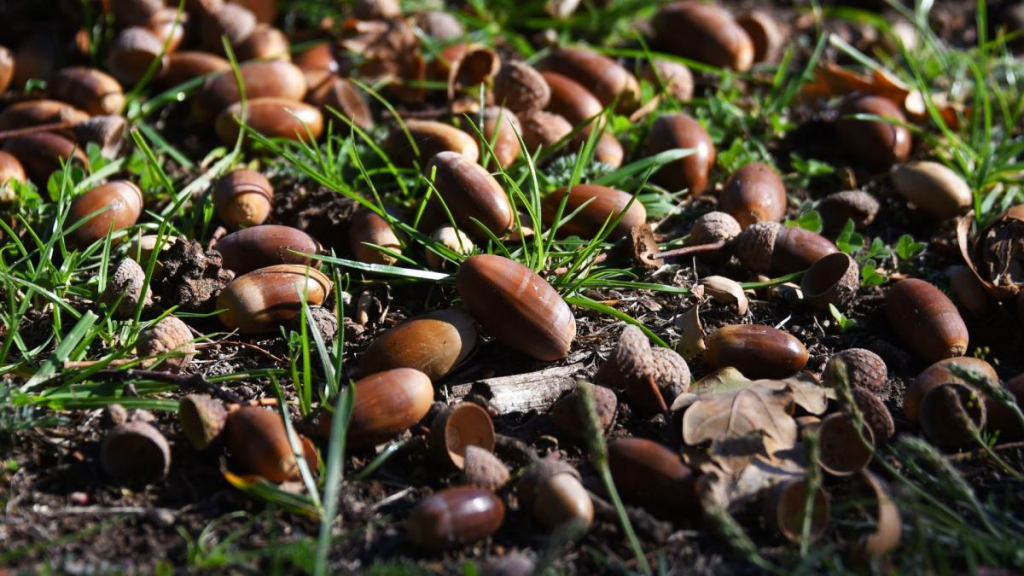
If you’ve ever wandered through a forest, you might have noticed that some years the ground is carpeted with acorns, while other years there are hardly any. This fascinating phenomenon is called “masting.” In this article, we let us learn all about mast years, exploring why trees synchronize their seed production and how it affects the ecosystem.
What Is a Mast Year?
A mast year occurs when trees, predominantly oaks but also walnuts, beeches, and more, produce an abundance of seeds all at once. Imagine a grand symphony where every tree plays its part in perfect harmony. Some years, the forest floor is showered with nuts, while in other years, it remains relatively bare. This phenomenon is not limited to a single species or region but can occur across a variety of tree species, including oaks, beeches, pines, and others. But why do trees engage in this synchronized seed production?
Causes of Mast Years
The occurrence of mast years is influenced by a combination of environmental factors, including weather patterns, climate conditions, and biological cycles. One key factor that can trigger a mast year is favorable weather conditions during the flowering and fruiting stages of tree reproduction. Adequate rainfall, sunlight, and temperature conditions can stimulate robust growth and reproduction in tree populations.
Additionally, mast years are often associated with periodic fluctuations in tree physiology and reproductive cycles. Some tree species exhibit synchronous mast cycles, in which entire populations of trees synchronize their reproductive efforts, leading to widespread mast events across entire forests or regions.
The Benefits of Mast Year
- Feeding the Future: Each seed contains a packet of energy-rich starch to nourish the dormant baby tree within. These seeds are like little powerhouses, tempting a variety of animals—from beetles to squirrels—to feast upon them. When trees coordinate their seed production, these seed-eating animals can’t possibly consume all the seeds in a mast year. The surplus seeds remain, ready to sprout into new trees.
- Squirrel Savings Account: For trees like oaks, which rely on squirrels to carry their seeds away and bury them, a mast year offers an extra advantage. When there’s an abundance of nuts, squirrels become diligent bankers. Instead of devouring every acorn immediately, they stash them away in the ground. As a result, oaks spread across the landscape, thanks to their bushy-tailed partners.
Why Does it Happen
But how do trees manage this synchronized seed production? Let’s explore some key factors:
- Energy Investment: Producing a bumper crop of seeds demands significant energy. Trees create their food through photosynthesis, converting sunlight into sugars and starch. However, resources are limited. After a mast year, trees may need to replenish their stored starches or focus on growing new leaves and wood.
- Weather Matters: Spring weather plays a crucial role. If a sudden cold snap freezes the tree’s flowers (yes, oaks have tiny flowers!), seed production suffers. Similarly, summer droughts can harm developing seeds. Trees adapt by closing their leaf pores to conserve water, but this also reduces their ability to photosynthesize.
Significance of Mast Years
The significance of mast years extends beyond the immediate impacts on wildlife populations and ecosystem dynamics. These events play a crucial role in the long-term survival and reproductive success of tree species. By producing large quantities of seeds and fruits during mast years, trees increase the likelihood that at least some of their offspring will germinate, establish new individuals, and perpetuate the species.
Mast years also contribute to the genetic diversity of tree populations by facilitating the dispersal of seeds over large distances. Animals that consume seeds and fruits during mast years act as vectors for seed dispersal, transporting seeds to new locations and facilitating the colonization of new habitats by tree species.
In addition to their ecological significance, mast years hold cultural and economic importance for human societies. Historically, mast events have been celebrated as indicators of abundant harvests and prosperous times ahead. In some cultures, the timing of mast years has been used as a predictor of future weather patterns and agricultural success.
The Mystery Persists
Despite our understanding, the precise mechanism behind masting remains somewhat mysterious. How do individual trees decide when to unleash a mast year? Scientists continue to investigate, examining factors like temperature, rainfall, and hormonal cues.
Beyond Acorns
Mast years aren’t exclusive to oaks. Pines, hickories, and even Southeast Asian dipterocarps participate in this synchronized dance of reproduction. So next time you crunch an acorn underfoot, remember that you’re witnessing a natural rhythm—a symphony orchestrated by trees.
In conclusion, mast years reveal the intricate connections between trees, animals, and the environment. As we marvel at the carpet of acorns or the scarcity of nuts, let’s appreciate the silent collaboration of the forest, where every tree plays its part in this timeless performance.
Source:
- This Fall Is Full of Acorns—Thanks to a ‘Mast’ Year
- Mast years — Science Learning Hub
- What is a Mast Year? How and Why it Happens – Woodland Trust
You May Also Like


 Decoding Biosphere