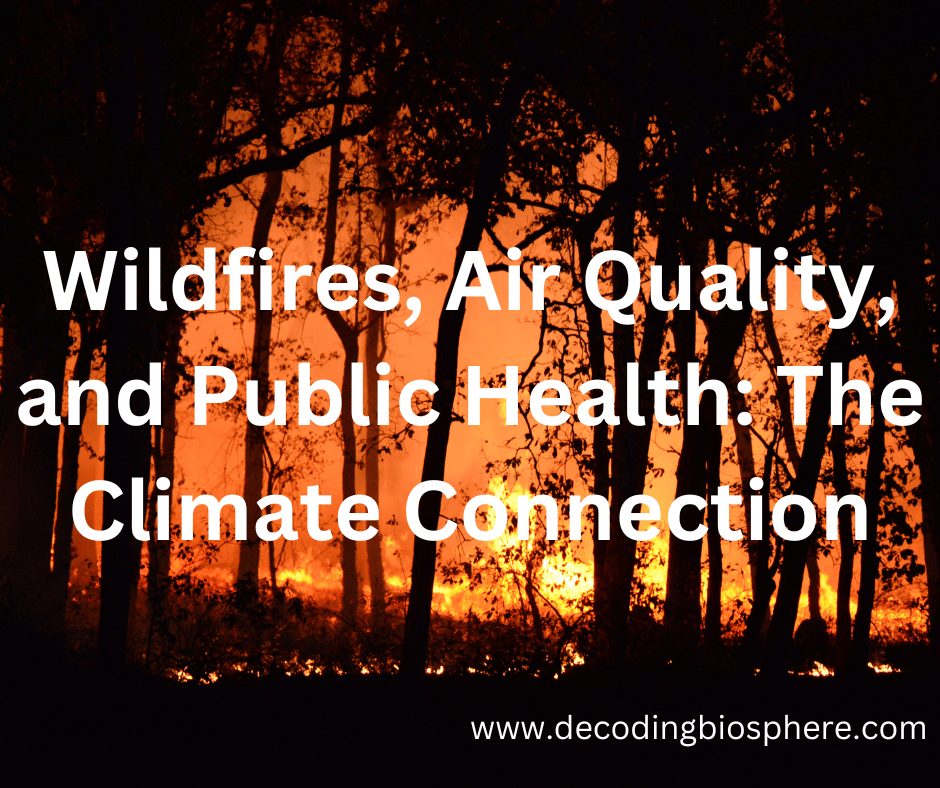
Wildfires are not only destructive to forests and communities but also have far-reaching consequences for air quality and public health. The increasing frequency and intensity of wildfires in recent years have raised concerns about the direct and indirect impacts on the quality of the air we breathe. Understanding the intricate link between wildfires, climate change, and their implications for public health is crucial in addressing this pressing issue.
Wildfires and Air Pollution:
Wildfires emit a cocktail of pollutants into the atmosphere, including fine particulate matter (PM2.5), carbon monoxide (CO), nitrogen oxides (NOx), volatile organic compounds (VOCs), and hazardous air pollutants (HAPs). These pollutants can travel long distances, affecting air quality in both immediate and distant regions. The smoke produced by wildfires creates hazy conditions and reduces visibility, highlighting the magnitude of the problem.
Climate Change Amplifies Wildfire Risks:
Climate change acts as a catalyst for more frequent and severe wildfires. Rising temperatures, prolonged droughts, and changes in precipitation patterns contribute to drier vegetation, increasing the likelihood of ignition and fire spread. As climate change continues to alter weather patterns and exacerbate drought conditions, the risk of wildfires intensifies, amplifying the associated air quality impacts.
Impact on Respiratory Health:
Exposure to wildfire smoke can have significant implications for respiratory health. Fine particulate matter, in particular, penetrates deep into the lungs and can trigger or exacerbate respiratory conditions such as asthma, bronchitis, and chronic obstructive pulmonary disease (COPD). Vulnerable populations, including children, the elderly, and individuals with pre-existing respiratory conditions, are at higher risk of adverse health effects.
Cardiovascular and Systemic Effects:
Beyond respiratory health, wildfire smoke exposure can also have cardiovascular and systemic effects. Studies have linked exposure to PM2.5 from wildfires with increased risks of heart attacks, strokes, and other cardiovascular diseases. The inflammatory properties of wildfire smoke can also impact systemic health, potentially contributing to a range of health issues, including impaired immune function and increased susceptibility to respiratory infections.
Mental Health Implications:
The impacts of wildfires extend beyond physical health, affecting mental well-being as well. Evacuations, loss of homes and belongings, and the overall disruption caused by wildfires can lead to stress, anxiety, depression, and post-traumatic stress disorder (PTSD) among affected individuals. The long-term psychological toll on communities grappling with the aftermath of wildfires should not be overlooked.
Addressing the Challenge:
Addressing the interconnected challenges of wildfires, air quality, and public health requires a multi-faceted approach:
a. Climate Change Mitigation: Reducing greenhouse gas emissions, transitioning to renewable energy sources, and implementing sustainable practices to mitigate climate change and reduce the frequency and severity of wildfires.
b. Effective Fire Management: Implementing proactive fire management strategies, including controlled burns, fuel reduction programs, and early detection systems, to minimize the size and impact of wildfires.
c. Public Health Measures: Enhancing public health responses during wildfire events, including timely communication, evacuation plans, and access to clean indoor air spaces. Supporting healthcare systems to cope with increased demands during and after wildfires.
d. Research and Monitoring: Investing in research to better understand the health impacts of wildfire smoke, improving monitoring systems, and developing early warning systems to inform public health actions.
e. Community Resilience: Building community resilience through education, preparedness, and support networks to help individuals and communities cope with the physical, mental, and emotional challenges posed by wildfires and their aftermath.
Take Away
The link between wildfires, air quality, climate change, and public health is undeniable. Urgent action is needed to mitigate climate change, effectively manage wildfires, protect air quality, and safeguard public health. By addressing the root causes of climate change, implementing proactive fire management strategies, and prioritizing public health measures, we can strive towards a healthier and more resilient future where the impacts of wildfires on air quality and public health are minimized.


 Decoding Biosphere