Global warming and climate change are two terms we often hear. They are often used interchangeably, but they do have different meanings. Understanding the difference is important because it helps us better grasp what is happening to our planet. This article will explain what global warming and climate change mean, how they are related, and what impacts they have on our world.
WHAT IS GLOBAL WARMING?
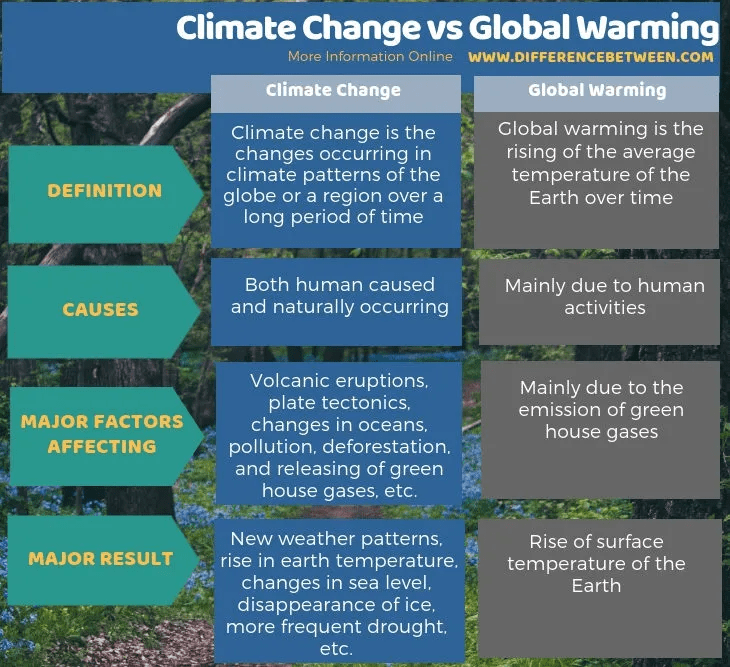
Global warming refers to the increase in the Earth’s average surface temperature. Over the past century, the Earth’s temperature has been rising. Scientists measure this temperature and have found that it is getting warmer. The main cause of global warming is the increase in greenhouse gases in our atmosphere.
What Are Greenhouse Gases?
Greenhouse gases trap heat in the atmosphere. They act like a blanket, keeping the Earth warm. Some greenhouse gases are natural, like carbon dioxide (CO2), methane (CH4), and water vapor. However, human activities have increased the amount of these gases. For example:
- Burning Fossil Fuels: When we burn coal, oil, and natural gas for energy, we release CO2.
- Deforestation: Cutting down trees reduces the number of trees that can absorb CO2.
- Agriculture: Farming activities, especially livestock like cows, release methane.
The Greenhouse Effect
The greenhouse effect is a natural process. Without it, our planet would be too cold for life. However, too much greenhouse gas means too much heat is trapped, leading to global warming.
WHAT IS CLIMATE CHANGE?
On the other hand, climate change is a long-term alteration in the weather patterns of the planet brought on by the same greenhouse gas emissions. Rising global temperatures are one aspect of climate change, but there are many other effects those greenhouse gases are having on the world as well, some of which even involve some locations growing colder!
A changing climate is a natural part of life on Earth, just as temperature variations are. Large regions of the continent might see major weather changes for months or even years as a result of systems like El Nio and La Nia. But the phrase “climate change” refers to longer-term, abnormal, and unanticipated changes that are the result of human activities.
A wide range of changes, which have become indisputable during the past century, are among the repercussions of climate change. Sea levels have increased, biodiversity has been lost, there have been more heatwaves, droughts, and floods than ever before, and wildfires and hurricanes have never been more powerful. All of which indicate a climate that is drastically and quickly changing.
The Relationship Between Global Warming and Climate Change
Global warming is one part of climate change. When the Earth’s temperature rises due to global warming, it affects other aspects of the climate. For example:
- Melting Ice: Warmer temperatures cause ice caps and glaciers to melt. This adds more water to the oceans, leading to rising sea levels.
- Changing Weather Patterns: Warmer temperatures can change where and how much it rains. Some places may experience more droughts, while others may have heavier rainfall and floods.
- Impact on Wildlife: Animals and plants may struggle to survive if their habitats change. For example, polar bears rely on ice to hunt. If the ice melts, they lose their hunting grounds.
Evidence of Global Warming and Climate Change
Scientists use various methods to study global warming and climate change. Here are some key pieces of evidence:
Rising Temperatures
- Temperature Records: Scientists have been keeping temperature records for over a century. These records show a clear increase in global temperatures, especially in recent decades.
- Ice Cores: By studying ice cores from glaciers, scientists can learn about past temperatures. These cores show that the current warming trend is unusual compared to the past.
Melting Ice and Rising Seas
- Glacier Retreat: Many glaciers around the world are shrinking. For example, the glaciers in the Alps and the Himalayas are getting smaller.
- Arctic Sea Ice: The amount of sea ice in the Arctic is decreasing. Each year, there is less ice covering the Arctic Ocean.
- Sea Level Rise: As ice melts and ocean water warms (warm water expands), sea levels rise. This can lead to flooding in coastal areas.
Changing Weather Patterns
- Extreme Weather: There are more extreme weather events, like hurricanes, heatwaves, and heavy rainfall. These events can cause serious damage and disrupt lives.
- Shifting Seasons: Spring is starting earlier, and winters are getting shorter. This can affect plants and animals that rely on certain temperatures to grow or migrate.
Impacts of Global Warming and Climate Change
Global warming and climate change have wide-ranging impacts on the environment, human health, and economies. Here are some examples:
Environmental Impacts
- Loss of Biodiversity: Many species may not be able to adapt to the rapid changes in climate, leading to extinction.
- Coral Bleaching: Warmer ocean temperatures cause coral reefs to expel the algae living in them. This turns the corals white and can lead to their death.
- Forest Fires: Increased temperatures and drier conditions can lead to more forest fires, destroying habitats and releasing more CO2 into the atmosphere.
Human Health
- Heat-Related Illnesses: More frequent and severe heatwaves can lead to heatstroke and dehydration.
- Spread of Diseases: Warmer temperatures can expand the range of insects that carry diseases, like mosquitoes that spread malaria and dengue fever.
- Food and Water Security: Changes in rainfall patterns can affect crop production and water supply, leading to shortages and higher prices.
Economic Impacts
- Damage to Infrastructure: Extreme weather events can damage buildings, roads, and other infrastructure, costing billions in repairs.
- Agricultural Losses: Changes in climate can lead to poor harvests, affecting farmers’ livelihoods and food supply.
- Insurance Costs: As the risk of natural disasters increases, so do insurance premiums, making it more expensive to protect homes and businesses.
What Can We Do?
Addressing global warming and climate change requires action at all levels, from individuals to governments. Here are some steps we can take:
Reduce Greenhouse Gas Emissions
- Use Renewable Energy: Switching to wind, solar, and other renewable energy sources can reduce our reliance on fossil fuels.
- Increase Energy Efficiency: Using energy-efficient appliances and improving insulation in homes can reduce energy use.
- Plant Trees: Trees absorb CO2 from the atmosphere. Planting more trees can help offset emissions.
Adapt to Changes
- Build Resilient Infrastructure: Designing buildings and infrastructure to withstand extreme weather can reduce damage.
- Protect Natural Ecosystems: Preserving wetlands, forests, and other natural areas can help buffer against climate impacts.
- Plan for Sea Level Rise: Coastal communities can develop plans to deal with rising sea levels, such as building sea walls or relocating to higher ground.
Conclusion
Global warming and climate change are serious issues that affect all of us. Understanding the difference between the two terms and their impacts is crucial for taking meaningful action.
Remember, every small step counts, and together we can make a big difference.
Related Environmental Concepts
- What is an Ecosystem?
- What is a Biome?
- What is Biological Association?
- What is Sustainable Agriculture?
- What is Biodome?
FAQs About Global Warming and Climate Change
1. What is the difference between global warming and climate change?
Global warming refers to the increase in the Earth’s average surface temperature due to rising levels of greenhouse gases. Climate change includes global warming but also encompasses other changes such as shifts in weather patterns, precipitation, and increased frequency of extreme weather events.
2. What causes global warming?
Global warming is primarily caused by human activities that increase greenhouse gases in the atmosphere. These activities include burning fossil fuels (like coal, oil, and natural gas), deforestation, and certain agricultural practices.
3. How do greenhouse gases cause global warming?
Greenhouse gases trap heat from the sun in the Earth’s atmosphere, similar to how a blanket keeps you warm. This process, known as the greenhouse effect, keeps our planet warm enough to support life. However, too many greenhouse gases can trap too much heat, leading to global warming.
4. Is climate change happening right now?
Yes, climate change is happening right now. Scientists have observed changes in temperature, sea levels, and weather patterns. These changes are happening faster than in the past and are largely due to human activities.
5. What are the effects of climate change?
Climate change affects the environment, human health, and economies. It can lead to rising sea levels, more extreme weather events (like hurricanes and droughts), loss of biodiversity, health problems related to heat and the spread of diseases, and economic losses due to damaged infrastructure and poor crop yields.
6. Can we stop global warming?
We can’t stop global warming completely, but we can slow it down and reduce its impact by reducing greenhouse gas emissions, using renewable energy sources, increasing energy efficiency, and protecting forests and other natural environments.
7. What can I do to help fight climate change?
You can help fight climate change by:
- Using energy-efficient appliances and light bulbs
- Reducing, reusing, and recycling materials
- Using public transportation, biking, or walking instead of driving
- Supporting renewable energy sources like wind and solar power
- Planting trees and supporting conservation efforts
- Educating others about the importance of climate action
8. How do scientists measure global warming and climate change?
Scientists measure global warming and climate change using various methods, including temperature records from weather stations, satellites, and ocean buoys. They also study ice cores, tree rings, and other natural records to understand past climate changes.
9. What are the main greenhouse gases?
The main greenhouse gases are carbon dioxide (CO2), methane (CH4), nitrous oxide (N2O), and fluorinated gases. CO2 is the most significant because of its large volume and long-lasting presence in the atmosphere.
10. Why are sea levels rising?
Sea levels are rising due to two main reasons: the melting of ice caps and glaciers, and the expansion of seawater as it warms. Both of these processes are driven by global warming.
11. How does climate change affect animals and plants?
Climate change can alter habitats, making them unsuitable for some animals and plants. It can also change the timing of seasonal events, like migration and flowering, which can disrupt ecosystems. Some species may face extinction if they cannot adapt quickly enough.
12. Are humans responsible for climate change?
Yes, the majority of scientists agree that human activities, especially the burning of fossil fuels and deforestation, are the main drivers of recent climate change.
13. What is being done to combat climate change?
Governments, organizations, and individuals around the world are taking action to combat climate change. Efforts include international agreements like the Paris Agreement, policies to reduce emissions, investment in renewable energy, conservation projects, and public awareness campaigns.
14. What are renewable energy sources?
Renewable energy sources are energy sources that can be replenished naturally and are less harmful to the environment. Examples include solar power, wind power, hydroelectric power, and geothermal energy.
15. How does deforestation contribute to global warming?
Deforestation contributes to global warming because trees absorb CO2, a major greenhouse gas. When trees are cut down, not only is this CO2-absorbing capacity lost, but the carbon stored in the trees is also released into the atmosphere, increasing greenhouse gas levels.
Subscribe to my newsletter
Follow us on twitter @DecodingBiosph1


 Decoding Biosphere
2 thoughts on “Global Warming vs. Climate Change”