
🌍 Introduction
Travel opens doors to cultures, landscapes, and unforgettable experiences. But today, tourism has also become a major environmental pressure — from carbon emissions to overtourism and waste accumulation.
As travelers, we now share a responsibility: to explore the world without harming it.
Responsible travel is not about perfection — it’s about awareness, intention, and small conscious choices that make a positive difference.
🧭 What Is Responsible Travel?
Responsible travel means exploring destinations in a way that reduces environmental impact, respects local communities, protects cultural heritage, and supports conservation efforts.
It asks one question:
➡️ “How can I experience the world while helping protect it for the next generation?”
🌿 10 Simple Eco-Friendly Travel Tips for 2026
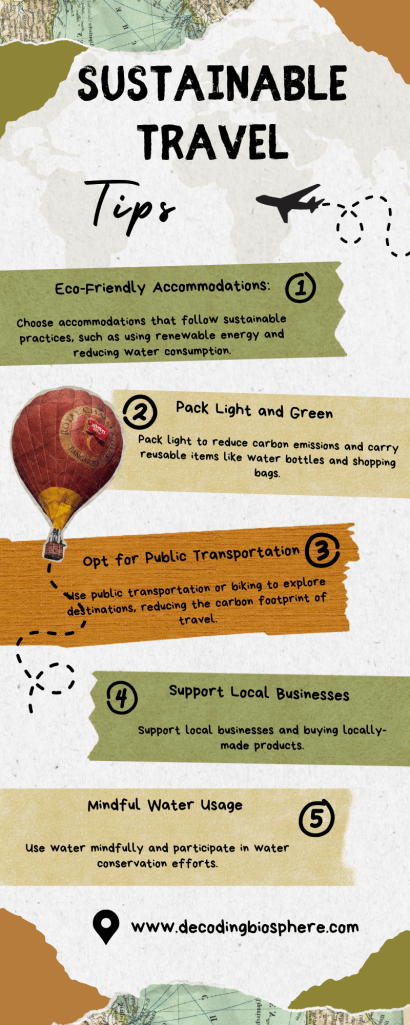
1. Choose Eco-Certified Stays
Look for accommodations with certifications such as:
- Green Key
- EarthCheck
- LEED
- Travelife
Eco-certified hotels use renewable energy, conserve water, and reduce waste.
2. Pack Light — Pack Smart
A lighter bag = lower aircraft fuel burn.
Bring:
- Refillable bottle
- Bamboo toothbrush
- Tote bag
- Solid toiletries
These small swaps reduce single-use waste dramatically.
3. Use Public Transport or Shared Mobility
Whenever possible, choose:
- Trains over planes
- Buses over taxis
- Cycling over scooters
Low-carbon travel options not only help the planet — they help you see more.
4. Support Local Businesses
Eat at local cafés, buy from local artisans, and hire community-owned tour operators.
This keeps money within the region and supports traditional livelihoods.
5. Avoid Single-Use Plastic
Destinations like Bali, Kenya, and Costa Rica have banned plastics because pollution harms oceans and ecosystems.
Carry reusables — a bowl, utensils, and a cup — especially when street food is part of the journey.
6. Respect Wildlife and Natural Spaces
No selfies with chained animals.
No feeding wildlife.
No touching corals or removing natural souvenirs.
Observe — don’t interfere.
7. Travel Slowly
Instead of visiting many countries quickly, spend more time in fewer places.
Slow travel:
- Reduces emissions
- Supports deeper cultural connection
- Minimizes the environmental footprint
8. Conserve Water and Energy
Treat your accommodation like your home:
- Turn off lights and AC when leaving
- Reuse towels
- Take short showers
Small actions add up — especially in water-stressed destinations.
9. Choose Experiences That Give Back
Look for:
- Community-led tours
- Eco-volunteering
- Conservation-focused activities
Meaningful travel leaves a positive footprint.
10. Leave Every Place Better
Follow the principle:
➡️ Take memories, leave nothing — except kindness.
Pick up trash, educate fellow travelers, and advocate for responsible tourism.
✨ Why Responsible Travel Matters in 2026
Tourism is recovering post-pandemic and growing rapidly. Without action, it could accelerate climate change, resource depletion, and cultural loss.
By choosing sustainable travel practices now, we protect:
- Wildlife
- Ocean health
- Cultural heritage
- Indigenous knowledge
- Local economies
💬 Final Thoughts
Responsible travel is not restrictive — it’s empowering. It deepens connection, enhances awareness, and transforms travel from consumption into stewardship.
Each journey becomes a contribution.
📌 Eco-Friendly Travel Checklist
🌍 Before You Leave
- ☐ Choose eco-certified or responsible accommodations
- ☐ Book direct flights or non-stop routes (reduces emissions)
- ☐ Offset your carbon footprint through a verified program
- ☐ Pack light (less weight = lower fuel emissions)
- ☐ Research local customs, wildlife rules & waste policies
👜 Smart & Sustainable Packing
- ☐ Reusable water bottle
- ☐ Reusable shopping bag or tote
- ☐ Bamboo/steel cutlery & straw
- ☐ Solid toiletries (shampoo bar, soap bar)
- ☐ Reef-safe sunscreen
- ☐ Natural insect repellent
- ☐ Compostable toothbrush & eco-friendly toiletries
- ☐ A notebook or digital journal (no printed itineraries)
🚗 Transport Choices
- ☐ Prefer walking or cycling when possible
- ☐ Use trains or buses instead of domestic flights
- ☐ Rent EV/hybrid vehicles (if available)
- ☐ Carpool or use public transportation apps
🍃 Waste-Free On The Go
- ☐ Say NO to disposable cups, straws, cutlery, and napkins
- ☐ Avoid mini hotel toiletries
- ☐ Use refill stations instead of bottled water
- ☐ Carry a reusable food container for snacks or leftovers
- ☐ Bring travel-sized reusable containers instead of travel Minis
🧭 Responsible Tourism Behavior
- ☐ Support local farmers, artisans, and businesses
- ☐ Respect wildlife — no feeding, touching, or riding animals
- ☐ Stay on marked trails to avoid habitat damage
- ☐ Reduce unnecessary energy use (lights, AC, heating)
- ☐ Avoid unethical souvenir materials (shells, coral, ivory, fur)
♻ Waste Disposal & Recycling
- ☐ Sort trash where systems exist
- ☐ Carry waste if no bins are available
- ☐ Avoid single-serve food items
- ☐ Leave every place cleaner than you found it
💚 Mindset & Impact
- ☐ Be patient — eco-travel takes planning
- ☐ Prioritize experiences over buying things
- ☐ Learn from the communities you visit
- ☐ Share sustainable practices with others
- ☐ Travel slower — enjoy depth, not speed
❓ Frequently Asked Questions
Q1: Is sustainable travel expensive?
Not always. Traveling slowly, supporting locals, and reducing waste often save money.
Q2: Can one traveler really make a difference?
Yes. Small habits multiplied by millions create global impact.
Q3: What is the easiest eco change to start with?
Start by eliminating single-use plastic during your trip.
Pin It
Let me know your views on this article by commenting in the below section. You can follow the blog or subscribe to get the updates on the latest articles.
Follow us on twitter @DecodingBiosph1


 Decoding Biosphere
Reblogged this on Decoding Biosphere.
LikeLike